
It’s a small win.
But the apparent survival of a Treasury Department fund that was subject to a termination order from President Trump offers a welcome respite and a marker for a possible path forward.
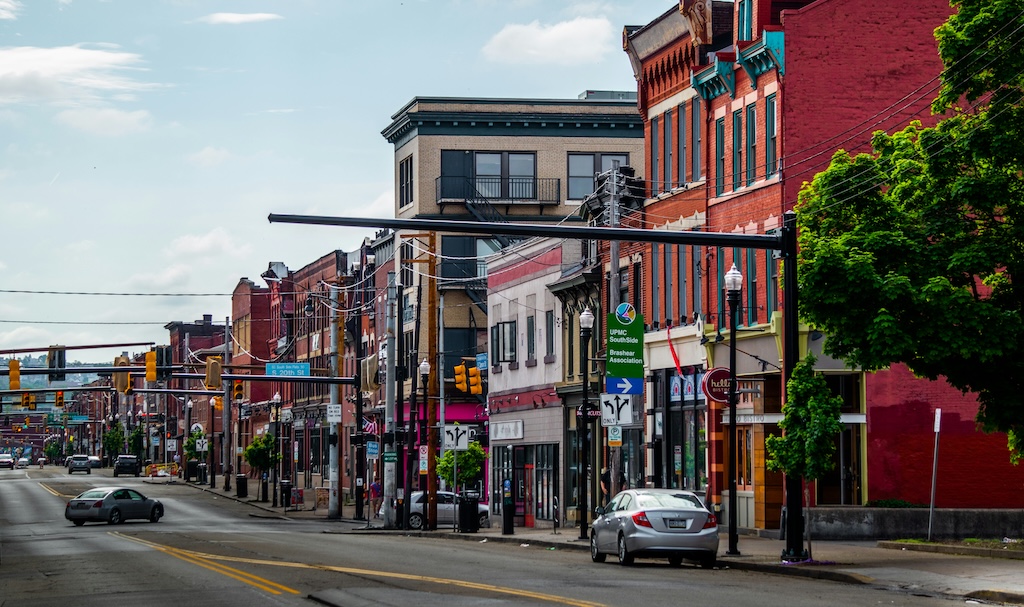
The CDFI Fund provides capital to community development financial institutions like banks, credit unions, funds and other lenders to finance small businesses and farmers, real estate developers and first-time homebuyers, and supermarkets, health clinics and community centers.
One CDFI network reported last week that the White House had notified it that the Treasury Department had affirmed its support for the CDFI Fund and said, “the CDFI Fund is operating as normal and does not anticipate any disruptions to the programs.”
The elements of its survival strategy: bipartisan support and a demonstrable record of success by community lenders in delivering economic opportunity and equitable access in rural and urban areas, in red states and blue states, to Black, white and any other borrowers.
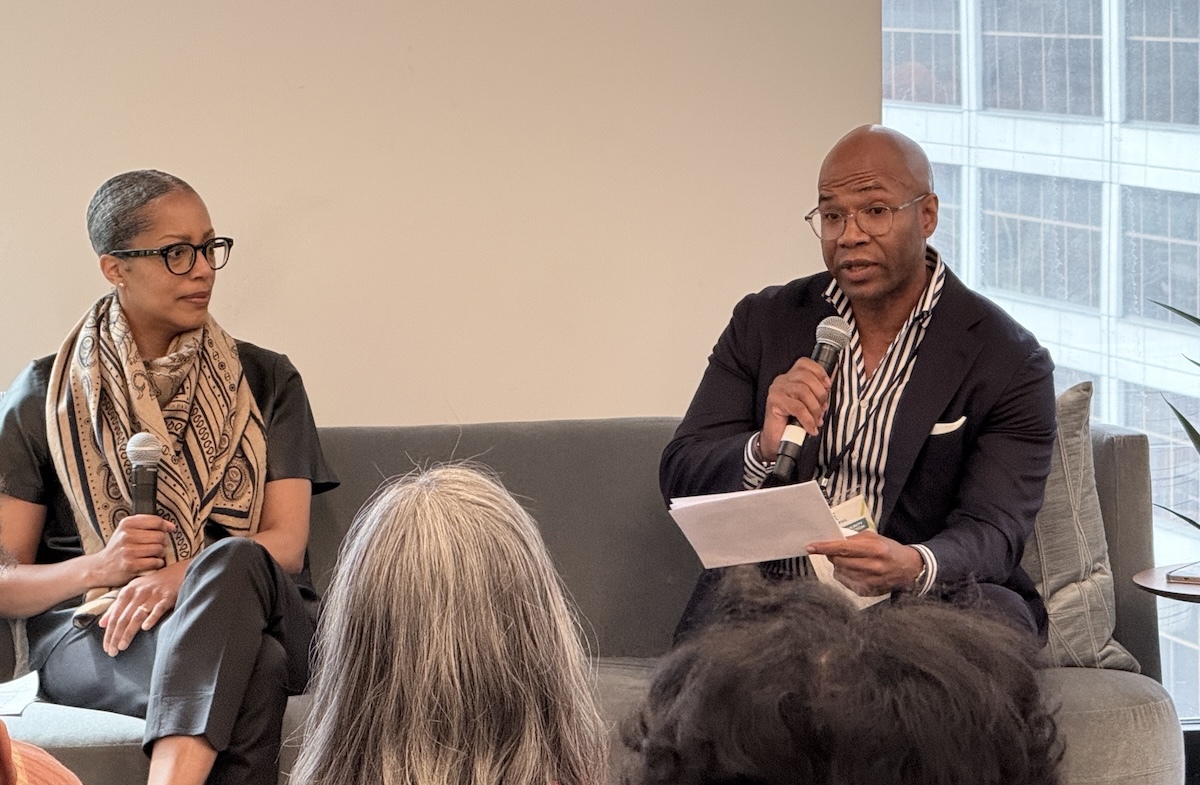
“You put on a blindfold and have folks tell you their challenges, it sounds a hell of a lot the same,” says Harold Pettigrew, head of Opportunity Finance Network, an association of CDFIs.
“We support small business and affordable housing and childcare and all of those things that we need in our communities, whether it’s a rural place or a city,” he said. “We know those are needs in our communities across the country.”
Spring tour
Such common sense and common purpose makes community lenders like CDFIs a linchpin of economic opportunity, vibrant communities and positive shared prosperity, what we’re calling Re:Construction. On our spring tour of in-person events next month, ImpactAlpha will be collecting such markers into “a playbook for shared prosperity.”
Re:Construction includes April gatherings in North Carolina, Washington DC, Boston and other cities (see below), featuring screenings of our mini-documentary, “Equity and Ownership: Napoleon Wallace and the Reconstruction of Black Wealth.” Wallace, a contributing editor at ImpactAlpha, also will be launching his occasional column.
Long a mainstay of the social finance ecosystem in North Carolina and beyond, Wallace several years ago left his position as North Carolina’s deputy secretary of commerce to build a network of businesses and social enterprises that together, he thought, represented a path to racial equity through wealth creation for Black families and communities.
The 20-minute documentary traces those efforts as Wallace confronts the challenges of late-stage ALS, a degenerative nerve disease that has left him able to communicate only through an “eye pad,” controlling a cursor with his eyes as he points to letters and words. Text-to-voice software renders his words in a robotic voice.
The tie-back of Re:Construction to the historical Reconstruction that followed the Civil War is intentional. North Carolina and other states have a legacy of slavery and Jim Crow, but also of shared prosperity and multiracial democracy based on broad ownership, self-determination and collective power. (ImpactAlpha in 2021 produced The Reconstruction, a series of posts and nearly two-dozen podcasts, hosted by Monique Aiken, that explored the term’s historical relevance and modern-day resonance.)
“Reconstruction, in my mind, represents a time in American history when we were striving to correct the deep divides that had torn the country apart,” Wallace told me in a conversation that accompanies the documentary. It was, he said, “a national effort to heal and move forward by expanding the electoral, educational, economic and social opportunities available to all Americans,” and particularly citizens newly freed from slavery.
“Today, we face similarly troubling divisions,” he continued. “To overcome them, we will need a new kind of Reconstruction, one that invests deeply in our communities and institutions to build a more united, healthy and prosperous future.”
Fusion power
Next year marks the bisesquicentennial, or 250th anniversary, of the Declaration of Independence, which began an intense period of nation-building that culminated with the ratification of the Constitution about a dozen years later.
The year will also mark the sesquicentennial, or 150th year since the end of an equally intense period of national rebuilding, or Reconstruction. The roughly dozen years from the end of the Civil War through 1876 included the 13th, 14th, and 15th amendments to the Constitution – the nation’s second founding.
The story of the Reconstruction era, replete with denunciations of “carpetbaggers and scalawags,” was distorted by the perspectives of its opponents. In fact, the decade-long experiment in multiracial democracy and inclusive prosperity spurred small-town vitality and the flourishing of Black businesses and professionals across the South.
“A bottom-up and top-down mobilization to rewrite rules, redistribute power and redress injustice can turn disruption and division into renewal and reconciliation,” ImpactAlpha wrote several years ago. “How do we know? Because it has happened before.”
Still, Reconstruction is perhaps best known for the backlash that followed. The brief flowering of new possibilities was sold out after the contested election of 1876, when a candidate who lost the popular vote was installed as part of a political deal that included the withdrawal of federal troops from southern states. That was followed by decades of Jim Crow laws that enforced not only racial segregation, but subjugation – including by violent force.
That backlash shares with today’s reaction against the racial reckoning of recent decades that the opposition comes not from such efforts’ failure, but from the promise of success.
Back then, Reconstruction succeeded in lifting up the economies of southern states, decimated by the long Civil War and adjusting to the new realities of free Black labor. In cities around the south, Black business districts grew up around Black owned banks and department stores, doctors and lawyers, newspapers and fraternal orders. In Beaufort, South Carolina, for example, Civil War hero Robert Smalls was returned to Congress five times, even winning back his seat after being defeated in 1878. Beaufort now hosts the headquarters of Reconstruction National Historical Park, which celebrates what is known as the Port Royal Experiment.
In many places, vibrant Black business districts outlasted the end of formal Reconstruction and thrived well into the 20th century, buoyed by support from white business owners who also were prospering in the growing economy. It was the success, not the failure, of Black businesses and communities in Wilmington, NC; Tulsa, Oklahoma, Springfield, Illinois, Rosewood, FL and many others that so provoked the mobs who resorted to organized violence to try to destroy them.
ImpactAlpha’s documentary connects today’s Reconstruction with the remarkable success story of Wilmington, NC’s “fusion” politics of the 1890s, when the city’s majority Black population supported banks, department stores and newspapers before a white supremacist coup in 1898 overthrew the city’s elected government and massacred citizens in the streets (listen to our podcast, “Lessons from the Wilmington coup of 1898”).
In today’s North Carolina, Napoleon Wallace sees a modern version of Wilmington’s fusion politics similarly uniting diverse constituencies around a common agenda of entrepreneurship, access to capital and economic growth.
“This shared vision brought together a diverse coalition of wealthy abolitionists, newly freed black Americans, poor white sharecroppers and indigenous peoples,” he told me. “There’s immense power and potential in building a coalition that includes both the historically privileged and for most marginalized, working together toward a common goal of inclusion and shared prosperity.”
What’s Working
Entrepreneurial ecosystems. Access to capital. Small-business support. Manufacturing investments. Workforce training. The menu of successful solutions is not that different for “blue” urban areas and “red” rural regions.
Community development financial institutions, which played a vital role in helping small businesses get through the pandemic shutdowns and are poised to become vital channels for financing green community infrastructure, are not the only success story of recent years.
New small business starts, after a decades-long slump, have been on a tear since 2021, with more than more than five million new businesses starting each year, a dramatic increase from the prior period. Last year, more than 5.2 million new business applications were filed last year, down only slightly from a record 5.5 million in 2023. Small businesses create a disproportionate share of new jobs in the US and most other countries. .
What’s more, nearly half of the new business owners are women, and the share of Black (6%) and Hispanic (13%) is roughly double the historic rate. Black women have been the fastest-growing group of new entrepreneurs.
“There’s not a time in our history where Black women were doing well, and other people were not doing well. That has never existed,” Anne Price, now head of Maven Collaborative, told ImpactAlpha on a Reconstruction podcast. “If they are doing well, then everyone else is going to be doing well. It’s really that simple.”
Indeed, in recent years, wealth inequality had ever-so-slightly decreased after decades of widening to a chasm.
Business ownership is only part of the emerging “ownership economy” that includes home ownership, ownership of financial assets such as retirement savings and even employee ownership, as an increasing number of retiring business owners sell out to their workers. The Aspen Institute estimates that such an investment ecosystem could, in rough numbers, 10x the wealth of households of color and those in the bottom half of US wealth distribution, which now own less than 2% of US household wealth.
This week’s Agents of Impact Call will explore the growing range of emerging models for financing transitions to employee ownership. Apis & Heritage’s Todd Leverette, Essential Owners Fund’s Malini Ramanarayanan Moraghan, Social Capital Partners’ Jon Shell, Ownership Capital Lab’s Alison Lingane, Lafayette Square Institute’s Jack Moriarty, and other Agents of Impact will share emerging strategies for financing employee-led buyouts, Wednesday March 26 at 10am PT / 1pm ET / 5pm London. RSVP now.
In Denver, the Dearfield Fund for Black Wealth in Denver provides interest-free down-payment assistance loans to local Black families to purchase their first homes. Ownify, based in Raleigh, NC, is looking to replace predatory rent-to-own models with a fractional ownership strategy that covers all upfront costs for first-time low-income and minority homebuyers. New York-based Homium, through its “shared-appreciation notes,” is helping low- and middle-income first-time buyers secure down-payment assistance in exchange for a cut of their home equity appreciation.
“Ownership of assets is very unique. It’s something that can pass from one generation to the next,” Self-Help’s Martin Eakes told ImpactAlpha. Eakes will join other Agents of Impact at Re:Construction North Carolina in Chapel Hill on April 4. “Income gives a family the ability to make short-term choices, but assets and wealth that you build up give that same family the ability to make long-term choices. They can take an asset like a home, with equity that’s built up, and use that to borrow money to start a business, use that to borrow to send kids to college. You can make long term choices for your family.”
Wallace, along with Talib Graves-Manns and Wilson Lester, is building Partners in Equity to help Black business owners buy the commercial properties in which they operate. The appreciating asset can then be leveraged for growth capital, building generational wealth.
“You can sell it and get cash windfall or you can use it as leverage to acquire other properties,” Graves-Manns says. “That’s one of the biggest benefits of being an owner in real estate.”
Over the next several months, ImpactAlpha’s Re:Construction project will collect many more such examples of successful multi-racial wealth-building initiatives. That may seem out of sync in a period of backlash and reaction.
But that’s exactly the point: by highlighting what’s working, we hope bring together diverse constituencies around common aspirations and together assemble a playbook for shared prosperity.
Spring tour. ImpactAlpha is hitting the road with our first mini-documentary, “Equity and ownership: Napoleon Wallace and the Reconstruction of Black wealth.” Please join us at one or more of these live events to help assemble a playbook for shared prosperity.
Re:Construction North Carolina. GOOD TRBL’s Napoleon Wallace and ImpactAlpha’s David Bank will welcome Self-Help’s Martin Eakes, ncIMPACT Initiative’s Anita Brown-Graham, Partners in Equity’s Wilson Lester, Symphonic Capital’s Shruti Shah, and dozens of other Agents of Impact to the Ackerman Center for Excellence in Sustainability at the University of North Carolina in Chapel Hill, for an all-day event, Friday, April 4. RSVP today.
Re:Construction Washington, DC. The Robert Wood Johnson Foundation and ImpactAlpha invite community developers, green bankers, ownership investors, unemployed staffers and other Agents of Impact to an evening of shared purpose and warm introductions, hosted by the Aspen Institute. Bring a +1 whose work or community has been disrupted. Tuesday, April 8. Reserve your spot.
Re:Construction Boston. “Equity and ownership” has been selected by the Boston International Film Festival for its Saturday night showcase. Get your tickets and join us for drinks and discussion, Saturday, April 12, 7:30pm ET. Buy tickets.