The restoration of Portland’s once-bustling Black community of Albina is moving from vision to action.
The 1803 Fund, seeded two years ago with $400 million from Nike billionaires Phil and Penny Knight, has begun to deploy capital to reclaim land, enable community ownership and anchor economic opportunity in Albina, a neighborhood long scarred by displacement.
The Black woman-led fund last week made $70 million in investments to purchase close to a dozen acres of land and real estate in historically Black Portland that will be redeveloped into mixed-used centers of business, affordable housing and community spaces.
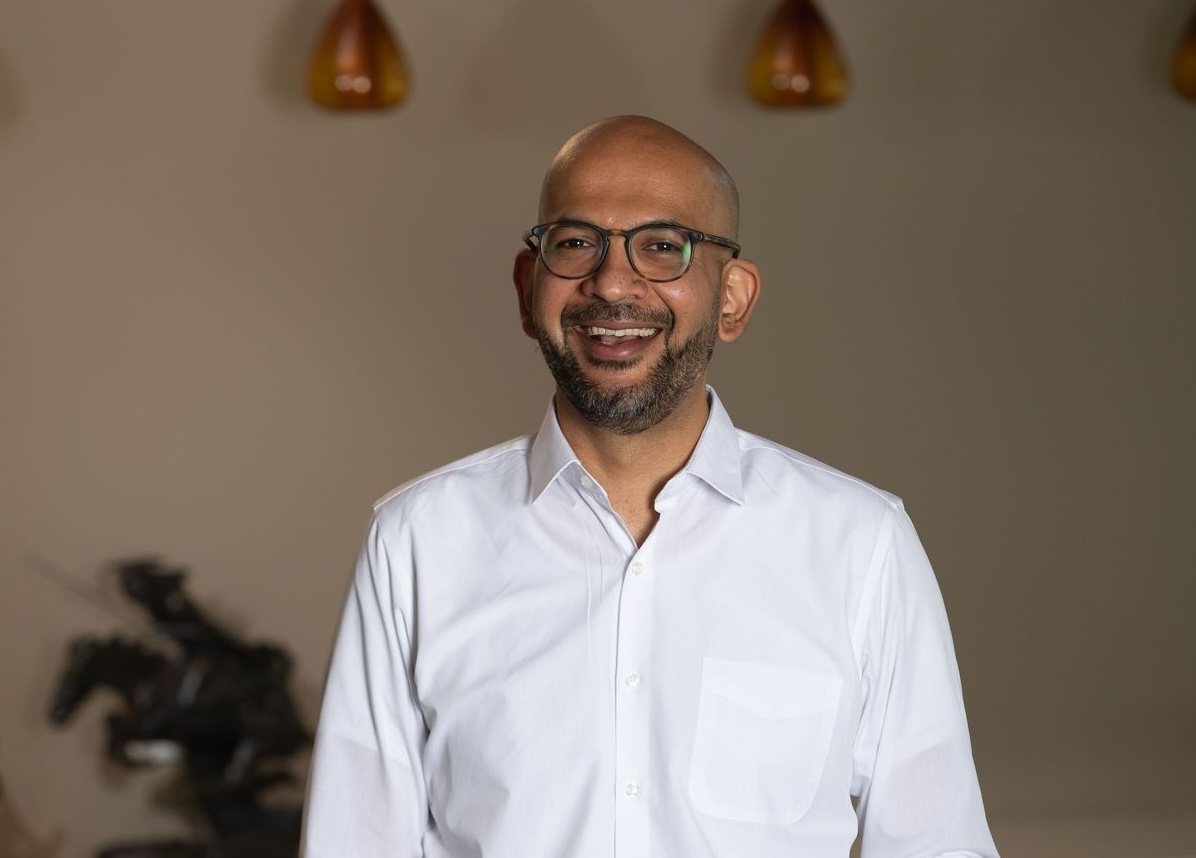
“The ambition we have isn’t to redevelop a geography or just to create a commonwealth through infrastructure investing,” says 1803 Fund’s Rukaiyah Adams, a seasoned investor who grew up in the neighborhood. “It’s to demonstrate a new way of doing capitalism.”
The acquisition of Albina Riverside, a three-acre former grain silo site on Portland’s east bank, along with over seven acres of properties in the city’s Low End district, will anchor a billion-dollar “impact infrastructure” initiative that aims to create lasting value and ownership for Black communities. 1803 Fund is looking to raise an additional $600 million from philanthropic, institutional and impact investors for the effort.
Adams, who has managed investments for Meyer Memorial Trust and Oregon’s public employees pension fund, accepted an invitation from Knight two years ago to lead Albina’s rebuild. She says she insisted on bringing in as board members former Nike CEO John Donahoe and Larry Miller, chair of Nike’s Jordan brand.
Another condition: The 1803 Fund’s portfolio would remain in long-term collective ownership by the Albina community. Plans call for the private equity “for the people” fund to exit to a community-owned real estate investment trust in five to seven years.
“We want to make money, but we don’t want to make so much money that we’re extracting bone marrow from a community that needs it,” Adams told ImpactAlpha. “We need to share some of that wealth with the community. So these investments we’re making, we’re trying to demonstrate that you can seek profit without being extractive, exploitative, destructive.”
Made in Portland
1803 Fund takes its name from the year York, an African American member of the Lewis and Clark expedition, set out on that two-year mission to explore the newly acquired Louisiana Territory. After returning, York was denied both pay and freedom; he was not emancipated from enslavement until about a decade later.
In their initial phases, the newly-acquired projects are projected to create hundreds of jobs and close to $700 million in economic impact in the Portland metropolitan area. Adams plans to hire Black developers and other contractors for the projects and to share ownership of the assets with the Albina community, through the publicly-listed REIT owned by local residents.
“They can own a compartment of their community,” she says.
The 1803 Fund’s revitalization strategy is part of a range of initiatives to expand community ownership of land, housing and commercial real estate across Portland’s underinvested and historically overlooked neighborhoods. Adams also chairs the board of the Albina Vision Trust, a community-led nonprofit organization created in 2017 to buy back and redevelop land, housing and real estate in Black neighborhoods, while also creating pathways for local residents to become owners.
In East Portland, a Community Investment Trust is allowing local residents to buy shares in a neighborhood shopping center for as little as $10 a month (see, “This strip mall in Portland is helping neighborhood families build wealth and community ownership”).
The 1803 Fund is looking for both institutional investors and philanthropic partners. For the commercial aspects of the projects, she expects financial investment to come from donor-advised funds, traditional institutional investors and impact funds.
“We are actually doing stuff at scale here that is amazing,” Adams says. “We’re trying to buy a whole zip code and demonstrate that we can build a community for Black people and children, and that that endeavor can be profitable — but profitable in a bond-return framework, not in an equity-return framework.”
Rich uncle
Like Knight, Adams grew up in Portland, where her family has lived for generations. Knight was raised in the white working-class neighborhood of Eastmoreland. Adams grew up on Northeast Roselawn Street in “the projects,” government-subsidized public housing for low-income residents.
“When Phil was starting Nike, he would run through the city, and he would run through the Black part of the city,” Adams says. “So he knew the neighborhood I had grown up in.”
As Knight’s wealth grew, he helped fund youth sports programs in Albina. Adams, who played basketball growing up, was part of one of these programs. Knight also funded scholarships for students like Adams to attend the Caitlin Gabel School, one of Oregon’s most prestigious private schools. Adams earned a J.D. in corporate law from Stanford University Law School in the late 90s.
Adams wouldn’t meet Knight until she returned to Stanford for business school, where he had graduated in 1962. During Adams’ first year at Stanford, Knight provided the $105 million down payment for the Knight Management Center at Stanford’s Graduate School of Business.
“Someone on his team was like, ‘Hey, there’s actually one person who’s been through all these programs you’ve been funding over the years, would you like to meet her?’” With teary eyes, she said, “It gave me a chance to say, ‘Thank you, and if you wonder what the present value of all of that money is, it’s me, and this is what I’m doing with my life.’”
With her MBA, Adams became a mergers and acquisitions lawyer for large-scale private equity transactions. At The Standard, a Portland-based provider of insurance, retirement and investment products, she managed billion-dollar portfolios. Adams also served as chief investment officer of Meyer Memorial Trust, one of the largest charitable foundations in the Pacific Northwest, and chair of the Oregon Investment Council, which manages the assets of the Oregon Public Employees Retirement Fund.
Those experiences sharpened Adams’ investing instincts. She refers to herself as a “shark,” which resonated with Knight when he called her to run the 1803 Fund.
“His view was, ‘I don’t believe that transformation for communities will happen through charity. I think it will take someone who thinks like an owner and who understands risk,’” Adams recalls Knight telling her.
Adams says Knight feels like a rich uncle, and sometimes like a sports coach offering a pep talk.
“He said to me, ‘I want you to go big and go big before I die. Anybody gets in your way, run them over. Go for it,’” Adams says. “And, oh my gosh, we are going for it.”
‘Modern pitchforks’
Throughout much of the 20th century, Albina’s inner-city neighborhoods bustled with Black-owned barber shops, jazz clubs, schools and churches. Waves of urban renewal in the 1950s and 60s, including through the use of eminent domain to build Interstate 5 and expand Emmanuel Hospital, displaced much of Albina’s Black families.
The upheaval didn’t end there. Decades of redlining, discriminatory lending and, later, gentrification compounded the losses. By the 2010s, Black residents made up less than 15% of Albina’s north and northeast Portland neighborhoods, up from around 80% in the middle of the last century.
That share is even smaller today, and the former glory of Albina’s Black communities is obscured by homeless camps on city blocks and blighted homes and commercial buildings.
“Other people see risk and poor and Black,” Adams says. She sees opportunity. 1803 Fund plans to acquire another $17 million in real estate in the coming months. The real win will come when locals like Adams’ mother can invest in the projects through the community-owned trust.
“Growing up here, people like my mom didn’t have a retirement fund or down payment for a home. But she could invest $4,000 a year into a community REIT,” she says. “What I’m trying to do is disrupt the ownership model for homes. People don’t need to fully own their homes – they can own a part of it through a REIT structure”
Adams says Portland’s Albina community is ready for a rebuild, but that she and other local leaders worry about “the modern pitchforks and fire.” The reference is to historically-thriving Black neighborhoods in the US that were destroyed in white supremacist backlashes, such as Wilmington, North Carolina, in 1898, Springfield, Illinois, in 1908 and Tulsa, Oklahoma’s Black Wall Street in the Greenwood neighborhood in 1921.
“I’m thinking about Greenwood and Black Wall Street and the way that spaces that are clearly designed for Black financial wellbeing are burned down,” says Adams, as she goes out to fundraise for the billion-dollar downtown revitalization initiative.
In Portland’s southern neighborhoods, President Trump has ramped up US Immigration and Customs Enforcement operations and recently moved to deploy the National Guard in response to local protesters his administration has labeled “Antifa terrorists.”
She says she’s not worried about attacks related to diversity, equity and inclusion, or DEI.
“We’re not asking for inclusion or equity. We’re doing our own thing,” she says. “Portland will have to include us because we’re the best thing happening in this town.”