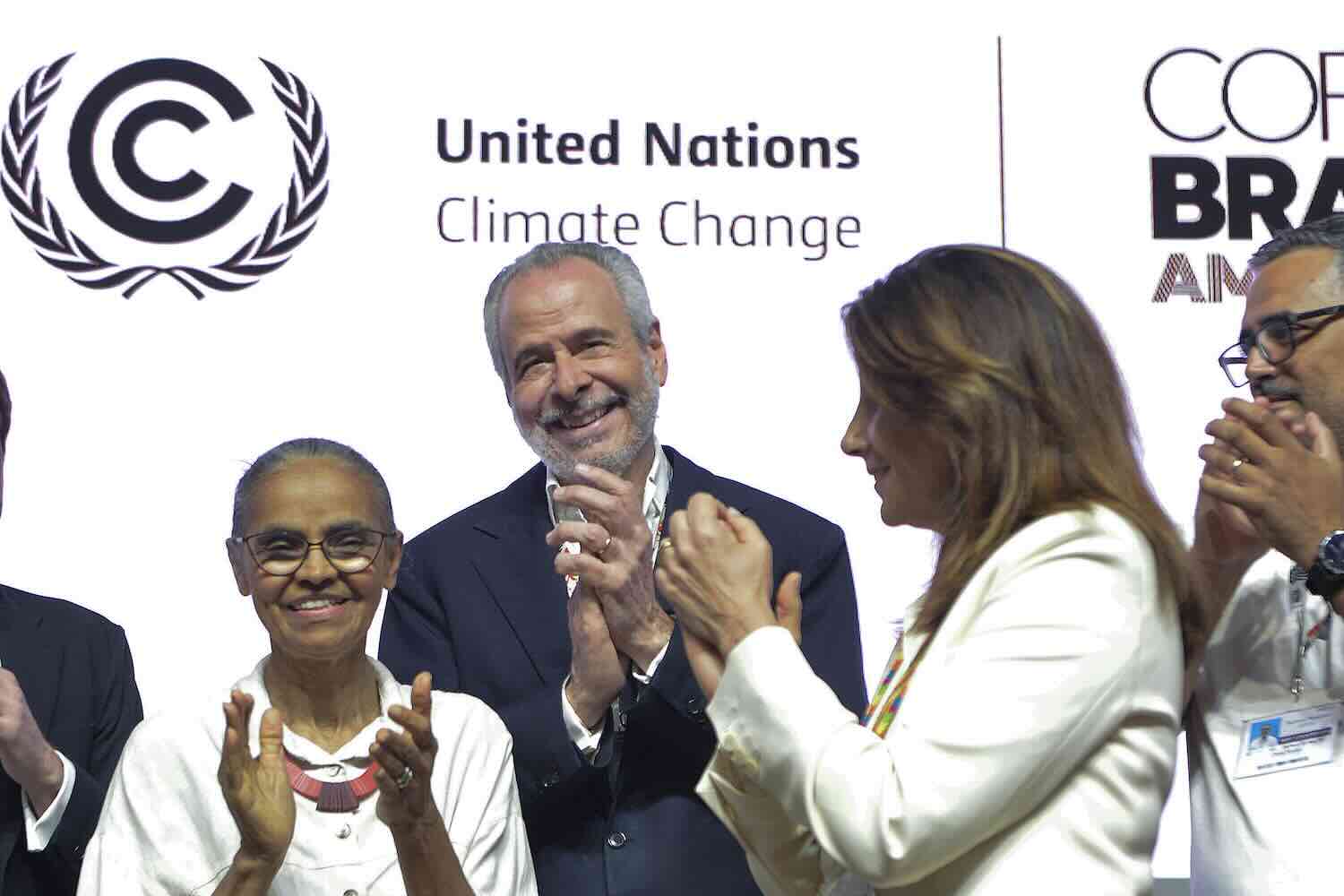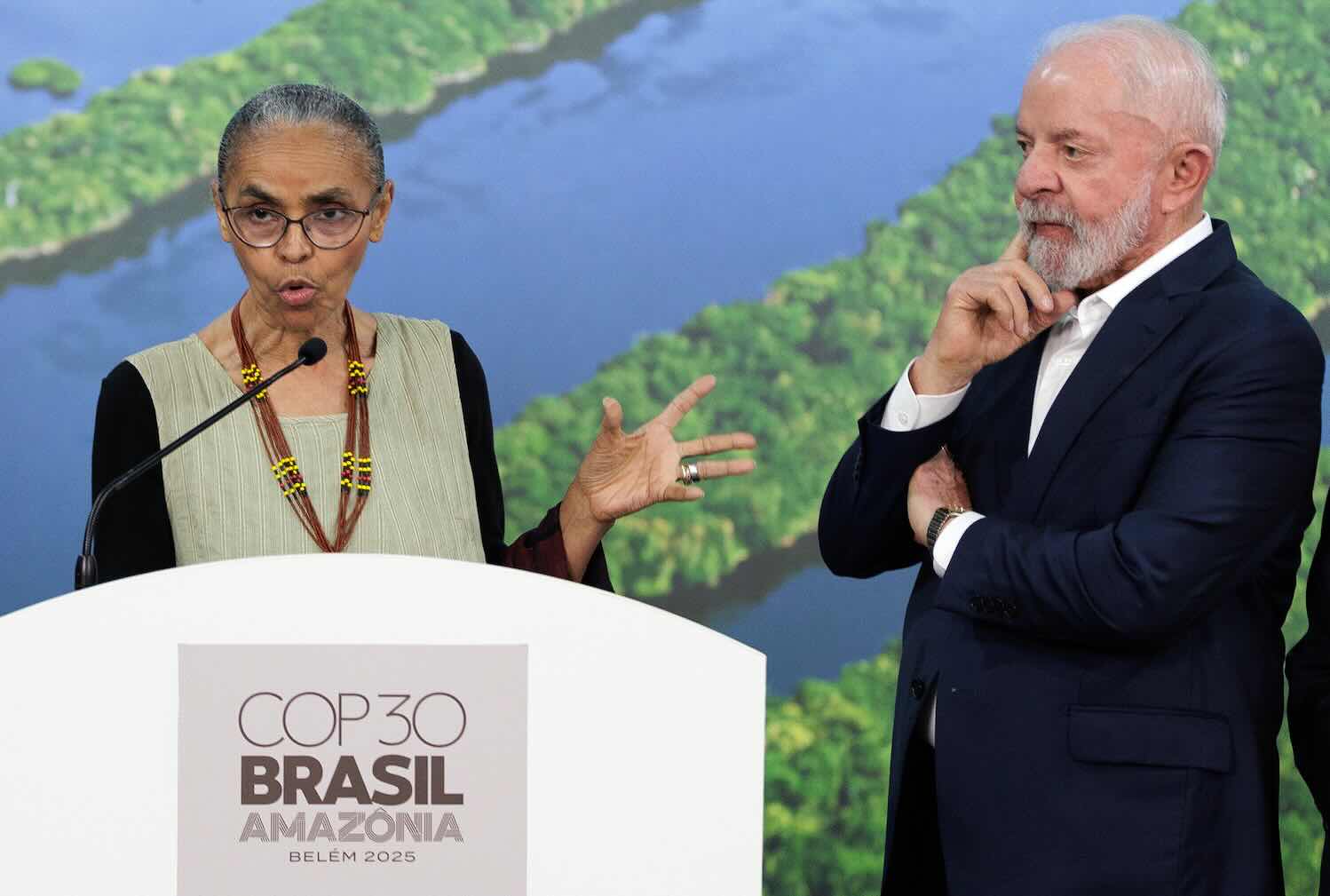
Brazil’s environment minister had a ready metaphor when the question of phasing out fossil fuels came up. “When we have a terrain that is quite grim, it is good that we have a map,” Marina Silva told negotiators at the 30th Conference of the Parties, or COP30, in Belém. “But the map does not force us to travel, or to climb.”
Her careful phrasing captured the awkward position Brazil found itself in as host of this year’s climate summit, at a time when appetite for global climate action is taking a back seat to economic issues in many regions. The government declined to put fossil fuel phase-out language, agreed to at COP28 in Dubai, on the official agenda and kept it out of behind-the-scenes consultations as well.
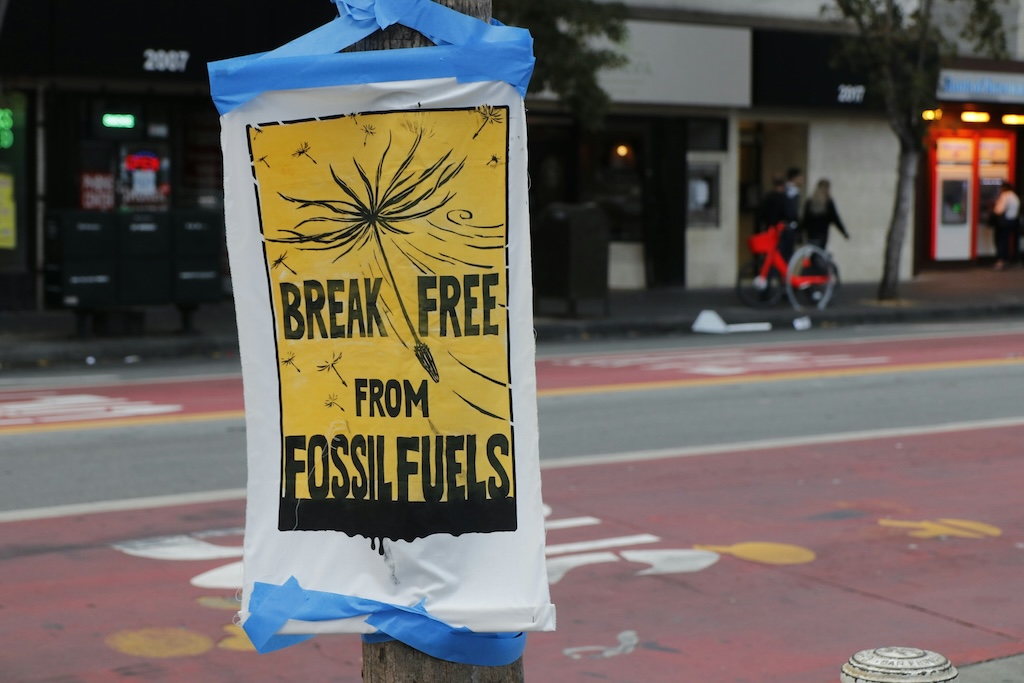
Just days earlier, at the Summit of World Leaders, President Luiz Inácio Lula da Silva had publicly called for the world to “overcome dependence on fossil fuels.” And this week, more than 80 countries from Africa, Asia, Latin America, the Pacific and Europe pressed for a formal roadmap building on COP28’s goal to “transition away from fossil fuels” — language Saudi Arabia and other petrol producers have worked hard to weaken.
The fossil fuel finessing is just one of many contradictions as the climate talks draw to a close this week.
Implementation COP
Expectations were unusually high for COP30, arriving after three straight conferences held in undemocratic petrostates. Many arrived in Brazil hoping COP30 would break from years of sweeping declarations and modest follow-through. And that Brazil, home to a vast expanse of the Amazon forest and a diverse Indigenous population, would elevate the role of nature, Indigenous wisdom and the Global South. Lula set a goal of cutting national emissions by up to 67% by 2035.
The reality has been more challenging. A lack of accommodations in Belém, at the mouth of the Amazon river, kept many government and business leaders away. The Trump administration, which has begun withdrawing from the accord, sent no one. Former vice president and Generation Investment Management cofounder Al Gore and California governor Gavin Newsom were among the handful of high-profile US attendees. China’s Xi Jinping also skipped the talks. Many business leaders preferred to attend pre-COP events in Rio and São Paulo.
And despite the focus on Indigenous voices and the participation of some 900 Indigenous representatives granted access to the ‘Blue Zone,’ local communities felt compelled to stage protests to call attention to mining and other corporate incursions on their land and to demand to be heard.
The energy that was present at pre-COP events was less evident in Belém, Mark Gough of the Capitals Coalition, an impact accounting group, told ImpactAlpha upon arriving home from Brazil this week. “I didn’t get the feeling that we were moving into action.”
And, with finance sidelined on the official agenda, and wealthy nations crying poor, the goal of mobilizing $1.3 trillion annually for climate action in poorer nations, as outlined in the Baku to Belém Roadmap, seems elusive.
The stakes get higher each year. Global emissions must fall 42% by 2030 to keep the 1.5-degree target in reach. Instead, emissions keep rising, and current trajectories point closer to up to 3.1 degrees over the course of this century.
Still, COP talks have pulled off last minute surprises before. And climate advocates were hoping that, with Lula returning to the talks on Wednesday, negotiators would salvage the implementation COP. Indeed, by mid-week, climate finance and a roadmap to transition from fossil fuels were added to the still-evolving COP30 draft agreement. “This is one of those things that gathers energy,” UK climate envoy Rachel Kyte told Bloomberg.
What we’re watching:
Nationally Determined Contributions
A decade after the Paris Agreement, COP30 was supposed to be the year when countries ratcheded up their emissions reductions goals, known as “nationally determined contributions,” or NDCs.
According to Climate Watch’s NDC tracker, 118 countries have submitted new or updated NDCs by Monday. But notable gaps remained. India, whose emissions account for the global total, had not submitted an updated target. Vietnam, South Korea and Saudi Arabia were also absent from the list.
The new commitments, if achieved, would cut emissions by 12% by 2035 —far short of what scientists say is needed to stave off catastrophic warming.
Mobilizing private capital
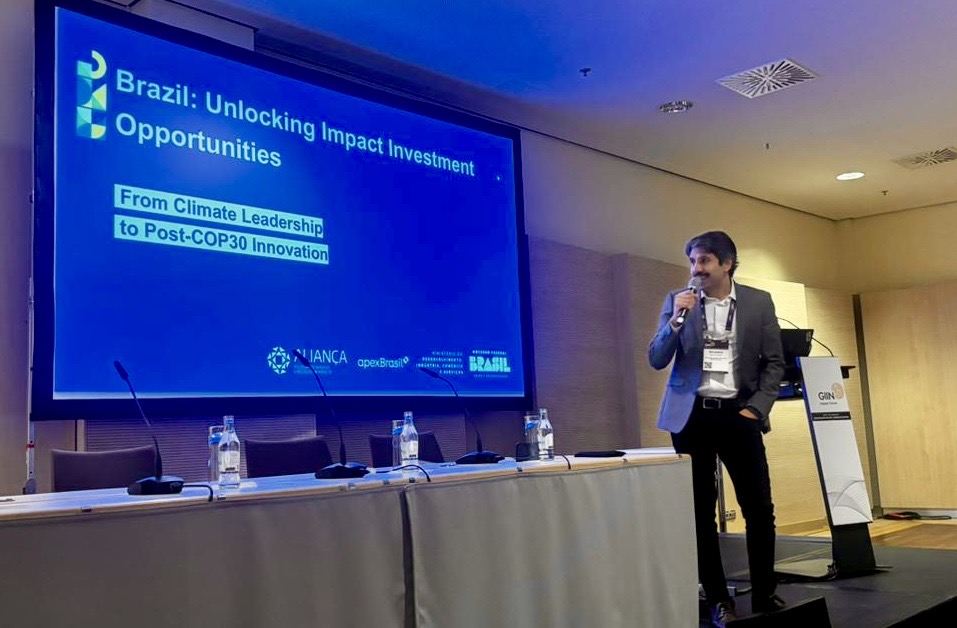
Beyond the negotiating tents, more promising dynamics evolved. Public and private actors announced climate commitments and charted pathways forward, moving capital toward climate solutions in ways the formal process could not.
At the Principles for Responsible Investment conference in São Paulo in early November, discussions among the institutional investors centered on climate investment opportunities and the broader role of private capital.
The Climate Bonds Initiative released findings showing how 12 countries — including Brazil, Costa Rica, and the Dominican Republic — have curated robust climate investment pipelines. The research identified $4.4 trillion in investable opportunities across clean energy, resilient infrastructure, and adaptation projects within these countries.
“Tremendous opportunities in emerging markets are there though they are not broadly understood by the global investor community,” PRI’s Lizeth Palencia told ImpactAlpha. Asset owner demand for emerging market diversification is growing, she said, and “investment managers should take note.”
Nature-based solutions
Corporations, a key piece of the climate financing equation, also stepped up — particularly Big Tech companies looking to reduce their sizable and growing emissions from data centers. Google purchased 200,000 tons of CO2 removals from Brazilian carbon removal company Mombak. Salesforce expanded watershed resilience programs across Latin America. The Symbiosis Coalition, founded by Google, Meta, Microsoft and Salesforce, launched an advance market commitment to contract up to 20 million tons of high-quality nature-based carbon removal credits by 2030.
Brazil’s government-led blended finance program, Eco Invest Brasil, announced that it deployed $13.4 billion in its first year targeting ecosystem restoration and clean energy. The Tropical Forests Forever Facility, a mechanism to fund forest conservation at scale, reached $5.5 billion in commitments — still short of its initial $25 billion goal.
In other funding news, Capital for Climate said institutional investors had pledged $10.4 billion for nature-based solutions through 2027, signaling a readiness for the private sector to start investing in climate.
Philanthropies and donor nations committed $1.8 billion to support sustainable land right efforts for Indigenous Peoples and local and Afro-descendant communities. The Rockefeller Foundation invested $5.4 million for Brazil-led climate solutions, with investments supporting regenerative ecosystems and helping family farmers connected to public school meal systems.
Gordon and Betty Moore Foundation, in partnership with Brazilian impact fund Vox Capital, announced the Catalytic Capital for the Agricultural Transition, a new fund designed to restore Brazil’s degraded farmland.
Vox Capital also partnered with CAIXA to launch a private credit vehicle to support sustainable development efforts in Brazil. The Flora Fund, launched by WRI Brasil, will direct $10 million toward restoration in the country’s Amazon region.
Indigenous and local communities secured both land rights and direct financing. Donors surpassed their $1.7 billion pledge to support Indigenous-led land rights and climate resilience, and fourteen countries endorsed the first Intergovernmental Land Tenure Commitment, recognizing 160 million hectares of Indigenous and community lands.
Adaptation and Resilience
With increasing storms and damage fueled by climate change, even investors are hailing “the age of adaptation.” Building resilience in the face of mounting climate threats was a key theme at COP30.
A “loss and damage” fund, first floated at COP27 in Glasgow, Scotland, to compensate vulnerable nations recovering from climate disasters, is at last open for business. The Fund for Responding to Loss and Damage issued its first $250 million call for proposals.
That is welcome news for Jamaica and other Caribbean nations hit by hurricane Melissa last month. The fierce storm triggered a $150 million catastrophe bond payout for Jamaica, yet the island nation faces some $10 billion in reconstruction costs.
Germany and Spain kicked in $100 million for a new program to help poor countries adapt to a warming planet. Called Accelerating Resilience Investments and innovations for Sustainable Economies, or ARISE, the program is part of The Climate Investment Funds, a World Bank unit that provides low-cost, long-term financing to de-risk climate projects around the globe.
“Physical climate risks are predetermined for the next decades,” said PRI’s Palencia. “Mitigation remains essential, but adaptation is critical to ensure societal resilience.”
In Belem, the adaptation-focused venture firm Lightsmight Group received a $3 million grant from the Global Environment Facility and the Norwegian Ministry of Foreign Affairs to advance its ‘one-stop-shop’ that can provide equity, debt and technical assistance to companies building adaptation and resilience solutions.
Singapore-based Temasek, the $324 billion state-owned global investment company, this year called climate adaptation and resilience “one of the defining markets of the future,” and estimated that $1.3 trillion a year is needed annually to adapt to climate change.
At an agricultural innovation showcase at COP, The Gates Foundation made a $1.45 billion commitment to expand access to innovative adaptation solutions that help farmers across sub-Saharan Africa and South Asia build resilience to extreme weather.
The Latin America and Caribbean Water Investment Programme outlined a $20 billion pipeline for water security by 2030. The Belém Health Action Plan brought countries together to strengthen healthcare systems against climate impacts.
The Adaptation Fund, which finances climate adaptation projects in developing countries, announced $135 million in new pledges at COP30 and reported a project pipeline exceeding $1 billion. Brazil’s Earth Investment Engine, a mechanism for channeling capital to forest conservation and restoration projects, crossed $10 billion mobilized for nature-based solutions.
Industrial decarbonization
For the first time at a COP, negotiators included language on transition minerals such as lithium, nickel, and copper — acknowledging that transitioning away from fossil fuels shouldn’t create new extraction harms through mineral supply chains essential for the energy transition.
The energy transition is being fueled by the economics of cheaper, cleaner and better alternatives to legacy systems. The nonprofit Mission Possible Partnership has tracked, via its Global Project Tracker, 144 industrial-scale projects, mainly in emerging economies in the Global South, that are either operational or have secured funding. They include energy-intensive sectors such as aluminum, cement, chemicals and steel.
The Asian Development Bank and the World Bank committed $12.5 billion to the Association of Southeast Asian Nations Power Grid, a regional infrastructure project connecting power systems across Southeast Asia. A new Global Grids and Storage Council launched to mobilize financing for electricity grid upgrades and battery storage.
And the Global Environment Facility, a multilateral fund that supports climate and environmental initiatives, allocated $16 million to the United Nations Industrial Development Organization, which will use it to unlock $214 million in total investment for hydrogen projects.