
As Brazil prepares to host COP30 in November, the Amazonian bioeconomy is gaining momentum on the global climate agenda.
On the ground, there are positive signs that the Amazon’s economic future does not have to repeat its extractive past. For example, the largest impact accelerator in Brazil’s North region – AMAZ – is driving a new impact economy that puts the forest – and its peoples – at the center of prosperity.
Whether in river logistics, the valorization of traditional knowledge, or forest regeneration, AMAZ and its portfolio of 14 businesses show that forest conservation and economic prosperity can go hand in hand.
An impact strategy rooted in place
AMAZ is coordinated by the Institute for the Conservation and Sustainable Development of the Amazon (Idesam). The accelerator’s portfolio spans sectors from river transport logistics to community-based tourism, indigenous fashion, natural cosmetics, regenerative agroforestry, and art. What connects these ventures is their commitment to sustainable natural resource management, ecosystem restoration, and ethical value chains.
Three examples show how this works on the ground:
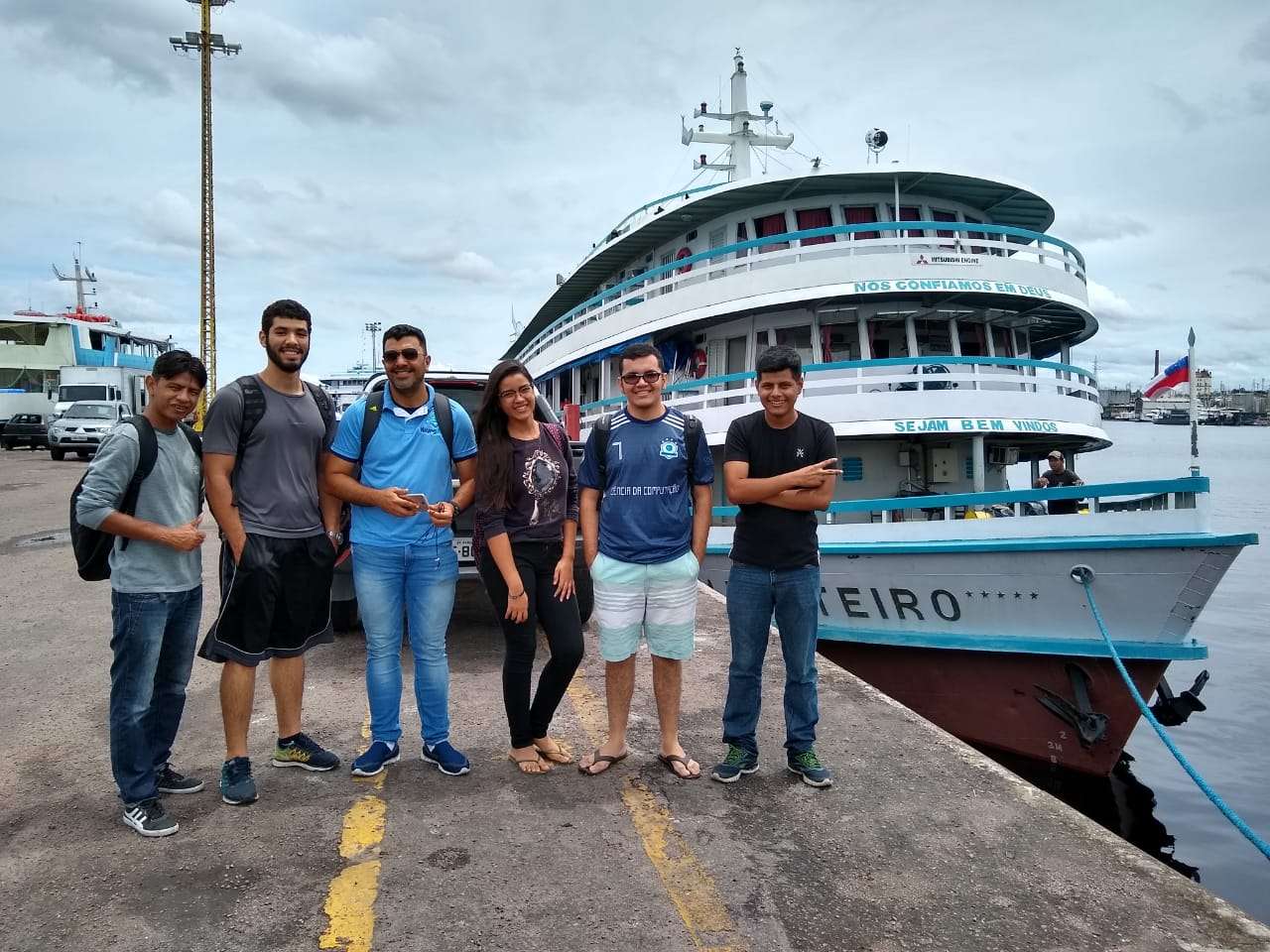
- Navegam is an online platform for purchasing river transport tickets in the Amazon, currently connecting municipalities in the state of Amazonas and expanding to other states in Brazil’s North. By digitizing ticket sales and providing reliable information, Navegam reduces mobility barriers for riverside communities and strengthens sustainable logistics.
- Mazô Maná is a brand that combines Amazonian foods with traditional knowledge. Its headquarters are in Altamira, Pará – a region known for its socio-environmental significance. In addition to sourcing from responsible supply chains, the company has allocated 10% of its equity to traditional Amazonian peoples, embedding community values into corporate governance.
- Floresta S.A. is implementing regenerative agroforestry systems focused on perennial fruit production and high-value timber. Each planted hectare represents both an environmental gain and an economic asset, integrating innovative techniques with local community participation.
More than business: Toward “bem viver” in the Amazon
AMAZ’s aim goes beyond scaling startups. Its goal is to ensure these ventures shape public policy and economic models that secure “bem viver” – the good life – and the long-term presence of traditional populations in their territories.
This approach has broad implications:
- For impact investors, it points to a concrete pipeline of scalable businesses with clear socio-environmental return metrics.
- For policymakers, it offers case studies to inform incentives and regulations for the bioeconomy.
- For other ecosystems, it proves that integrating communities, science, and entrepreneurship is a viable – and profitable – path for just economic transitions.
From metrics to momentum
AMAZ Impact Accelerator released its 2025 impact report on July 28 – the global day for nature conservation. The numbers tell a powerful story: operations spanning more than 6.4 million hectares across the Brazilian Amazon, 1,959 families and 45 social organizations directly benefited, and R$ 4 million (about $800,000) paid to local partners in 2024 alone.
Behind these figures lies a clear thesis: the bioeconomy is not just an environmental opportunity but a driver of sustainable development and dignified livelihoods for traditional communities.
As COP30 approaches, AMAZ offers a tested blueprint for scaling impact-driven businesses that align climate action with inclusive economic growth. The portfolio shows that scalable, measurable impact models are already in operation. The challenge is no longer to prove feasibility but to mobilize resources and policies to replicate and scale them.
The full 2025 AMAZ Impact Report is available here.
Mariano Cenamo is the CEO of AMAZ and the director of new business at Idesam.