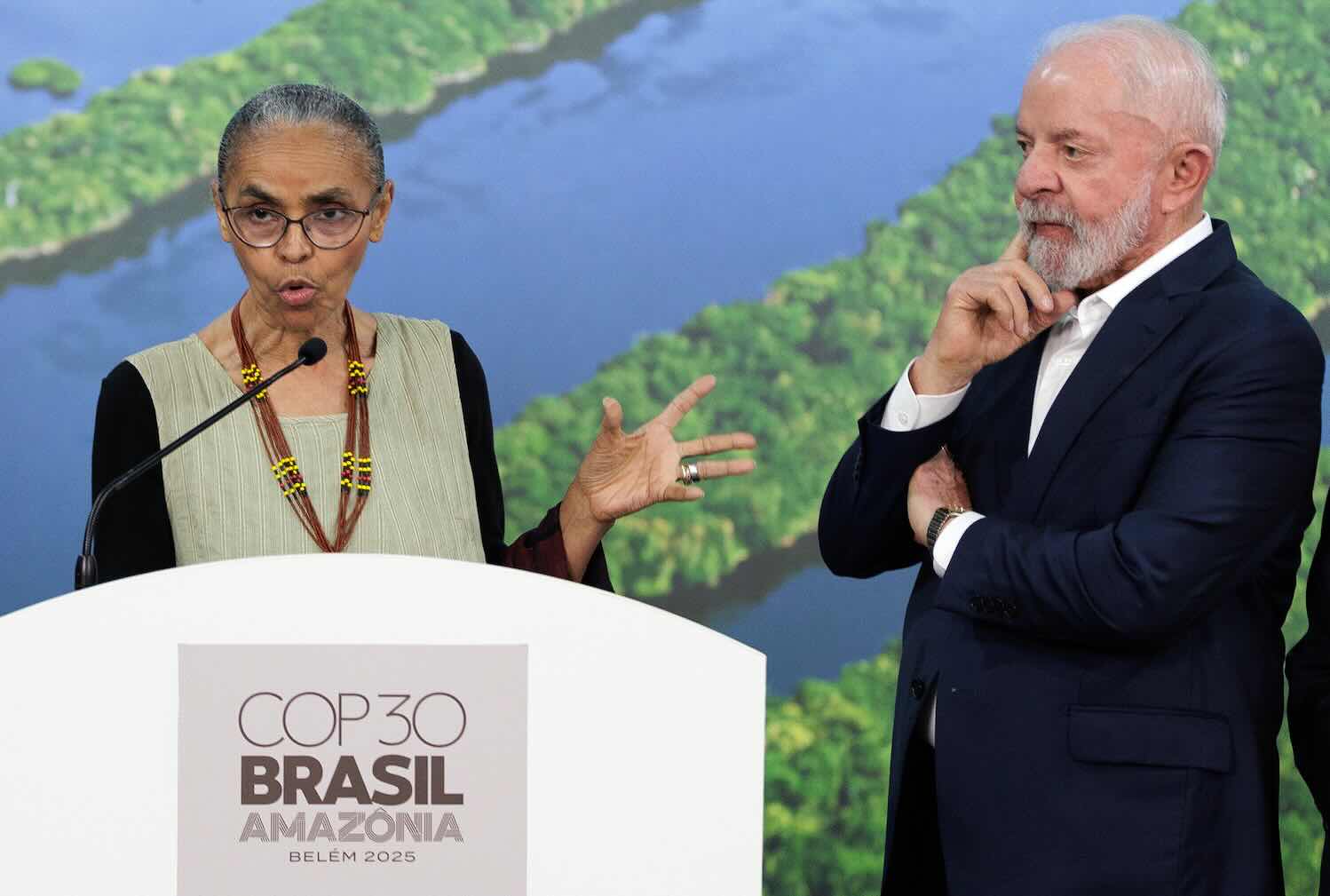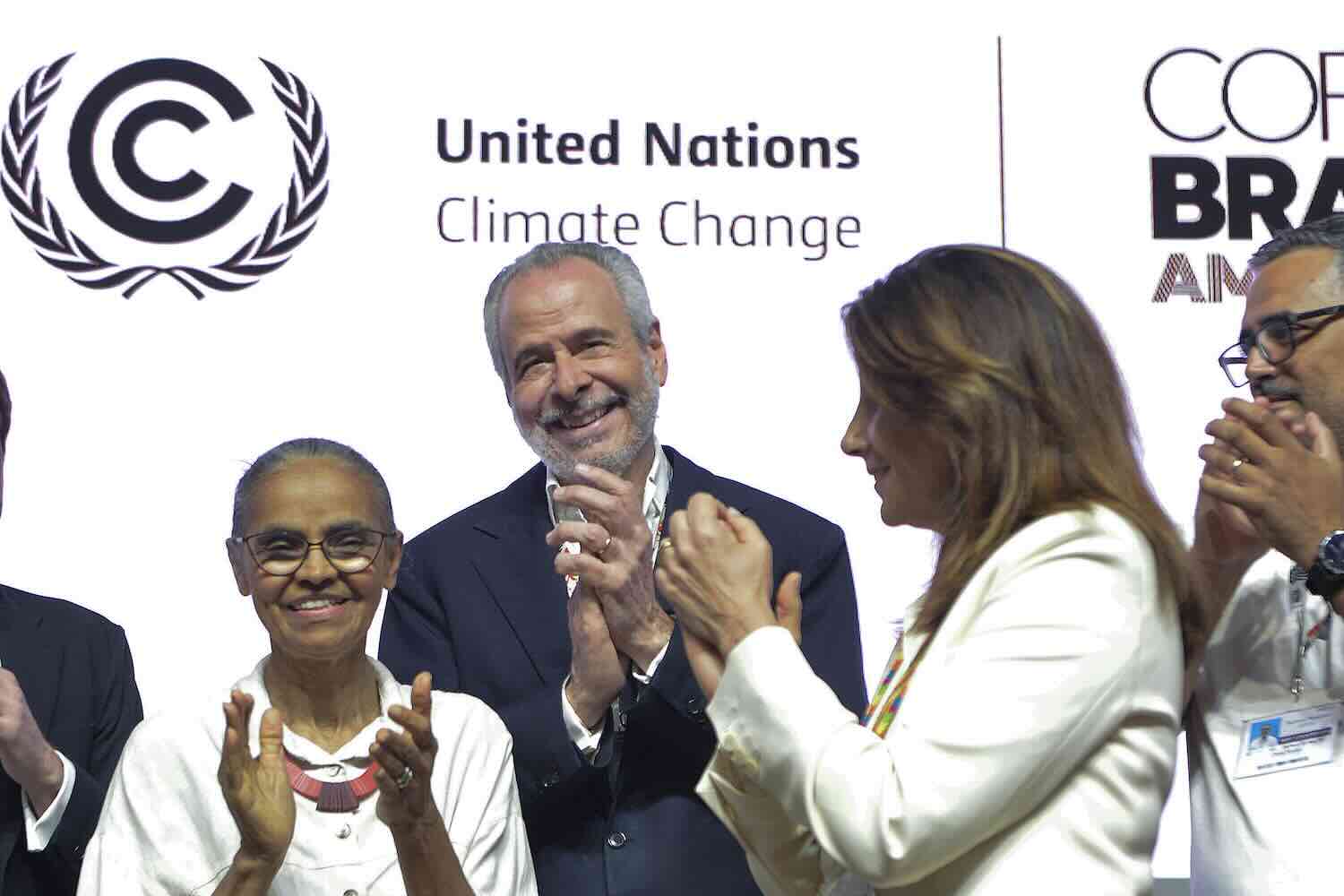
Climate negotiators at COP30 braved sweltering heat, tropical downpours and a fire that erupted on Thursday and pushed the talks into the weekend. In the end, the deal they reached was seen by climate advocates as a bitter compromise.
The final “Belém package” made no mention of fossil fuels, much less a hoped-for roadmap to phase them out. Nor did the talks, held in Belém, Brazil near the Amazon rainforest, deliver on a plan to reverse deforestation by 2030. Brazil’s Tropical Forests Forever Facility — a signature initiative aimed at raising $25 billion to stave off deforestation — mustered just $6 billion in contributions. The best that could be said, according to many participants at the talks, was that the talks did not collapse altogether.
“Despite pressure from Washington and the fossil fuel industry, the world refused to backslide at this year’s climate talks,” said NRDC’s Manish Bapna in a statement. “Though the pace of progress was slower than what the climate crisis demands, countries continued to march forward in the face of unprecedented headwinds.”
The decade since the 2015 Paris agreement represents a “lost decade” for climate action, a group of climate scientists said in a report published over the weekend. The scientists, led by Johan Rockström of the Potsdam Institute for Climate Impact Research, warned that climate tipping points are close to being reached and that we could fast be approaching a “hothouse Earth” scenario if immediate action is not taken, including reducing emission by 5% a year, transforming the global food system within the next decade, and removing an additional 5 billion tons of carbon dioxide from the atmosphere each year.
Adaptation
The 194 participating nations agreed to triple climate adaptation finance for emerging markets to $120 billion a year by 2035, still far short of the $300 billion in public funding estimated to be needed annually. The talks began the process of identifying indicators to assess global adaptation progress on water, food, health, infrastructure, and livelihoods.
Also gathering steam was an effort to make countries’ adaptation plans more investable. A National Adaptation Plan Implementation Alliance will work over the next year to support the implementation of the country adaptation plans, replicate promising solutions, and mobilize public and private investment.
The World Resources Institute estimates that each dollar of public climate adaptation financing mobilizes only an additional 11 cents of private capital. Last month, Netherlands-based Climate Fund Managers raised nearly $1.1 billion for Climate Investor Two, one of the largest climate adaptation infrastructure funds ever for emerging markets.
Fossil fuel phase out
The fossil fuel phaseout plan was among the most contentious issues. At COP28 in Dubai, negotiators agreed to “transition away from fossil fuels,” the first mention of the primary cause of global warming ever in a “conference of the parties.”
Fossil fuel interests and petrostates including Saudi Arabia have since fought fiercely to keep any further language out of subsequent agreements. They prevailed over the 80 or so countries, led by Colombia and European nations, that lobbied for the inclusion at COP30 of a roadmap that would begin to move the world away from fossil fuels. The final text refers only to the “UAE Consensus.”
As a compromise, Brazil said it would host a parallel effort over the coming year to develop a roadmap to transition away from fossil fuels. Also outside of the official COP process, Colombia and The Netherlands will host a gathering in 2026 to advance international cooperation on a just transition away from fossil fuels.
Petrostates “may be able to veto diplomatic language, but they can’t veto real-world action,” declared former vice president Al Gore in a statement. “Countries, companies, cities, and states worldwide are moving forward to adopt the clean energy solutions that will create jobs, grow economies, and prevent the health catastrophes associated with burning fossil fuels.”
Global trade
With the EU’s carbon border adjustment mechanism — a tax on the embedded emissions of imported goods such as steel and fertilizer — set to go into effect next year, trade became another contested issue. Countries including China, India and Saudi Arabia argued that it will make their goods more expensive. The final COP30 text raised the issue of global trade for future talks.
Real world COP
For all its flaws, or maybe because of them, COP30 was “by far the most meaningful COP that I’ve attended,” said Marilyn Waite of the Climate Finance Fund in a LinkedIn post. “Imperfect drainage systems. Beautiful nature. Broken concrete on the sidewalks Colorful people. Dilapidated buildings. Flavorful cuisine. Belém and its surroundings just felt like the real deal of our world.”
As such, she said, it offered “a perfect illustration of why economic diversification is critical, why providing quality jobs must be core to the climate-friendly world we are building, and why a GHG emissions-first approach in any climate strategy is a non-starter for the Global Majority.”
“Livelihoods. Dignity. Beauty. Culture. Heritage. Future Generations. Small and mid-sized business. Investment for the long-haul,” she added. “That’s what climate action has to be heading into 2026.”