Not currently available for streaming (trailer)
Spoiler warning: High
Total score: 12 (Accuracy: 5, Entertainment: 4, Impact: 3)
In late 2007, the residents of Providence, RI became aware of a peculiar story, the details of which would soon make national headlines.
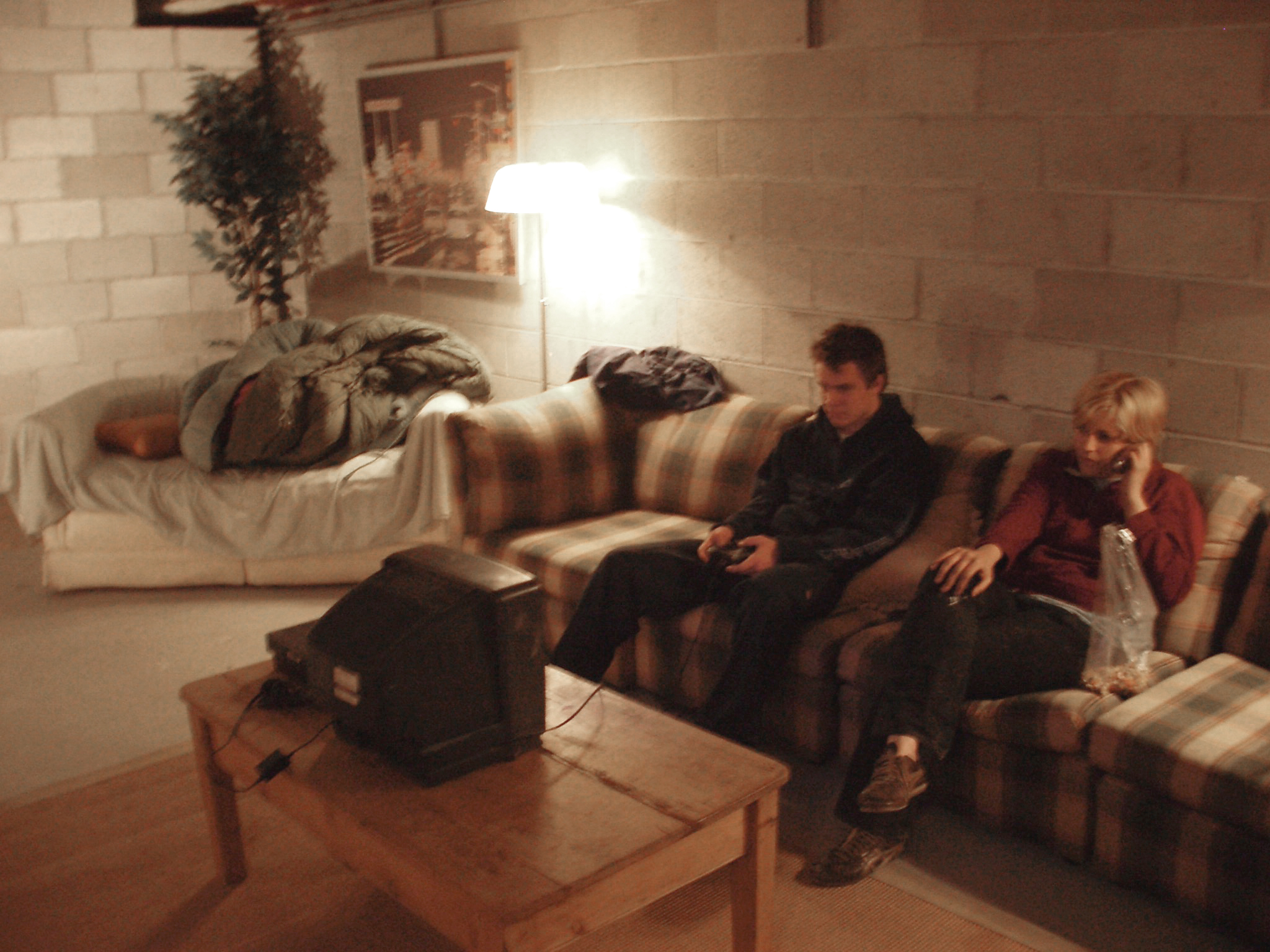
A group of eight local artists had turned a hidden, unused space within the Providence Place Mall into a 750-square-foot secret apartment. They managed to stay undetected for four years, during which time they furnished the apartment with several couches, a full dining room set, a TV, and even a door with their own set of keys. They even had plans to install a bathroom and wood flooring before they were finally caught and evicted by mall security.
Now for the first time, the artists are speaking out about their experience in a new documentary, appropriately titled Secret Mall Apartment, which first premiered at the 2024 SXSW Film Festival and was produced by Jesse Eisenberg. I recently had an opportunity to watch a screening of the film courtesy of the Woods Hole Film Festival.
I had expected Secret Mall Apartment to be a rousing tale of the strange obstacles people face when they’re doing something clearly illegal and subversive. And there was plenty of that, including a scene of the artists carrying cinder blocks through an emergency door that felt like a Monty Python sketch. But the film carried a deeper meaning as well that warrants our attention.
First, it’s important to understand some of the motivation for undertaking this kind of subterfuge. What initially started as a challenge between friends quickly turned into an art project that was part adventure and part protest movement. The artists shared a deep frustration about being pushed out of local housing (across from the mall no less) by developers who cared more about making a quick buck than what would happen to the local community. In the words of one of the artists featured in the documentary: “There was no effort to bring people along.” The mall, positioned by politicians and developers as the centerpiece of an economic revitalization plan, was therefore a natural target for the artists’ ire.
While the events of Secret Mall Apartment took place in the early 2000s, the issue of housing insecurity is more urgent than ever. Housing prices have hit historic highs. Rents are going up in many of the biggest cities. In many parts of the country, buying a typical home right now would require an annual income of at least $106,000, up 80% from what was needed to afford a home in 2020.
So it’s no wonder that more and more people are exploring unusual living situations. Until recently, I was living in a 7-person, vegan-only household in Brooklyn. Perhaps not an ideal living situation, but the rent was more affordable than any other apartments I could find. Sacrifices had to be made – my privacy for my wallet.
Millions of Millennials and now Gen Z’ers are making similar decisions.
- In 2023, roughly 1 in 3 U.S. adults aged 18 to 34 were living with their parents. (CNBC)
- In 2018, nearly 1 in 3 U.S. adults were living in shared housing with someone who wasn’t a spouse or partner. (Pew Research Center)
- In 2018-2022, the average renter in the New York City area spent around $1,710 or 33.5% of their income on rent. As many as 30% of low-income renters spent more than 50% of their income on rent. (NYC Comptroller)
The precariousness of these types of living arrangement was made very obvious during the Covid-19 pandemic when the virus would often rampage through a household. These arrangements also aren’t very conducive to building a family, working from home or hosting friends.
There are plenty of impact investors focused on affordable housing, often with an explicit focus on creating more units of housing that are accessible to lower and increasingly middle-income populations. There are all sorts of societal and economic advantages to providing affordable housing to people, from reducing homelessness to increasing economic activity within the community.
It’s not hard to see how the protagonists of the Secret Mall Apartment would be able to dedicate more time and energy to their art if they didn’t have to worry so much about housing and other living costs. (FWIW, the Providence artists collective is known for Tape Art, which involves using masking tape to create stunning murals and other artwork.)
It’s a similar story for the millions of people facing housing insecurity. If they can’t guarantee a roof over their heads, especially if they have a family to support, then people are obviously going to be cautious about making any strategic investments in their own self-improvement, whether that means taking care of some long overdue healthcare issues or paying for car repairs or going back to school.
Not everyone has the means or wherewithal to infiltrate an “underutilized space” and build a home for themselves, as fun as the artists in the Secret Mall Apartment may make it seem. For the rest of us, we need the public and private sectors to do a better job of providing affordable housing to everyone.
Dmitriy Iosolevich is the founder of 17 Communications.