
Directed by Rosanna Xia & Daniel Straub
Entertainment: 4, Impact: 4
WHFF Director’s Choice Award winner for Fortitude in Filmmaking
“Out of sight, out of mind“
Anybody who’s read Rachel Carson’s Silent Spring is likely already familiar with the story of DDT. The magical pesticide that was first used during World War II to limit the spread of insect-born diseases like malaria and typhus among troops, and then was sprayed indiscriminately all over America for much of the 1940s and 1950s to protect crops and rid households of pests. It wasn’t until reports started appearing about animals dying that DDT was banned by the federal government in 1972.
But as is the case with many other forever chemicals, the DDT story just doesn’t want to die.
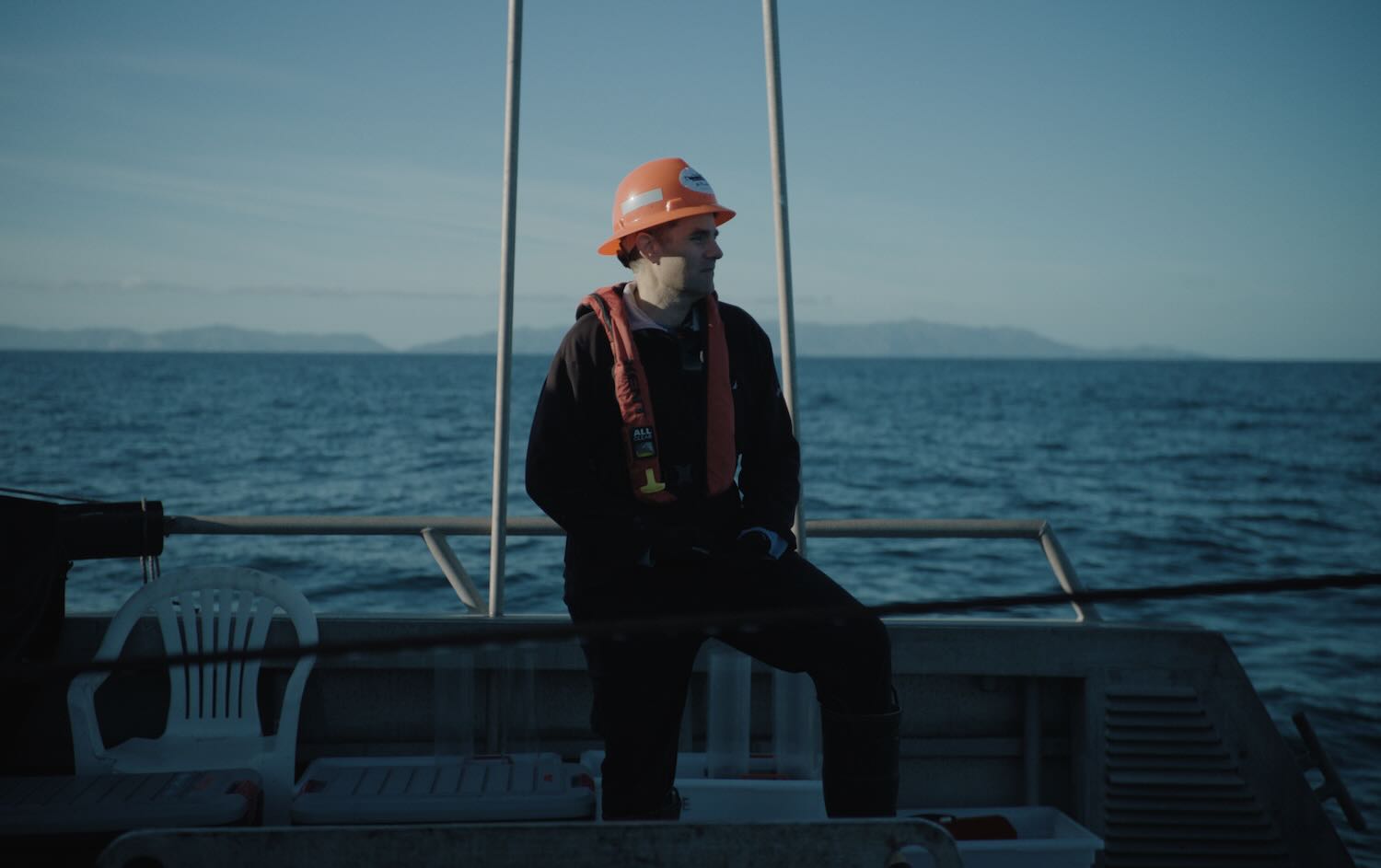
The latest chapter in the haunting DDT story comes courtesy of Rosanna Xia, an environmental reporter for the LA times, and David Valentine, a professor of geochemistry and microbiology at UC Santa Barbara. Together, they investigated mysterious reports of barrels containing toxic waste being dumped into the Pacific Ocean off the coast of southern California through much of the 1980s.
The culprit was fairly obvious since the nation’s largest manufacturer of DDT, a now defunct company called Montrose Chemical Corp., was based in Los Angeles from 1947 to 1982. But the consequences were unconscionable – as many as half a million barrels littering the ocean floor, some already leaking toxic sludge.
Valentine’s reaction to seeing the barrels for the first time, courtesy of a deep-sea robot on loan from the Woods Hole Oceanographic Institution (WHOI), says it all: “Holy crap. This is real.”
The story of Xia’s investigation and Valentine’s shocking scientific findings is captured in a captivating new documentary feature called Out of Plain Sight. It’s a fitting title for the way that many companies and governments around the world continue to treat toxic waste – “out of sight, out of mind.”
But that’s why investigative reporting and visual storytelling is so important, illuminating what’s hidden and making it top of mind for everyone from scientists and policymakers to wildlife experts and community activists. I appreciate that, unlike many other nature or science documentaries, Xia and Valentine aren’t just narrators of the story – they are active participants in many of the research expeditions and are visibly upset at what the scientific studies unveil. This makes Out of Plain Sight the rare documentary where both the audience and the people on screen are on the edge of their seats, wondering what will happen next.
Perhaps the most shocking part of the investigation is that the dumping was considered completely legal at the time. There were entire businesses built around how to most efficiently dispose of toxic waste. The ocean was a natural choice. After all, there is a common adage that “the solution to pollution is dilution.”
But dilution doesn’t work when it comes to chemicals like DDT, which accumulates in animals’ tissues and fat and is capable of disrupting entire food webs.
One of the most heart-wrenching scenes from Out of Plain Sight was watching a team of marine scientists trying to save sea lions that were riddled with tumors. The source of the tumors was DDT in the sea lions’ food supply, specifically the hundreds of fish they eat each month.
The farther up the food chain an animal was, the more susceptible it was to the effects of DDT. This includes bald eagles and California condors, whose numbers began mysteriously dwindling in the 1990s despite nesting several miles from the area where the dumping took place. It also includes humans, with recent studies showing a potential link between DDT exposure and breast cancer.
If there’s a lesson to be learned from Out of Plain Sight, it’s how little we still understand about the Earth’s ecosystems and how delicate the linkages can be. A few million gallons of toxic waste may not sound like much when the Pacific Ocean holds an estimated 187 quintillion gallons of water (or 187 trillion million). It’s an infinitesimally small percentage that most people would treat as a rounding error.
But small things can have a big impact. Where we dump toxic waste, no matter the amount, can have far-reaching environmental and social impacts that we are only beginning to grasp.
We can’t continue to “treat the ocean as the world’s dumpster,” especially as more evidence shows that “our health and the ocean’s health are pretty inseparable.” Nor can we continue to indiscriminately pollute our air or water with chemicals that we justify using in the name of economic progress.
Actions have consequences, and those consequences won’t remain hidden forever.