Go to almost any film festival and you’re likely to hear filmmakers bemoan the dire straits of film financing. It’s never been harder to get an indie film project fully funded, and it’s even harder to secure a distribution deal with a major studio or streamer.
The vast majority of independent films never get a major theatrical run. Fewer than one-third of indie films generate a profit.
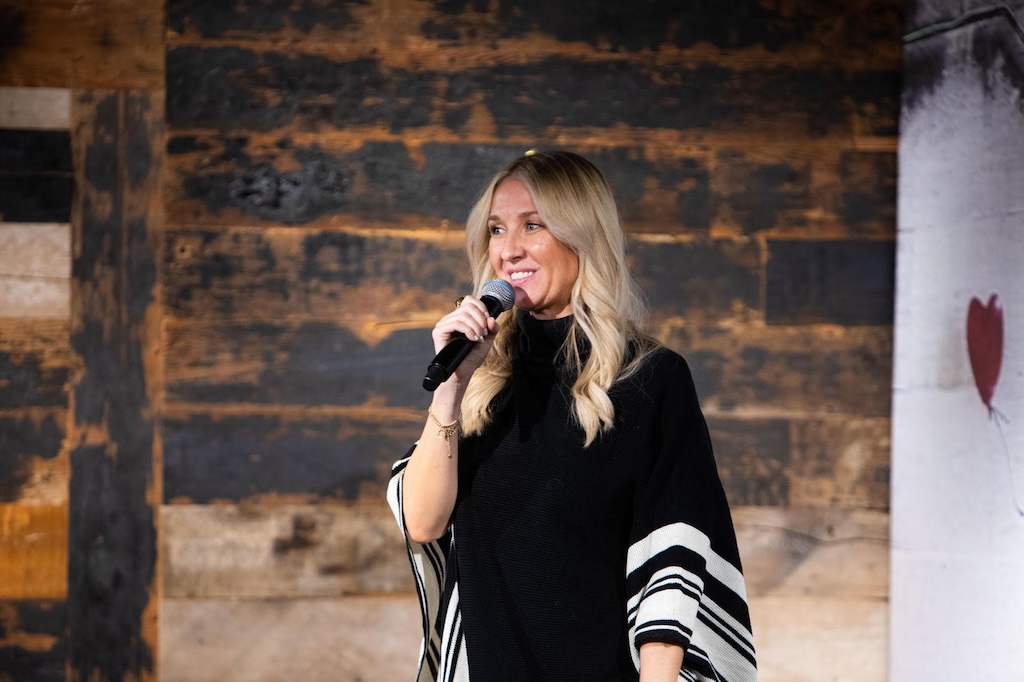
Lindsay Hadley was compelled by the power of storytelling to shift the zeitgeist to cofound Harbor Fund two years ago to try to buck the steep odds.
“Movies are empathy-making machines,“ says Hadley, a serial entrepreneur and CEO of the nonprofit film fund that finances movies and TV shows that inspire social change. “We live through narrative, and whatever story we carry in our heads is how we shape and define our lives.”
Hadley is bringing fundraising prowess and philanthropic zeal to the financing of independent films. Over the course of her career, including as a founding member and chief development officer for Global Citizen, an annual music festival with a mission to end extreme poverty, Hadley estimates her campaigns and events have raised more than $100 million and mobilized billions of additional dollars.
Harbor Fund has raised $15 million from more than 80 donors, $10 million of which has already been deployed across 20+ film projects, many of which come attached with A-list directors, producers, and/or actors. Hadley and her team hope to build on the growing interest in social impact storytelling to raise $100 million by mid-2028, which would put Harbor Fund in the top 1% of film financiers.
“We want to be category leaders,” says Hadley.
Impact engine
Much like a venture capital firm that spreads its bets across a number of different ventures, hoping at least one will generate outsize returns, Harbor Fund takes a portfolio approach that diversifies the risk of any one project. Investment proceeds from successful projects are recycled into a self-sustaining evergreen fund to reinvest in social impact films. The hope is that the evergreen structure will enable Harbor Fund to take bigger swings without having to re-engage donors each time.
“The goal is to unlock philanthropic dollars that are sitting in donor-advised funds or family foundations,” said Hadley. “These funders care about social impact, and they see Hollywood as the ultimate PR engine for social causes.”
This engine is now hard at work churning out films with explicit impact themes across Harbor Fund’s portfolio.
Some of the films are focused on social issues. “By Any Means” is a civil rights crime thriller starring Mark Wahlberg that follows a high-stakes investigation tied to racial injustice, bringing a mainstream lens to historic inequities in the American justice system. “Evicted” is a documentary film produced by Chris Pine based on Matthew Desmond’s Pulitzer Prize-winning book, “Evicted: Poverty and Profit in the American City,” about the families that faced eviction during the US housing crisis.
Environmental issues are also in the mix. “The Lake” is a documentary from Utah filmmaker Abby Ellis about the Great Salt Lake and the story of two intrepid scientists and a political insider who are racing against the clock to save their home from an unprecedented environmental catastrophe.
Films like “Hershey” challenge viewers to think about their own personal responsibility in helping protect and lift up different communities. The biographical drama based on the life of Milton Hershey starring Finn Wittrock and Alexandra Daddario explores how one man built an iconic American enterprise alongside a legacy of philanthropy and social impact.
“Orphan Myth,” produced by Téa Leoni, is part of a broader advocacy campaign, training its lens on “orphans” and how they are often removed from families. It takes a narrative approach to interrogate the concept of “otherness” and challenges the systems that define belonging, care, and social responsibility.
A few of the projects have generated enough interest to score distribution deals. “By Any Means” was acquired by Paramount and will have an extended 45-day theatrical release window. Hershey will be distributed by Angel Studios (which also worked on Andy Serkis’ “Animal Farm”) and released in theatres across the country this Thanksgiving. Other Harbor films, like “Flash Before the Bang,” “The Lake,” “Orphan Myth” and “Tutu,” are currently focused on the festival circuit.
Harbor Fund also has its share of A-listers on its Advisory Board – including Mark Burnett (“Shark Tank,” “Survivor,” “The Voice”), Gerard Butler (“300,” “Greenland,” “How to Train Your Dragon”), Katie Couric (longtime journalist for ABC, CBS and NBC), Mark Cuban (serial entrepreneur; star of “Shark Tank”), and Geralyn Dreyfous (acclaimed film producer behind recent projects like “The Librarians” and “All the Empty Rooms”) – that help add to the prestige of partnering with the Harbor brand.
As a bonus, all donors get a producer credit as well as invitations to exclusive screenings and the occasional opportunity for them or a family member to appear on-screen as an extra.
From empathy to impact
Measuring the social or environmental impact of these film projects can be fiendishly difficult, as we covered in an earlier piece on “Nonnas.” Hadley acknowledged that there’s no single metric or universal way to define success, but pointed at award-winning films like “Blood Diamond,” “Hotel Rwanda,” “Schindler’s List,” and “Taken” that have succeeded in breaking through into the zeitgeist and catalyzing action around an important social issue.
For example, the 2016 film Lion starring Nicole Kidman and Dev Patel offered a provocative portrait of the orphanage system and the deinstitutionalization of children. Executives at UNICEF were reportedly so inspired by the film that in 2018 they launched Project LION, which collaborated with national and state governments in India to implement family-based alternative care that has helped more than half a million children get the support they need.
The potential for this kind of real-world outcome is what has many donors interested in partnering with Harbor Fund.
Brooke Zaugg, a Harbor Fund backer who currently serves as the vice president for The Faith & Media Initiative at Radiant Foundation, was inspired by Hadley’s passion and commitment to changing the way films are financed, and her “mission to create meaningful social change in the types of stories we fund,” she said.
“Harbor Fund is abundant in the best way,” she added. “They curate tremendous people doing incredible work, and then bring everyone together for experiences and connections that lead to meaningful work and lasting change. The relationships we’ve built, and the knowledge we’ve gained working with them, has allowed us to further our mission.”
Harbor Fund is also doing its own part to support this narrative infrastructure through initiatives like the Harbor Film Forum, an invitation-only convening of filmmakers, philanthropists, and cultural leaders designed to connect catalytic capital with storytellers. The 2025 Harbor Film Forum was hosted at Crazy Mountain Ranch in Montana and provided an opportunity for filmmakers to engage one-on-one with potential investors.
“One of the only antidotes to hopelessness is storytelling,” Shannon Sedgwick Davis, an attorney and activist who also serves as head of the Bridgeway Foundation, which aims to “end mass atrocities” around the world, said at the forum. “It’s helping others see themselves in a story and see the role that they might be able to play to make a difference.”
That might apply to the film industry as well.
“There is this perception that the industry is on fire right now and that it’s a difficult time to get into film,” said Hadley, who points to the combination of AI, consolidation, and decreased audience interest in theatrical releases as among the reasons for the sour mood among many Hollywood-watchers.
“Yes, the industry is hurting and we know that most studios prefer existing IP to minimize risk. But this is also why Harbor is needed, “ she adds.
“It’s clear that our culture needs better stories that humanize others and show why it’s important to have empathy.”