The holidays just passed were meant to be a time for bringing people together.
For too many people, they highlighted instead the crisis of connection – what some social scientists and even the former Surgeon General are calling an “epidemic of loneliness and isolation.”
Building and maintaining authentic communities is harder than ever. What happens when the fabric tying us together starts to erode? How do we find the capacity to listen to and even love people we may disagree with? How do we turn that longing for community into tangible actions?
For Nonnas, an Emmy-nominated 2025 film co-produced by 1Community, an entertainment production and co-finance company that uses the power of storytelling to drive real-world impact, the answer lay in serving audiences a heaping plate of Italian food, prepared with love and delivered with impact.
Founded in 2018, 1Community is the child of veteran producer and activist Scott Budnick, who went from making comedy blockbusters like The Hangover and Old School to taking on more mission-driven projects like Just Mercy and Winner. The focus for 1Community is projects with the potential to make “guerrilla impact,” by combining powerful narratives with impact campaigns that move audiences from awareness to action.
“We do not want to make the ‘take your medicine, eat your vegetables’ films,” Budnick told ImpactAlpha back in 2020. “We want to make commercial films that draw people in, get wide audiences, win awards and can move a lot of people.”
From Staten Island to Netflix
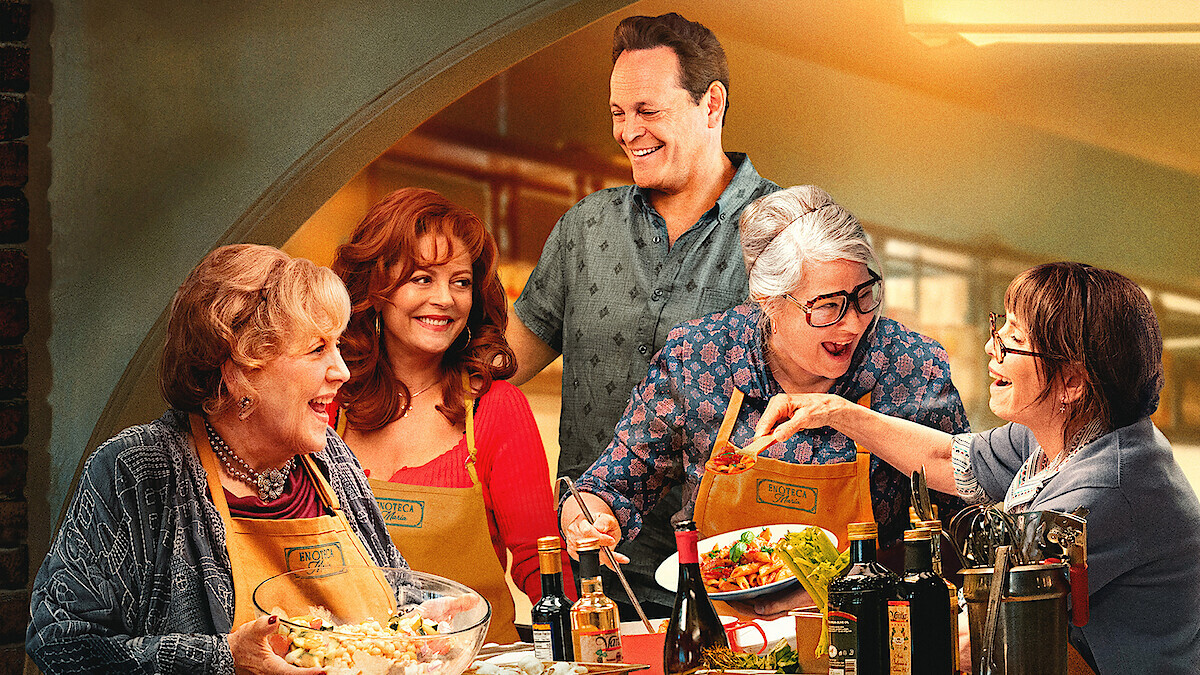
Nonnas tells the true story of a grieving man (played by Vince Vaughn) who risks everything to open an Italian restaurant in honor of his recently deceased mom. His unique twist: Employing local grandmothers as chefs. The nonnas may hold the secrets to family recipes, but many of them had also lost a sense of purpose and community. The Staten Island restaurant, Enoteca Maria, is still open to this day and serves nonna-approved specialties like lasagna, branzino, and even a roasted lamb’s head.
The film was sold to Netflix for a reported $20 million or more. Released in May 2025, to coincide with Mother’s Day, it topped Netflix’s charts for several weeks. The film has been nominated for a Critics Choice award and a Directors Guild of America award.
“The Nonnas story focused on community and family and culture, which is a throughline for every project we’ve done so far,” said 1Community’s Rachel E. Cooke. “A good story is a good story and it’ll resonate with audiences regardless of what the story is about.”
Given recent consolidation in the entertainment industry and widespread fears about the impact of AI, the issue isn’t a lack of good stories but rather how to identify and promote the most impactful films. Every film studio and content platform is already competing for the attention of viewers. What will set a project apart is the extent to which audiences want to engage with the material.
Cooke said a major focus for 1Community is on cultivating an audience (or audiences) that have a genuine appetite for social impact entertainment, and then bringing that demand to the table in conversations with filmmakers and distributions.
Cooke pointed to multiple impact lenses in Nonnas, from “engaging older women who may feel left behind by their community or family,” to “an immigration story about Italian-Americans that created community around each other,” to “an intergenerational story where people take care of each other and learn from each other.”
The beauty of integrating these stories together into a film like Nonnas is that each viewer will have a different experience. What resonates for each person will depend on their age, their relationship with their family, their experience with their community, and countless other incalculable factors. It’s a true ‘choose-your-own-adventure’ type of story.
To help viewers turn their reactions to the film into real-world actions, Cooke and her team started hosting in-person watch parties, ranging from intimate gatherings in people’s homes to larger groups of 200 or more.
“We found that people were really hungry for community, so we wanted to come up with more ways for folks to engage.”
Stories from the table
Measuring the impact of a film or interactive experience is no easy task. But Nonnas offered a test case for how to evaluate the success of a social impact project beyond surface-level metrics like views and clicks.
1Community partnered with Plus Media Solutions, an impact measurement studio that specializes in connecting audiences to engagement opportunities, to create a customized Impact Hub for Nonnas and spark intergenerational connection through food and storytelling.
According to Julie Davitz, Plus Media’s founder and CEO, the “Stories From the Table” impact campaign was built in about four months in close collaboration with 1Community. The goal was to create something that felt like a natural extension of the film, which involved creating different types of content and engagement opportunities for audiences. “Once the attention is grabbed, why not leverage that for action and information?”
Added Davitz: “The old survey method of tracking clicks or likes is no longer enough to articulate impact. Technology gives us the tools to directly engage with audiences. It allows us to zero in on the ‘micro-moment of interest’ so that creators — and the backers or investors in these productions — can see and understand the real impact of a film or TV show.”
The Nonnas Impact Hub, which launched with the film, included ways for viewers to get involved, each with a built-in way to track audience engagement (i.e., the percentage of visitors to the Impact Hub that took a specific action, like clicking on a link or downloading a resource).
- Hosting watch parties. Fully one-quarter of the visitors to the Impact Hub were interested in watch parties, and more than 200 were scheduled. Using a real-time interactive map (the GrandMAP), viewers were invited to host or join a watch party. The Impact Hub also included a ‘Watch Party Guide’ (24% engagement) complete with hosting tips and conversation starters like: “How do you keep your cultural identity alive while also adapting to the world around you?”
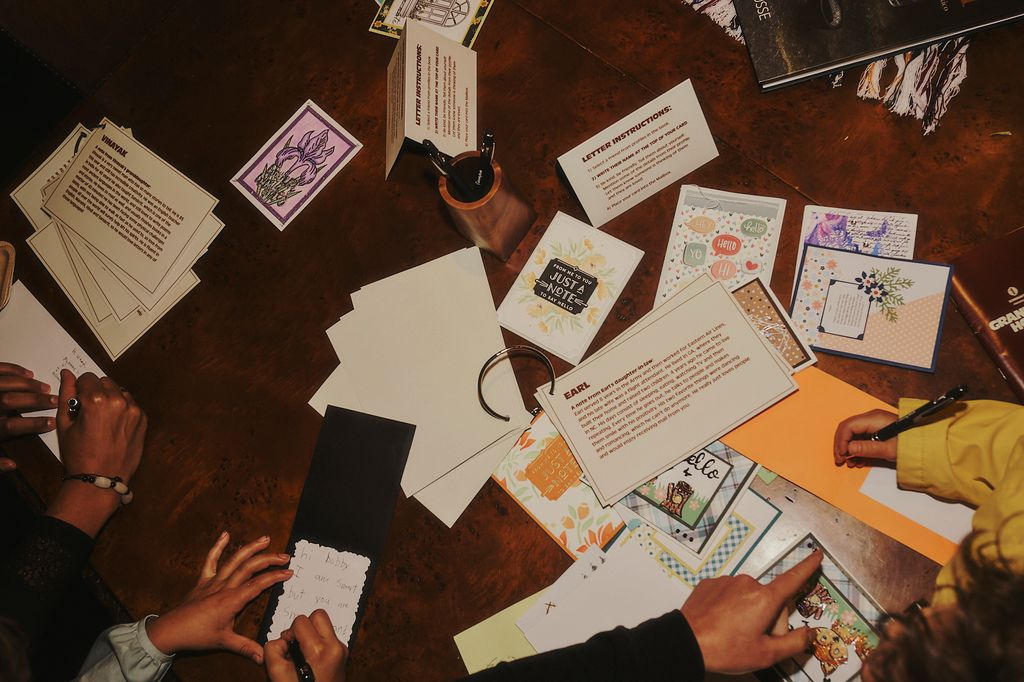
- Writing letters to elders. This prompt resulted in more than 130 letters, and 17% engagement from Impact Hub visitors. In partnership with the nonprofit Love For Our Elders, viewers could sign up to write handwritten notes to help brighten the spirits of older adults who may be suffering from loneliness.
- Sharing thoughts on a digital scrapboard. One in 10 visitors to the hub took advantage of the opportunity to submit a reaction video, voice memo or memory to a real-time library of reactions to the film, such as, “This made me miss my Baba’s perogies and her buns! I still can’t replicate them and wish I had paid more attention when she was alive.” Another visiter wrote, “Food creates such amazing experiences with family. My happiest times were at my Grandmas house. She cooked with love. I can’t wait to see this movie.”
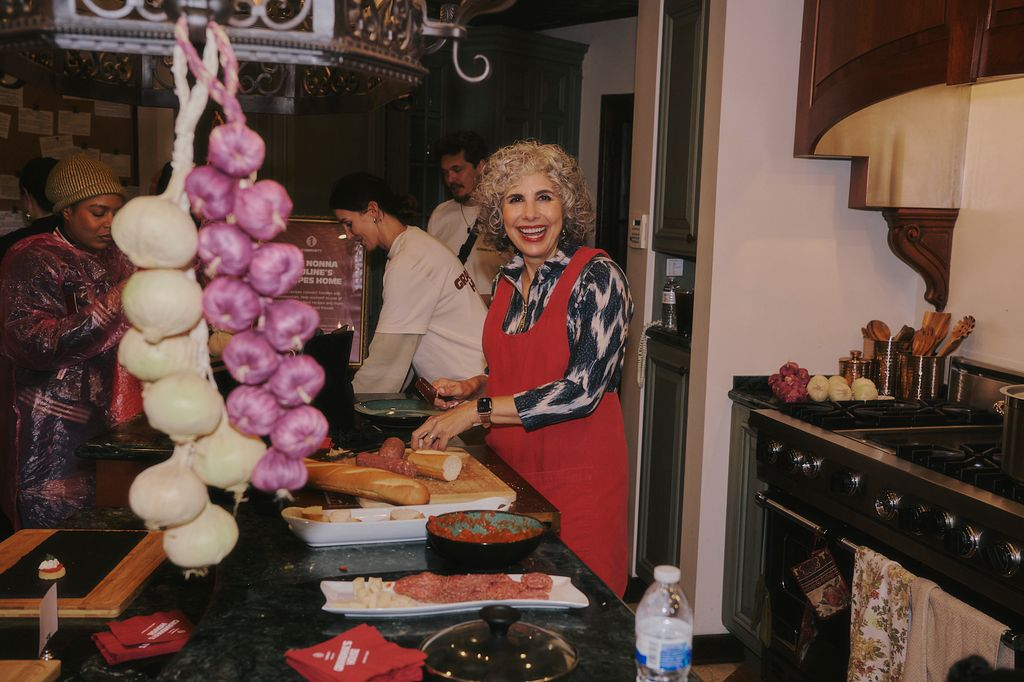
- Taking a trip to Grandma’s House. 1Community also created a live experience in Los Angeles called “Grandma’s House” that attracted nearly 400 visitors. The one-day, sold-out event was designed to transform the universal act of sharing a meal into a multisensory journey through culture, memory, and connection. Themed rooms were curated by three local grandmothers, providing a window into the ways food preserves history, combats loneliness, and builds belonging.
Measuring the impact
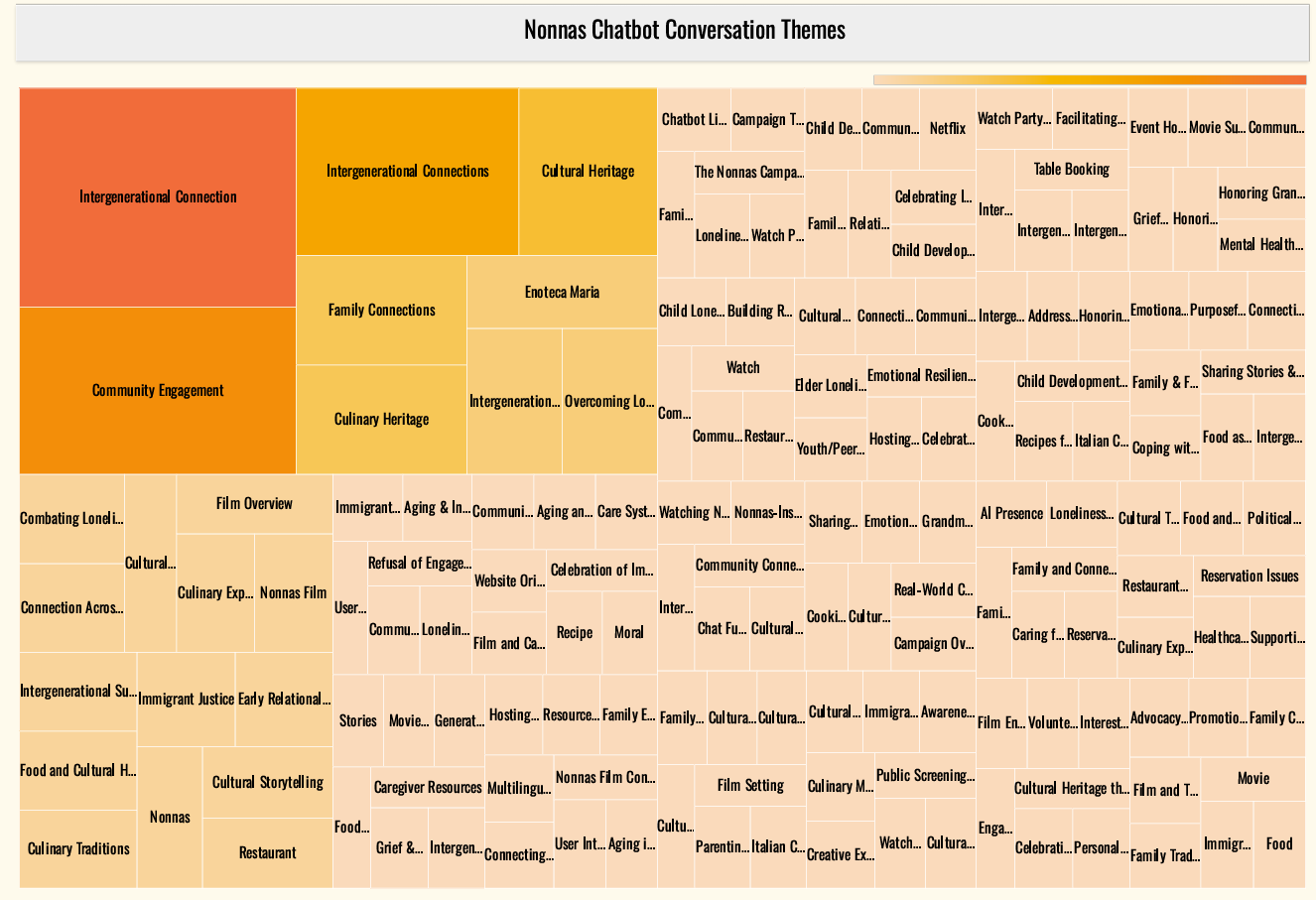
Each of these engagements was tracked in real-time using a dashboard that provided advanced analytics on user journeys, level of interaction, and geographic distribution. The dashboard also featured a +AI Amplify Impact Tool that offered a kind of heat map of the topics viewers were interested in learning more about, such as intergenerational relationships, grief, loneliness, family relationships, cultural heritage, and community connectivity. These types of metrics and insights may only scratch the surface of what’s possible as more creators seek to connect directly with their audiences.
In total, Plus Media reported an average audience engagement rate of 17.2% in the six-plus months since the film was released. Davitz tells me this is well above the 1-2% audience engagement standard for landing pages and the 10-15% gold standard for in-person events.
“The data reveals that audiences generate the highest return on attention when provided with infrastructure for action rather than passive reflection,” said Davitz. “Tools that allowed users to do something, like finding or hosting an event, drove the highest conversion.”
“The biggest takeaway is that people really did want to be together in community, especially post-pandemic,” said Cooke. “We weren’t sure if that need or want had faded, but it hadn’t. We saw strong demand for community engagement.”
Impact investing in films
Such impact campaigns don’t merely engage with audiences for marketing purposes. For potential funders, they show that entertainment media can generate real-world impact like other impact investments.
In the case of Nonnas, the impact data was used to enhance 1Community’s strategic partnership with Netflix and help make the case for similar social impact films.
“If we’re going to do a campaign, we want to make sure to measure the efficacy of the campaign to make sure we learn as much as possible,” said Cooke. “A lot of the campaign was testing activities and actions to see how they resonated with folks, and to see what we can do in future campaigns to improve.”
Cooke acknowledges the need for more rigor in assessing the impact of films like Nonnas, and to figure out what works and what doesn’t. At the same time, she wants to avoid a “slippery slope” for producers and filmmakers to feel like they have to measure everything, regardless of the relevance of the information.
“Too often, funders try to measure their impact entertainment work against other projects, rather than understanding that it’s a wholly new thing that requires a broader lens,” said Cooke.
“I think we obsess too much over questions around clicks and eyeballs. The real question is whether we’re injecting more empathy? Are we creating better communities? Are we moving the needle on certain social justice issues?”
From a funder’s perspective, the holy grail would be a metric that points to a specific action or change of behavior that wouldn’t have happened in the absence of the film or show. Showing such true additionality is elusive to even some of the most sophisticated impact investors.
The same idea could apply to creators’ efforts to raise funding for their next project. Many backers of impact-oriented projects want to see evidence of both impact and financial performance. Financial metrics alone can never tell the full story of whether a production was a success, but neither can impact metrics capture every nuance of human thought and behavior.
“The best thing we can do as 1Community is make someone question a misinformed belief about a particular issue,” said Cooke. “There are different ways of telling these stories to make it fresh and relevant, to make it come alive for people.”