
London Climate Action Week opened with what the British call a “marmalade dropper.”
Things got even stickier from there.
Just as conference-goers took to their seats inside Guildhall last week, UK Prime Minister Keir Starmer appeared outside No. 10 Downing Street to say he was resigning.
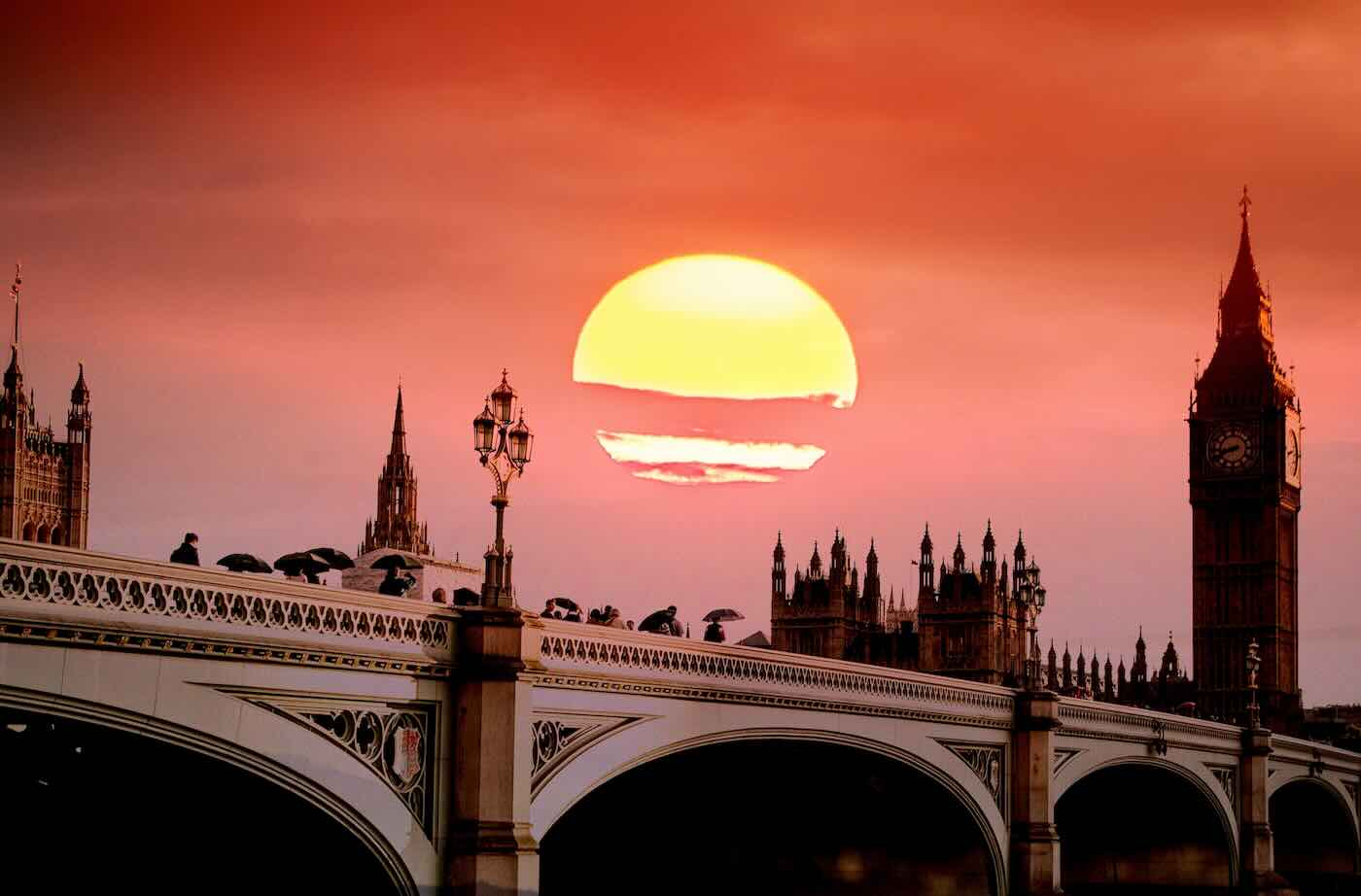
A brutal, record-breaking heatwave was already gripping large parts of the UK and Europe as more than 75,000 people gathered for the annual climate confab, providing “a very clear and timely illustration of why Climate Action Week matters,” as Michele Giddens of Bridges Fund Management put it.
The withering heat disrupted transit, strained energy grids, and prompted the UK to issue a rare “red alert.” Some of Bridges’ investors were unable to attend the firm’s annual investor day, also held last week in London, due to the extreme heat.
Climate Week organizers canceled dozens of events held in buildings without air conditioning, including one hosted by the Zurich Climate Resilience Alliance focused on addressing extreme heat.
“That,” CarbonTracker’s Mark Campanale told ImpactAlpha, “is climate science moving from the footnotes into everyday life.”
The heatwave underscored a lack of preparedness as global warming accelerates faster than many scientific models had predicted, and nations and corporations backtrack on climate commitments. The past 11 years have been the warmest on record, according to the World Meteorological Organization.
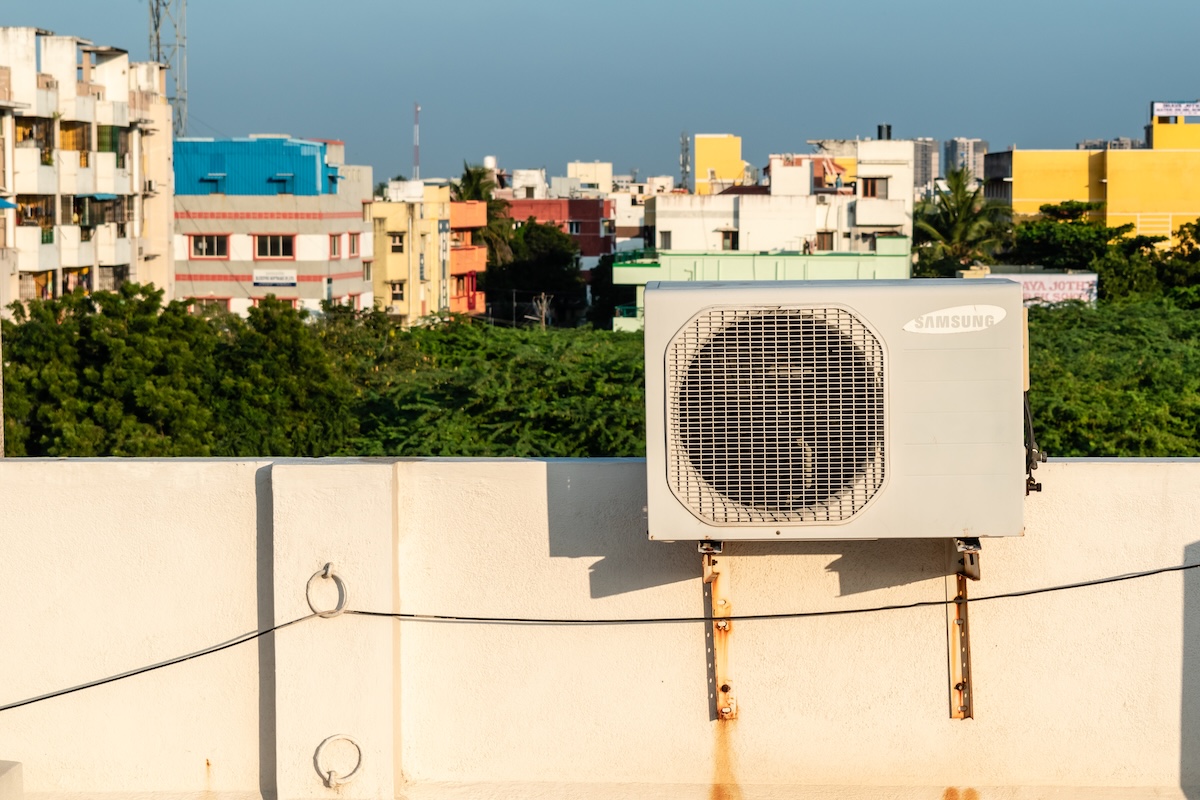
In the typically temperate UK, less than 5% of homes have air conditioning. In Europe, about one-fifth of homes are cooled. Unlike southern Europe, most northern and western European houses are built to retain heat.
Londoners desperate to cool off found retailers sold out of air conditioning units last week; investors bid up the shares of companies that make them. This correspondent’s family resorted to running a fan over a tray of ice for a makeshift cooling device.
Adapting to a changing climate
Climate adaptation, which has long long taken a back seat to mitigation efforts, is fast becoming an “unavoidable opportunity,” as Lightsmith Group’s Jay Koh calls it.
Of the hundreds of Climate Action week events, just over a dozen were focused on adaptation. One meeting, titled “Extreme Heat: Improving governance and strengthening action around the world” that was scheduled to be held at the London School of Economics, was canceled due to a lack of cooling mechanisms that could endanger the health of its attendees.
“The magnitude of future impacts from extreme heat will largely depend on global mitigation efforts, local heat governance, and response plans,” the session’s organizer, Zurich Climate Resilience Alliance, said.
“Cities like London have unique potential to adapt to changing heat risks through effective risk management at multiple levels, connecting policies and incentives, and strengthening community adaptation capacity.”
On cue, London mayor Sadiq Khan used Climate Week to unveil a climate adaptation plan, Heat Ready London. The plan was prompted by a 2022 heatwave that saw temperatures in London exceed 40°C (104°F) for the first time. Extreme heat that year cost the city an estimated £1.5 billion and strained public services. The London Fire Brigade, the Heat Ready plan notes, saw its busiest day since World War II.
The report, which was prepared before last week’s extreme heat, calls for measures to retrofit homes at risk of overheating, provide more tree cover and green spaces, and improve the resilience of critical infrastructure and healthcare systems.
Khan was also among the more than 40 mayors from cities around the world that launched a pact to ensure that the data centers being built out at a rapid pace deliver cleaner energy, lower costs, and benefit communities. The data center bailout has sparked a public backlash over concerns about rising energy costs, pollution and AI replacing human workers.
“AI and digital infrastructure will play a major role in the future prosperity of cities around the world, but residents are right to expect growth to be managed responsibly,” said Khan, who co-chairs C40, a global network of mayors of large cities.
Finance flows
Global adaptation funding plateaued at $64 billion in 2024, according to the latest global climate finance landscape report by Climate Policy Initiative. That compares to $1.9 trillion for global mitigation finance, which includes renewable energy and transportation, which rose 7% from 2023 (CPI’s data lags due to the complexity and delays in collecting it).
Most of the adaptation funding came from the public sector, including development finance agencies. “Private adaptation finance remains the missing piece,” CPI notes.
Some investors see opportunity. At London’s climate week, the Private Infrastructure Development Group announced it was teaming up with BlackRock’s Global Infrastructure to mobilize some $750 million in private institutional investment into climate-resilient infrastructure in emerging markets and developing economies.
The Global Innovation Fund, or GIF, a non-profit, impact-first investment fund headquartered in London, launched a new strategy that puts climate adaptation and resilience at the center of its future investments. It aims to raise $250 million by 2030 to scale up locally-led solutions for climate-vulnerable people in Africa and Asia.
“The evidence is there,” GIF wrote. “Locally-led adaptation delivers tangible benefits for vulnerable communities and generates strong social and economic returns. Avoided losses need to be part of the conversation.”
Business case
Despite the heat — and headwinds including geopolitical tensions, an energy crunch sparked by the US-Iran war, and political chaos in Britain — a sense of momentum prevailed throughout the week. Business, government and finance leaders have coalesced around an understanding that investing in a low-carbon economy is now an economic imperative.
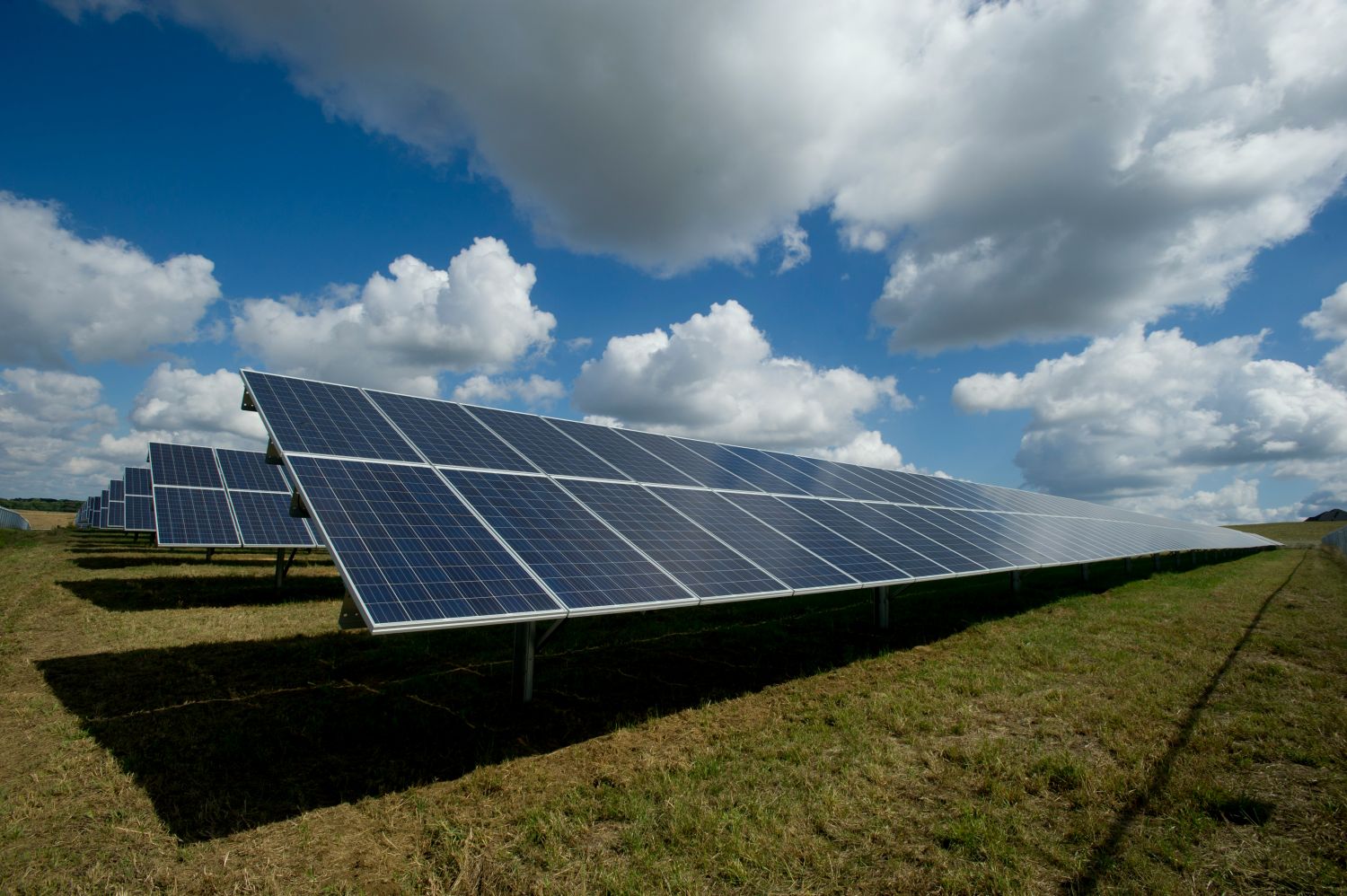
Since 2010, the cost of solar power has fallen by almost 90%, onshore wind by more than 70% and battery storage by 95%, making renewables “the cheapest, fastest and most scalable source of new electricity in most of the world,” UN secretary general António Guterres said on the second day of Climate Week in one of his last major speeches as UN chief.
Affordable clean power boosts competitiveness, attracts investment and creates jobs, former US vice president Al Gore, who chairs Generation Investment Management, a London-based sustainable investment firm with more than $36 billion in assets under management. Gore cited examples including Pakistan, which has seen a 40% drop in oil imports after mass adoption of solar power, and the low electricity prices in Spain, another leading solar adopter.
“Private finance is one of the real keys to making this revolution possible,” he said.
According to the the 2026 Business Breakthrough Barometer, 92% of more than 500 global business leaders surveyed expect sustainability to be a source of competitive advantage over the next five to 10 years, with 89% maintaining or increasing investments over the past year.
“Sustainability has moved from morality to materiality,” said Peter Bakker, president and CEO of the World Business Council for Sustainable Development, which developed the Business Barometer survey. “It is increasingly paying its way as a source of resilience and competitiveness.”
Companies are investing in clean energy, electrification, circularity and regenerative agriculture because they deliver lower costs, greater supply-chain security and improved business resilience, according to the survey.
But volatile geopolitics, policy shifts and supply chain disruptions have them fretting. More than two-thirds of the surveyed business leaders say a disorderly climate transition — one that is unplanned or poorly coordinated — is more likely than a year ago.
OK, UK
As the US has pulled back, investors are increasingly looking to Europe for opportunities, a shift that UK and EU governments are eager to capitalize on.
A day after Starmer’s resignation speech, UK Energy Secretary Ed Miliband, a much-maligned figure for the conservative British media, announced that more than £100 billion ($132 billion) in clean energy investment had been secured since the Labour government came to office. That includes an investment of up £9 billion ($12 billion) in the UK’s offshore wind industry by Japan, and a multi-billion-pound contract awarded to for Rolls-Royce SMR earlier this month to build small nuclear reactors in Sweden.
“This is further proof that clean energy is the industrial opportunity of this century for Britain,” Miliband said at that announcement.
With the shock resignation of Starmer on Monday morning reverberating through the conference, attention turned to Andy Burnham, the popular former mayor of Greater Manchester. Known as the “King of the North,” Burnham is now the favorite to become the seventh occupant of No. 10 Downing Street since the UK voted to leave the European Union in June 2016.
While Starmer was often criticized for lacking a grand vision for Britain, Burnham’s “Manchesterism,” which ties economic progress to social advancement, could offer a blueprint for what’s to come.
During a decade running one of Britain’s largest cities, Burnham put Manchester at the forefront of the green transition. He set a 2038 net-zero target, implemented infrastructure initiatives such as investment in electric buses, promoted home energy retrofit schemes and partnered with Great British Energy on local power projects. Burnham also launched the £3.5 million ($4.6 million) Green Spaces Fund, which supports more than 120 green community projects, and created England’s first local nature recovery strategy to reverse wildlife decline.
During his time in office, the economy of Greater Manchester grew an average of 3.1% annually, which is twice as much as the UK overall growth rate. The northern England city now boasts a young, highly-educated population and has attracted major employers, including Bank of New York, IBM and Booking.com.
Whether Burnham can translate the “Manchester miracle,” which was driven by place-based, “business-friendly socialism” into a national success remains to be seen. Last year, Burnham spooked investors when he declared Britain had to get “beyond this thing of being in hock” to the UK’s $3.7 trillion sovereign bond market.
The UK’s climate policy may also be put to the test.
Although other major economies such as the US and Germany are watering down their net zero policies, the Starmer government had doubled down on climate goals since winning the general election in 2024. This included an ambitious target to slash emissions by 87% from 1990 levels by 2040, phasing out oil and gas exploration off its shorelines and aiming for renewables to generate 95% of all electricity by 2030.
Burnham, who has previously said he is “open-minded” about drilling for oil and gas in British waters, hasn’t publicly spoken about his climate plans for the UK.
In his first major economic policy speech since Starmer announced his resignation, Burnham vowed to hand more power over to local governments in what he called a “circuit-breaker” for the stagnant British economy.
In order to kick-start “good growth in every postcode,” Burnham promised to move part of the central government at London’s No 10 Downing Street to the northwest of the British Isles in what he said was “the biggest rebalancing of power our country has seen.”
That new center, dubbed “No 10 North,” will make place-based collaboration “the new operating principle for UK plc,” Burnham said. The former Manchester mayor also pledged to improve education for young people, overhaul the country’s cumbersome and at times polluting privatized water and energy utilities, create new industrial jobs and build the most social housing since World War II.
Although Burham didn’t explain how his economic vision would be funded, his speech was positively received in the City of London, and by think tanks including the Joseph Rowntree Foundation and the UK’s main employers and business federation, the CBI.