
I did not plan for events about extreme heat to be cancelled…due to extreme heat.
Arriving for London Climate Action Week on the summer solstice, Europe’s heat wave soon made clear the need for solutions to avert the worst of climate change.
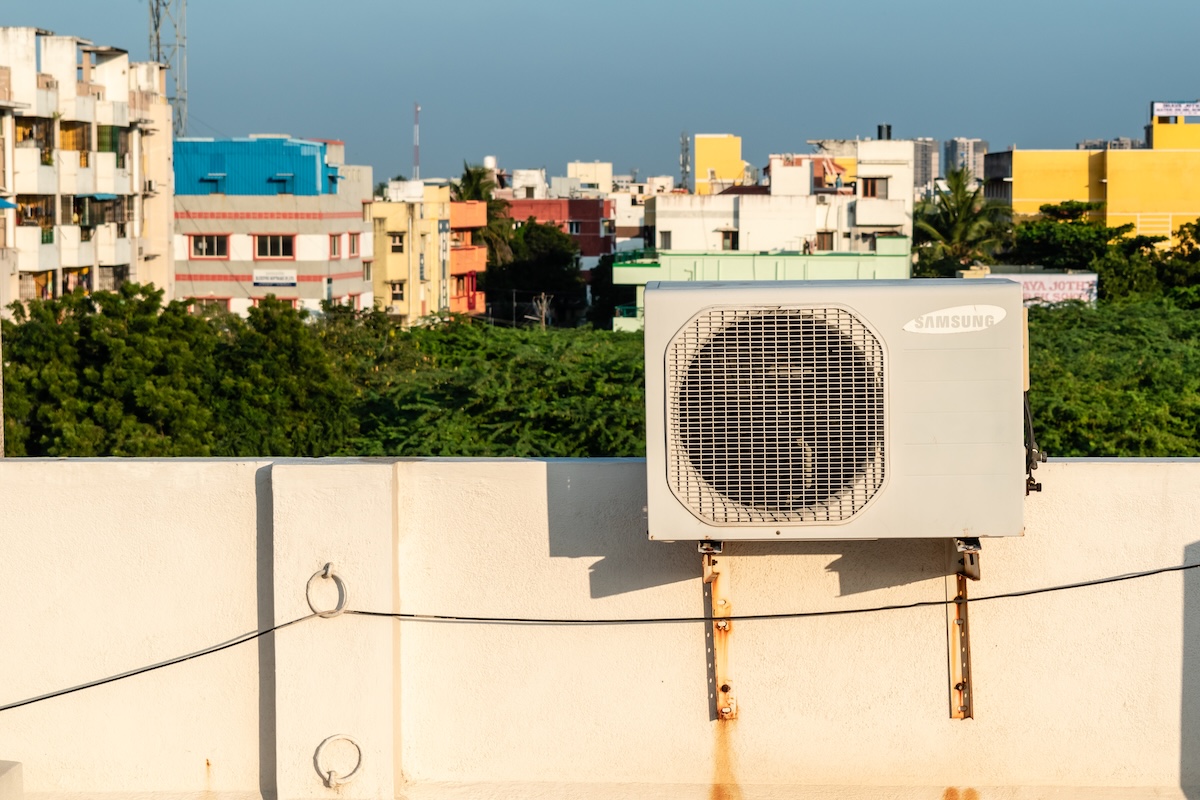
London’s transport systems struggled. Schools had to close. Greater Paris experienced record temperatures above 40°C. My mind was focused on the majority of the world’s population, in the Global South, where temperatures now regularly exceed 40. Locations, from Mexico to Pakistan have experienced above 50.
Those growth markets are still commonly overlooked by investors but they have the most at stake for addressing climate threats, protecting communities and economies, and also earning a financial return.
While low and middle income markets across Africa, Asia, and the Americas are not particularly centered in the communications of London Climate Action Week, they were evoked in almost every single room I entered. A sampling:
- The Global South House brought together community leaders, finance experts and philanthropists in a fishbowl format to surface what is working and what is not in capital mobilization for the global majority.
- Climate Justice Collaborative showcased an open-access map of organizations in the Global South working on climate justice.
- The World Climate Foundation’s World summit at the London Stock Exchange surfaced a new framing for the Global South (aka LMICs or EMDEs): growth markets. The common thread among Global South economies, the thinking goes, is the growth: in emissions, in populations, in economic activity.
- Capital For Sustainability emphasized private capital pools that can meaningfully diversify into growth market climate opportunities.
- At UNEP FI’s bankers-only convening, one participant declared, “In our analysis, we found that clients who do not have climate transition plans in high emitting sectors…will be difficult to bank in the future anyway.”
Climate solutions
Investment opportunities in Zimbabwe, Bangladesh, Senegal, Mexico and other emerging markets are growing as countries focus on greener pathways for economic prosperity. Doing so often leads to more investor-friendly policies and increased support for industries that address pollution in almost every real economy sector.
In Africa, for example:
- Mzansi Clean Energy Capital is partnering with landlords of low-income households to expand renewable energy access in South Africa. Their perpetual debt fund aims to scale up clean energy access, providing debt to special purpose vehicles owning and operating clean energy projects, selling the energy directly to the tenants at discounted rates, and supported by long-term offtake agreements. Mzansi aims to reach 28,000 affordable housing units over the next five years and also plans to expand to other African countries. It has fundraising targets of $26 million for senior debt, $22 million for junior debt and $6 million for grants.
- The Nordic Impact Evergreen K/S is financing climate and gender-smart small businesses. This $50 million evergreen fund and impact-linked finance facility invests in small businesses building climate resilient solutions in East Africa. The funds provide equity financing, combined with impact-linked grant capital and technical assistance focused on achieving positive adaptation and gender outcomes. About 60% of the fund’s portfolio is made up of women-led companies. Nordic Impact Evergreen K/S welcomes new investors on an ongoing basis, with a minimum ticket size of $115,000.
In Asia, the Good Fashion Fund 2.0 is supporting apparel and textile suppliers in Vietnam, India and Bangladesh with a $62 million debt fund. The fund provides mezzanine financing and technical assistance to support textile and apparel suppliers adopting more renewable and energy-efficient technologies. It focuses on companies working in dyeing and finishing as well as end-of-use for materials. The fund is aiming to mobilize $3 in commercial capital for every $1 of concessional funding raised.
In Latin America, Regenera Ventures is financing farmers, small businesses and companies practicing regenerative agriculture in Mexico. This venture equity fund developed by SVX.MX provides redeemable equity, mezzanine financing and technical assistance. It tracks hectares under regenerative management, carbon and carbon equivalent emissions reduced, and smallholder incomes improved. It also focuses on women-led enterprises and inclusive ownership.
Risks and rewards
Today, only 15% of total climate finance is mobilized for low- and middle-income countries – excluding China – despite their contribution of roughly 50% of greenhouse gas emissions.
For those that may think this misallocation is due to riskier markets, the data concretely shows that there is no real risk difference between high-income and low- and middle-income markets – or rather, growth markets. The Global Emerging Markets Risk Database, or GEMs, shows that the past 30 years investments in growth markets had an average default rate of 3.5% – similar to high-income countries. What’s more, the lowest default rates are those to the financial sector, at under 2.3%.
So as temperatures continue to rise, from London to Lagos, some of the best bets for getting climate finance at scale may be through local banks, credit unions and other financial institutions in the Global South.