
Greetings Agents of Impact!
☎️ The Call: Crafting a positive agenda for faith-based investors. Can faith-aligned investors become known for what they are for, not just what they’re against? To help such investors move beyond negative screens to a positive agenda, Impact Evaluation Lab’s Terry Keeley and John Coleman of Sovereign’s Capital have developed metrics for “human flourishing” for both fund managers and portfolio companies. Sue Ernster of the Franciscan Sisters of Perpetual Adoration, and Jean Baptiste de Franssu, until recently president of the Vatican Bank, will join Keeley and Coleman on the next Agents of Impact Call, Wednesday, July 15, at 7am PT / 10am ET / 3pm London. RSVP today.
- Background reading. “How faith-based investing could and should become more impactful,” by Jim Sorenson and Terrence Keeley.
In today’s Brief:
- Investing in refugee entrepreneurs as an economic opportunity
- Community-directed climate financing in Canada
- Renewables shakeup in Europe
- Helping clients invest in the social determinants of health
Featured: Migration Mandate
The economic case for investing in refugee entrepreneurs (podcast). Advocacy has fallen short in changing the political climate around refugees and migrants, who have been castigated as a burden on economies. Perhaps private investment can shift the discussion. On the latest Agents of Impact podcast, the Refugee Investment Network’s Christine Mahoney and John Kluge argue that, when given the chance to work, build businesses and access capital, displaced people become entrepreneurs, taxpayers and job creators. Their new book, “Banking on Belonging: Why Investing in Refugee Entrepreneurs Benefits Everyone,” out July 21, makes the case that the global refugee crisis is an overlooked opportunity for impact investors. With more than 120 million people displaced by conflict and violence worldwide – the highest level in history – governments have chosen to scale back refugee resettlement and humanitarian aid just as it is needed most (see, “Conflict in the Middle East creates (even more) refugees in need of livelihoods, services and impact investment”). That’s bad for refugees, and it’s bad for economies. “When governments create policy that’s a bit more welcoming, the economic returns happen almost simultaneously,” says Mahoney. The US refugee resettlement program alone has generated nearly $500 billion in tax contributions over the past 15 years, the authors say.
- Eight strategies. “Banking on Belonging” outlines opportunities for investors across asset classes. In an exclusive excerpt on ImpactAlpha, Kluge and Mahoney call for G7 governments – with or without the US – to mobilize $1 billion for refugee-lens investing, and for a parallel private push to unlock another $1 billion. Foundations, they argue, are sitting on billions in untapped program- and mission-related investment capital; community development financial institutions, large employers and even everyday consumers all have roles to play. And Kluge and Mahoney want to ready a $100 million refugee-lens fund at the US International Development Finance Corp., modeled on the 2X Women’s Initiative, for if and when the politics in Washington allow it. Read the excerpt.
- Hope spots. In Mexico, refugees from the US border have been resettled into labor-starved northern cities to help fill labor shortages. In Europe, policies granting Ukrainian refugees the right to work have led to high rates of entrepreneurship and tax contributions. And in Massachusetts, Social Finance has found success with its refugee-focused Pathways to Economic Advancement program. Kluge and Mahoney, borrowing a term from oceanographer Sylvia Earle, describe such places as “hope spots,” where governments, companies and investors are proving the models (see, “New tools for humanitarian relief in crisis zones”). “Even if you took away the fact that this is the right thing to do, you are still left with a very strong economic argument that this improves performance at a firm level,” says Kluge. “What we’re hoping with this book is that investors don’t get left behind. This is like a pioneer market. Now is the time.”
- Keep reading and listen to, “The economic case for investing in refugee entrepreneurs,” by David Bank and Isaac Silk. Get the podcast in your feed by subscribing on Apple, Spotify or YouTube.
Live on Edge: Refugee-Lens LPs and GPs
Tracking deals that help displaced populations. ImpactAlpha Edge features more than 15 GPs with funds that invest in refugees, along with the almost 30 LPs backing those funds across 35 allocations.
- People on the move. iGravity’s Refugee Investment Facility is targeting $25 million and Kiva Capital is raising its second Refugee Investment Fund, backed by a $5 million loan from FMO, the Dutch entrepreneurial development bank.
Dealflow: Indigenous Finance
Climate funding for, and by, Indigenous communities in Canada. The Rights and Resources Initiative is working to ensure Indigenous peoples get more say over how money intended for them is spent. Its Community Land Rights and Conservation Finance Initiative, or CLARIFI, raises grant funding from private foundations and bilateral donors, then regrants it to Indigenous-led nonprofits. It directed about $10 million in such funding last year. The global NGO is setting up a new entity for CLARIFI in Canada to fundraise from Canadian institutions and support First Nations, Métis and Inuit organizations’ work around climate, conservation and resources. “We want to build systems that work for us, that are led by us, that are governed by us,” Rights and Resources’ Deborah Sanchez told ImpactAlpha.
- Inclusive climate finance. Rights and Resources is a network of more than 200 organizations led by Indigenous people, Afro-descendant people and other local communities. It launched CLARIFI in 2022 with Campaign for Nature to increase funding for Indigenous land tenure and stewardship. Grantees have full control over how the money is spent. CLARIFI also gives network members authority to shape the fund’s priorities and decide where grant dollars go. “The governance of the funding is collective,” said Sanchez. Committee members are this year prioritizing projects focused on gender justice and local economies.
- Resilient livelihoods. Many grants from CLARIFI cover project feasibility studies and development to ready initiatives for other forms of capital. Sanchez mentioned one grant that funded certifications and assessments needed by a cocoa cooperative in Peru to comply with the EU’s new zero-deforestation rules and maintain its business with European buyers. In Cameroon, CLARIFI’s funding enabled pastoralist women to process excess milk into soap and other products to reduce waste and generate extra income. “The whole development of the product, the development of the idea, is where there’s an enormous [funding] gap,” Sanchez said.
- Keep reading.
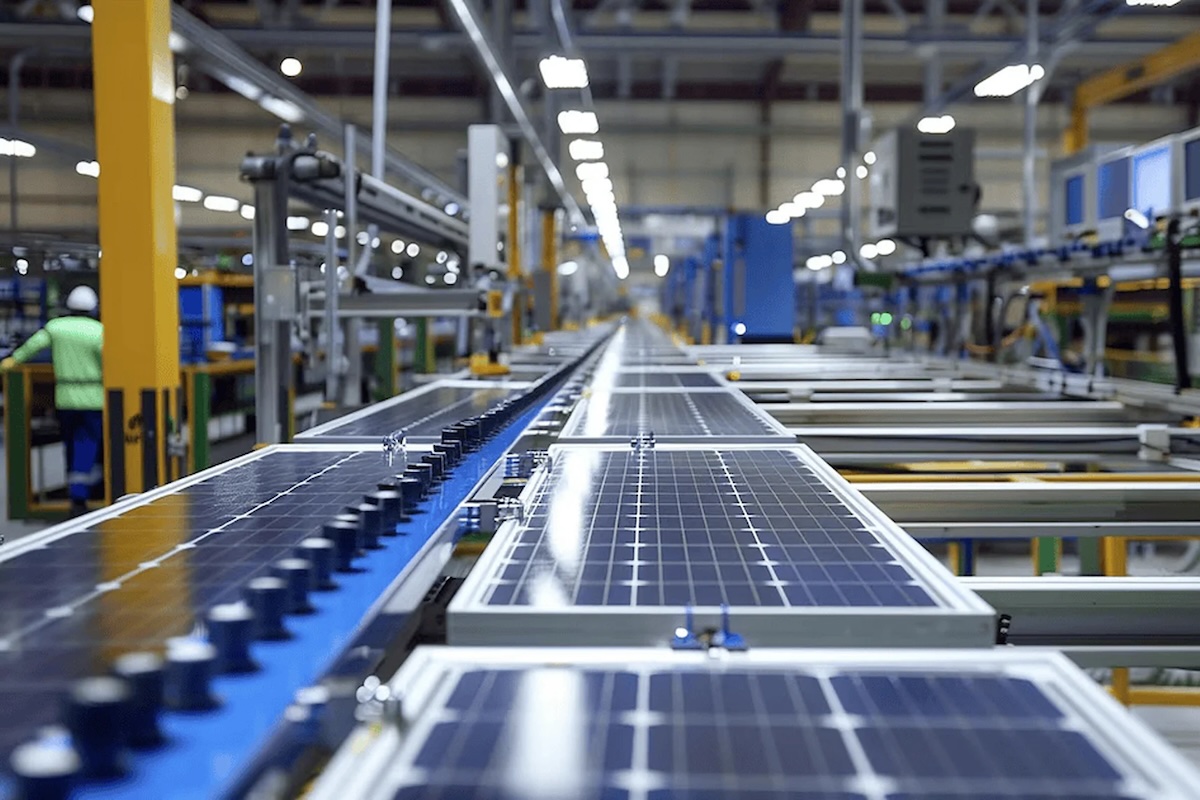
Total sells distributed solar portfolio amid renewables strategy shake up. TotalEnergies sold its 170-megawatt distributed solar portfolio to Irish solar company Amarenco and London-based AMPYR Distributed Energy. The French energy giant said in a statement that the sale was “in line with its strategy to refocus its renewable development on large utility-scale solar and wind farms in order to benefit from economies of scale.” The portfolio, which includes projects across Western Europe, is made up of small installations of three megawatts or less. Total says the divestment will have no impact on its pace of renewables development. The company has a renewables portfolio of more than 35 gigawatts and is aiming for 75 gigawatts by 2030.
- Leaders and laggards. Total has stood out among oil and gas majors for maintaining its clean energy commitments. Fossil fuels still make up the overwhelming majority of its business, but its fastest growing business segment is electricity generation, about 70% of which comes from renewable sources. Total is modestly increasing its oil and gas production compared to its peers. BP, which once ambitiously stood for Beyond Petroleum, has slashed its renewable energy spending to around $2 billion a year, while increasing annual oil and gas spending to $10 billion since Russia’s invasion of Ukraine. Shell has been shedding its solar and energy storage assets since 2024, and is planning to ditch about $1 billion of its offshore wind assets. Norway-based Equinor said last month it was dropping its 2030 renewables target.
- Share this post.
Dealflow overflow. Investment news crossing our desks:
- The Korea International Cooperation Agency committed $11 million to support a Palestinian entrepreneurship hub in the city of Bethlehem. The Bethlehem Center for Entrepreneurship will be run by the city and aims to incubate local startups and foster investment employment opportunities. (MENA Startup Digest)
- Impact Fund Denmark provided €25 million ($28.6 million) in subordinated debt to Côte d’Ivoire’s NSIA Bank to lend to micro and small businesses. (IFD)
- France-based Bohr Energie, which helps renewable energy producers sell electricity to wholesale markets, raised €10 million from Suma Capital, GSO Capital, Crédit Agricole and others. (EU-Startups)
- The Nairobi Business Angel Network invested in Nuru Solutions, which provides agricultural data and intelligence to financial services firms developing insurance and credit products for smallholder farmers. (NBAN)
Impact Voices: Advisors’ Corner
Three pathways for investors to advance healthy outcomes. Wealth advisors should think beyond hospitals and biotech when looking for investments with a positive impact on the healthcare system, Capshift’s Haley Aubuchon-Jones writes in the latest Advisors’ Corner column. Capshift’s new health investing framework identifies three interconnected themes: innovation, care and prevention. Many of the strongest opportunities are outside the traditional healthcare sector, says Aubuchon-Jones. “Healthcare services are essential, but the conditions in which people live, work, learn and age can also directly shape outcomes,” she writes, pointing to affordable housing, healthy food systems, clean water and community development as investments that can improve health outcomes while advancing health equity. The framework offers advisors a way to turn clients’ interest in longevity, wellness and equitable healthcare into investment strategies that address the social determinants of health alongside medical innovation.
- Advisors’ Corner. ImpactAlpha’s collaboration with Capshift includes explainers for advisors looking to meet client demand for impact. Recent articles include a summer refresher for those new to impact investing, also by Aubuchon-Jones, and an investor’s guide to supporting and strengthening democracy by Cynthia Desmet Villar. Ben Kramer offers tips for addressing client concerns about possible tradeoffs between impact and financial returns.
- Keep reading, “From prevention to treatment: A framework for health investing,” by Capshift’s Haley Aubuchon-Jones.
Agents of Impact: Follow the Talent
Don’t miss these ImpactAlpha partner events:
- Aug. 1: Impact Galleria Tokyo 2026, Tokyo.
- Sept. 8-11: Impact Minds 2026, Manaus, Brazil. ImpactAlpha subscribers can use code IMPACTALPHA_10 for 10% off.
- Sept. 16-18: Asia Impact Nights, Kobe, Japan.
- Oct. 12-14: SOCAP, Chicago. ImpactAlpha subscribers can use code ImpactAlpha26 for $100 off.
Amit Bouri will step down as CEO of the Global Impact Investing Network at the end of the year. He helped found the impact network in 2009 and has served as its CEO for more than a decade… Vodafone is recruiting an ESG specialist and an ESG finance lead… Oikocredit is recruiting an investor relationship manager… Low Carbon is hiring an investment associate… US Bank is on the hunt for an affordable housing business development associate… Natcap is hiring a senior nature consultant… Cypress Creek Renewables is looking for a capital markets associate.
👉 View (or post) impact investing jobs on ImpactAlpha’s Career Hub.
Thank you for your impact!
– July 13, 2026