

Can faith-aligned investors become known for what they are for in addition to what they are against?
That was the question posed by Martin Palmer, the founding president of FaithInvest and one of the primary conveners of the Faith in the Common Good conference that took place last month in Paris. For faith-inspired investors, few questions are more important.
Religious congregations and their governing bodies collectively oversee $12 trillion assets, and perhaps even more if every Shariah-compliant investment were to be added in. The vast majority of these assets are managed with negative screens – meaning they are not allowed to support vice activities like alcohol, tobacco, gambling, firearms, abortions, or the sex trade.
Only a small component of this $12 trillion-plus is intentionally invested to promote positive, impactful outcomes, such as building low-income housing, improving health and educational outcomes, promoting financial inclusion, and enabling greater economic mobility in developed economies and increased professional entrepreneurialism in emerging markets.
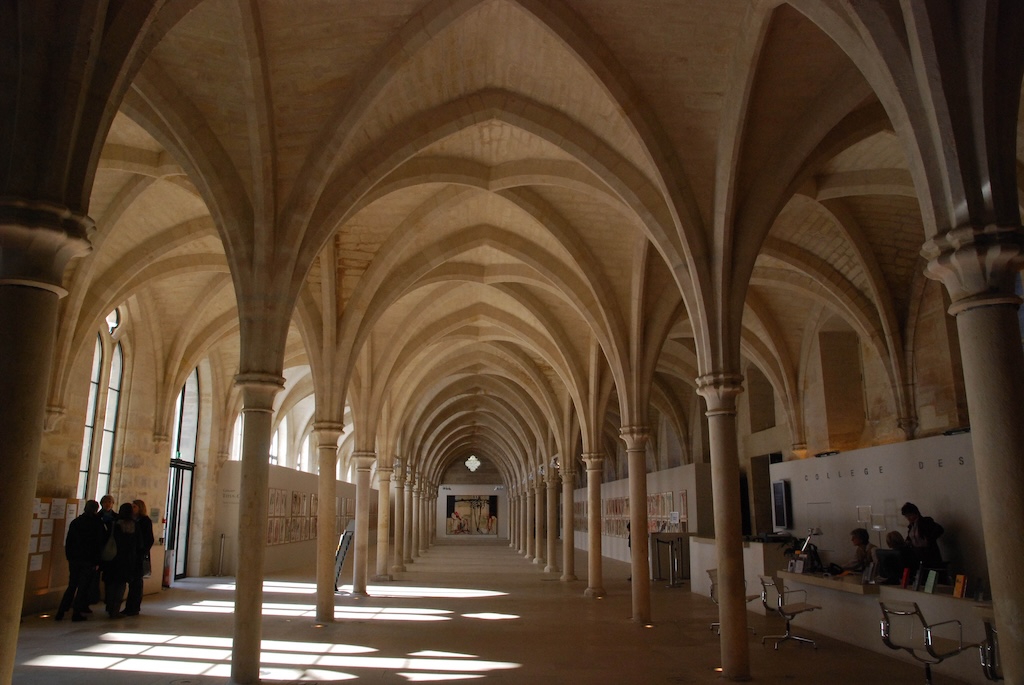
Our separate faith traditions – the Church of Jesus Christ of Latter Day Saints and Roman Catholicism – have always guided our personal and professional lives. At the Faith in Common Good conference, held at the College des Bernardins, we were in the cordial company of dozens of other men and women of deep religious convictions, including Jews, Muslims, Hindus, Anglicans, Methodists, Lutherans and other denominations. We all placed our religious convictions front and center to explore how faith-consistent investing could do more good in the world.
World made new
To help inform the discussion, we prepared a white paper for the event, A World Made New. We wanted to highlight a growing array of both concessionary and non-concessionary investment opportunities which may promote more heavenly outcomes right here on Earth. Such investments explicitly promote greater inclusivity and sustainability, serving the underserved while generating appropriate risk-adjusted returns. We also offered some practical experience to illustrate these possibilities.
Beginning on December 31, 2017, the Sorenson Impact Foundation dedicated 100% of its assets to such impact investment opportunities. Eight years on, this SIF portfolio has outperformed its market-rate benchmark by 0.7% on an annualized basis. We have also launched a transparency platform with market-leading analytics which measure the authenticity, true impact and likely financial returns of hundreds of existing impact fund strategies.
Through our actions and words, we have demonstrated that it is possible for one’s capital to do well and do good as long as you explicitly dedicate yourself to the right objectives and assemble the right analytic and professional resources to achieve them.
By the end of 2020, the endowment portfolio was fully transitioned to impact investments, including public equity, private equity, venture capital, real estate, and fixed-income strategies in a diversified, endowment-style investment portfolio.
The paper also highlights The Human Flourishing Project, a new initiative to develop a new faith-based impact measurement and management framework developed by faith-based investment firm Sovereign Capital and impact investing analytics firm Impact Evaluation Lab.
Faith in the Common Good concluded with momentum and hope. In closing surveys, 90% of the attendees observed faith-based investors have something of unique value to contribute to global capital markets; 75% strongly claimed they saw specific opportunities for deeper co-ordination.
Conference organizer and Vatican Bank Board President Jean Baptiste de Franssu was officially tasked with drafting a joint statement of intent from global religious leaders across multiple faiths. FaithInvest was tasked with becoming a center of religious investment excellence, promoting best practice and highlighting important case studies of relevance to the entire community. And we have volunteered to work with other attendees to help promote practical ideas – including better analytics and transactional opportunities – so those who want their investment capital and religious convictions to remain fully complimentary have professional, vetted tools to do so.
It is clear a growing portion of the financial assets that investors oversee can and should be directed to verified and verifiable impact investments. We see multiple opportunities to put capital to work that would verifiably promote human flourishing, amplify human dignity, protect our earth, land and waters and generate a range of acceptable financial returns. We imagine a day not far from now when all investors, perhaps led by the faith-based community, say not only how much their investments have made, but also how much good they have done.
Indeed, along with 2.3 billion other Christians, we explicitly pray for this day to come when we recite the Lord’s Prayer: “Thy Kingdom come, thy will be done on earth as it is Heaven.”
Jim Sorenson is founder and Chairman of the Sorenson Impact Group. He is also the author of the soon to be published, IMPACT CAPITALIST: Free Market Principles for a New Generation of Heros.
Terrence Keeley is the Chairman and CEO of 1PointSix LLC and the Impact Evaluation Lab. He is the author of SUSTAINABLE: Moving Beyond ESG to Impact Investing.
Disclosure: Sorenson Impact Foundation is an investor in ImpactAlpha. Guest posts on ImpactAlpha represent the opinions of their authors and do not necessarily reflect the views of ImpactAlpha.