TGIF, Agents of Impact! We’ll be taking a Brief break for the holiday weekend in the US. We’ll be back in your in box Tuesday morning.
🍻 Agents of Impact Happy Hour: New York. We’re running it back. Last summer’s Agents of Impact happy hour at The Standard beer garden near the High Line was such a hit that we’re gathering there again. If you’re in New York next Thursday, July 9, RSVP and join us for a drink with fellow Agents of Impact. I’ll be there along with my ImpactAlpha teammates Amy Cortese, Joe Whitwell, Brian Walsh and Erik Stein. Come catch up with old friends, make some new ones, and raise a glass with the ImpactAlpha team. – Dennis Price
In today’s Brief:
- Roundup: Free choice
- Podcasts: Rey Ramsey. Joy Anderson and This Week in Impact
- Pop Impact: Reviews from the Tribeca Film Festival
🗣 Fresh thinking. My long-planned walk from Vezelay to Nevers in the Burgundy region of France last week became something of an object lesson in the new realities of climate change, as well as in French itself. Schools, concerts, sporting events were annulés, or cancelled, because of le niveau 3 heat emergency. Electronic message boards warned: Canicule! The term, meaning “little dog,” dates to Roman times, when peak summer heat coincided with the appearance of the constellation Sirius, or Greater Dog, and refers to the type of heat wave that doesn’t cool down at night. In the age of global warming, the dog days of summer are just as likely to occur in May or June. Our climate adaptation: start walking at 6am, keep our hats soaked for evaporative cooling and spend the afternoons in the shade, sipping cool Burgundy whites. The European heat wave set off a scramble to adapt at London Climate Action Week, as contributor Danielle Rossingh reported, while Marilyn Waite suggested the place to look for such solutions is in the growth markets of the Global South.
The canicule this week moves to the eastern and midwestern US, just in time for the 250th anniversary of the nation’s Declaration of Independence. Our package of reflections on the holiday struck notes of common purpose and national rebirth. As AI redistributes the value that labor used to create, Gary Community Ventures’ Santhosh Ramdoss argues, we have the tools to fulfill the original promise of the Declaration of Independence: “life, liberty, and an actual share of the upside.” Broadening ownership of businesses, homes and community assets, writes Woodcock Foundation’s Stacey Faella, “seeds the conditions for a stronger democracy.” Contributing editor Antony Bugg-Levine reflected on the dozens of Agents of Impact profiled in his new book, “Investing in America,” and found, “They are persistent, finding ways to mobilize talent, money, and political support long after others would have given up.” And on what is also the 250th anniversary of the publication of “The Wealth of Nations,” contributing editor Napoleon Wallace breaks down the negative externalities that distort the hidden hand of the market. “At 250, the economy that Adam Smith described doesn’t need to be replaced, but it does need to grow up,” Wallace declares. “It needs to finally count the full cost of what it produces and stop mistaking unpaid bills for profit.”
Global warming is among the biggest of such negative externalities and the heat wave put in sharp relief the backtracking on climate commitments of many nations and corporations. To help more investors put impact first, Social Finance Institute and the Rustandy Center for Social Sector Innovation at Chicago Booth have developed a new tool to explore how impact-first investments affect both total impact and financial returns, as Robert Gertner and Tracy Palandjian explain. At Next50, a foundation focused on healthy aging, Peter Kaldes is reframing the swell of aging Boomers not as a burden, but an opportunity to invest in solutions that empower older Americans, first through public equities and now with private funds like disability-focused Enable Ventures. In our podcast conversation, Rey Ramsey of the Nathan Cummings Foundation urged impact leaders to reject the tyranny of false choices that dominate public debate, not least over the evolution of artificial intelligence. “If we play this right and make the right choices, it can enhance our agency rather than replace our agency. Those are choices. That is not destiny.” Stay cool. — David Bank
This Week’s Podcasts
🎧 This Week in Impact. Host Brian Walsh takes up ImpactAlpha’s top stories with editor David Bank. Up this week: Four Agents of Impact offer thoughts on the American experiment ahead of the country’s 250th birthday; a look at Next50’s strategy for financing GPs and companies that value aging; and how the UK startup Gaussion is speeding battery charging and boosting performance.
- Listen to the new episode of This Week in Impact. Get the podcast in your feed by subscribing on Apple, Spotify or YouTube.
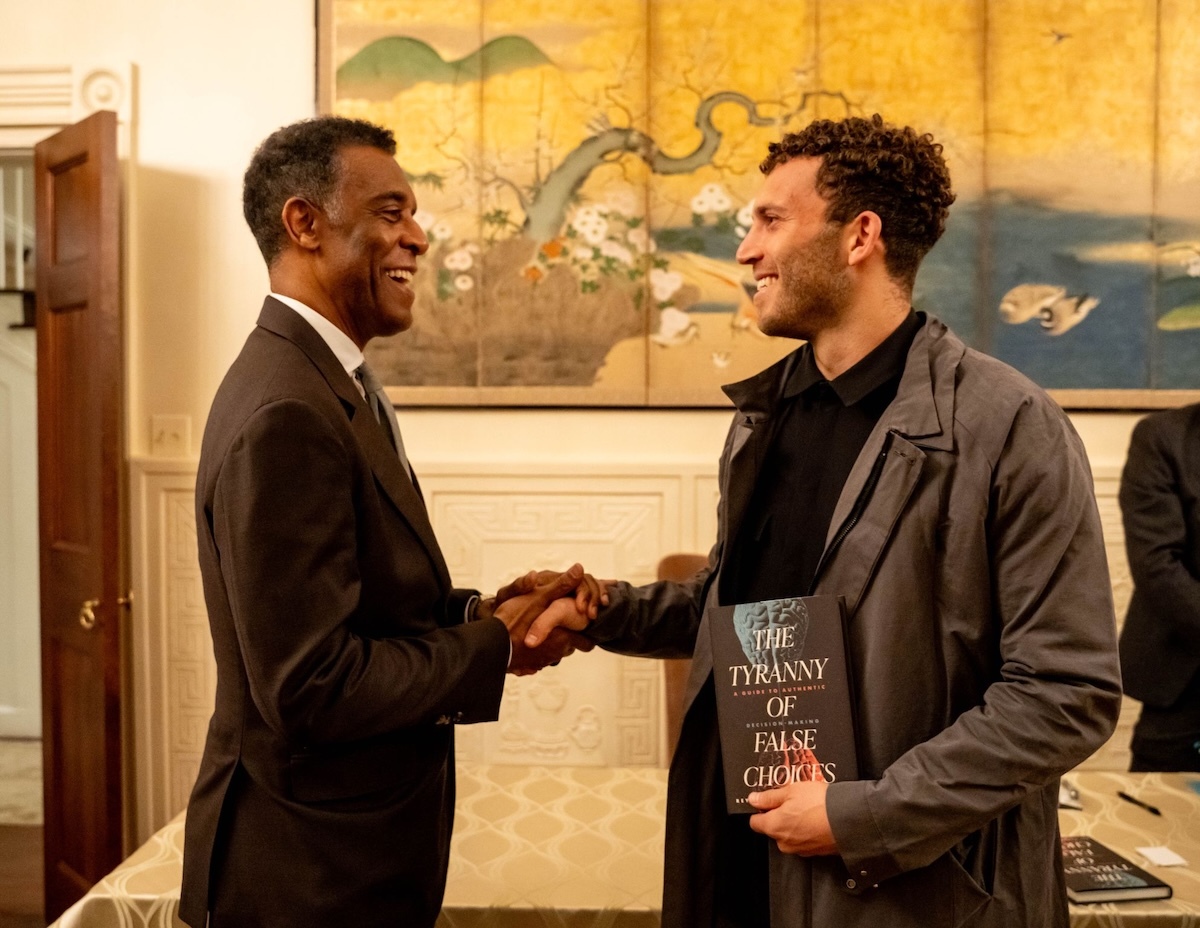
🦸Agents of Impact: Rey Ramsey on moving from false choices to authentic leadership on AI and impact investing. Rey Ramsey, CEO of the Nathan Cummings Foundation and author of the new book “The Tyranny of False Choices: A Guide to Authentic Decision-Making,” joins David Bank to share more about his boundary-crossing perspective on how foundations should invest, grant and lead. They speak about “venture grants,” transparency as a prerequisite for action, and how Ramsey has kept Nathan Cummings committed to racial, economic and environmental justice, even as some institutions trim their sails.
📯Criterion Institute Podcast: Paradox as discipline. Host Joy Anderson names six paradoxes she encounters when working to shift financial systems toward gender justice and social change. Among them: movement and field-building, urgency and patience, collaboration and competition, and resisting the urge to resolve them prematurely.
The Week’s Spotlight
Pop Impact: Impact takes center stage at the Tribeca Film Festival. New York in June is for the love of cinema, as some 150,000 film buffs fan out around the city for the annual Tribeca Film Festival. This year’s festival featured more than 200 screenings, as well as a storytelling summit, a pitch competition and a gaming showcase. One film entrant, “Dreams of Violets,” a feature-length documentary about the civil resistance of Iranians, was entirely generated by AI. Other films challenged viewers to think about social issues such as disability inclusion, women’s rights and aging. ImpactAlpha contributing editor Dmitriy Ioselevich was on the scene with the auteurs of culture as well as cinema.
- Disability inclusion. Hollywood narratives tend to focus on disabilities as a tragedy or as something to overcome. “Stand Up,” directed by Mari Sanders, is a coming-of-age story about a young woman who learns to adapt to life in a wheelchair after losing her leg in a car accident. “Kids Like Me,” directed by Cynthia Lowen and Jon Cohrs, is a documentary about a young disabled boy’s quest to direct and star in his own murder mystery. “The lesson from both films is that people with disabilities deserve a chance to lead a normal life,” writes Ioselevich. “Yes, they will need help at times, but most importantly they need people to treat them with love and kindness rather than as someone in need of saving.”
- Gender smart. This year’s Festival comes at a time of historic rollbacks in women’s rights. “Hollywood Does Abortion,” directed by Barbara Attie, Janet Goldwater and Mike Attie, turns the spotlight back on the TV and film industry, showing how representations of abortion in films like “Dirty Dancing” or “Juno” often lean into dangerous stereotypes and advance misinformation. “Miss Representation: Rise Up,” directed by Jennifer Siebel Newsom, the California governor’s spouse, emphasizes the negative impact of years of attacks on women’s rights and bodily autonomy, but also how women are fighting back by running for office, starting businesses and building movements.
- Valuing aging. Two films at Tribeca dealt with the challenges of aging populations around the world. “Death Boom,” directed by Jessica Chandler, is a documentary on the environmental impacts of the “death care” industry, such as the carbon impact of cremation. “The A-Word: The Future of Aging,” directed by Greg Kohs, is a documentary about the rise of longevity medicine. “Once regarded as the domain of hucksters and snake-oil salesmen, extending human life spans past 100 or even 120 years is now the subject of serious science,” writes Dmitriy. Is an older society compatible with a sustainable one?
- Keep reading. And catch up on all of this week’s dealflow reporting.
The Week’s Talent and Jobs

The ImpactAlpha team showed up to celebrate the nuptials of our colleague Roodgally Senatus. We wish Roody and his bride Cheryssa a beautiful life together.
The Rockefeller Brothers Fund named Ian Solomon, dean of the University of Virginia’s Frank Batten School of Leadership and Public Policy, as its eighth president and CEO, succeeding Stephen Heintz… Jon Lukomnik stepped down from VanEck’s US and European fund boards after two decades… Léa Dunand-Chatellet was appointed CEO of Mirova.
Enterprise Community Partners promoted Ayonna Blue Donald to vice president and market leader for the Midwest region… Pymwymic welcomed Josep Segarra, previously with SG Advisory, as an investment manager… GLIN Impact added Yutaka Ishikawa, formerly with McKinsey & Co., as an associate… Olivia Matta, a USC Marshall School of Business MBA student, joined Supply Change Capital as a summer fellow.
💼 See and share more than two dozen new impact jobs posted this week on ImpactAlpha’s Career Hub and view hundreds of more jobs in impact investing and sustainable finance. Have a job listing to post? Submit it here.
That’s a wrap. Have a wonderful weekend.
– July 3, 2026