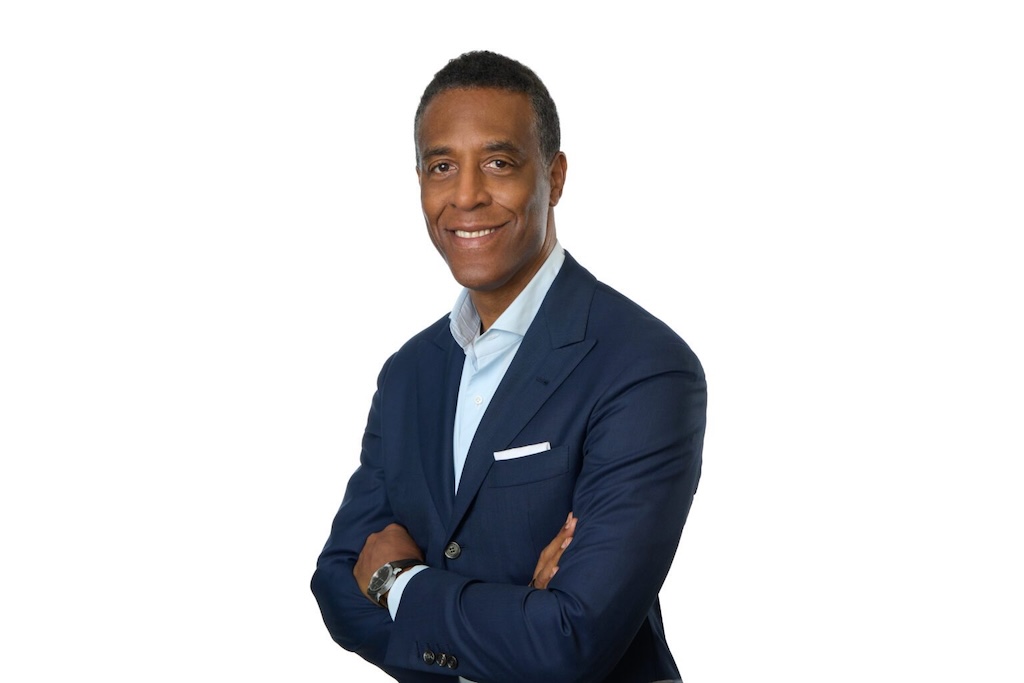

Rey Ramsey has spent his career refusing the options he’s been handed.
Instead, he’s expanded the range of available choices, in housing, technology, philanthropy and, now, impact investing, as president of the $483 million Nathan Cummings Foundation.
In his latest book, “The Tyranny of False Choices,” Ramsey plays out his underlying logic: that the either/or framings that dominate public debate – and private decision making – are manufactured, agenda-laden and often worth rejecting in favor of what he calls authentic decision making.
“The operative word—and what I say is an antidote to making these inauthentic and false choices—is liberation of thought,” he says. “Liberate your thought from all the biases, the algorithms, which are feeding you what you already believe.”
Ramsey joins David Bank on the latest Agents of Impact podcast to talk about the book, AI governance and the increased political pressures facing foundations today. Nathan Cummings has continued to describe its mission as advancing racial, economic and environmental justice, while ensuring its practices comply with nonprofit and civil rights law.
“Let’s continue to do the right thing,” he says. “If we’re doing proper diligence and analysis with our work, why would we have anything to be worried about?”
Mission alignment
Nathan Cummings Foundation is a founding partner of Impact LP, ImpactAlpha’s platform for asset owners for whom LP stands for “Leadership Potential.”
The most important choices, Ramsey argues, are rarely the ones we’re first offered. In a world of tribal thinking, he says, authentic decision making resists familiar ideological positions.
“We are bombarded with false choices more frequently than we realize,” he says. Rather than reacting to information that’s “loaded with an agenda,” decision makers should pause, examine the evidence and “expand your aperture.”
For Ramsey, false choices are everywhere. In the early 2000s, as co-founder of One Economy, he insisted broadband had to be in the home, not only in libraries or community centers. That took him into public housing projects and low-income neighborhoods — and put him in conflict with the Gates Foundation and AOL, which at the time were pushing center-based models as the consensus choice.
As CEO of Nathan Cummings Foundation, he’s built an “asset management” function for grants and program-related investments, using data to understand what works and to improve future decisions.
In 2018, when Ramsey served as a trustee on its investment committee, the foundation committed to 100% mission alignment of its endowment. In 2021, as interim CEO, he oversaw the replacement of the foundation’s longtime investment advisor with Bivium Westfuller. Cummings Foundation was one of the earliest clients of the woman-of-color-led investment firm that has since assembled an impressive client list. Ramsey says too many financial advisors reinforce conventional assumptions about risk rather than helping institutions rethink them.
“You do not have to have subpar returns because you’re doing impact work,” he says.
Two years ago, Nathan Cummings, alongside Ford Foundation and Omidyar Network, took a small stake in Anthropic when most foundations were still debating whether to engage with AI at all. The foundation’s $1 million stake could return 30 times or more when the AI giant goes public (see, “SpaceX, Anthropic IPOs set to unlock billions in liquidity for impact LPs”).
The investment was never primarily about financial returns, Ramsey says, but about ensuring foundations had “a seat at the table” as AI governance evolves. Public opinion on AI has so far largely been split between uncritical optimism and existential fear.
“We know that it’s transformative. We know that it does increase productivity,” he says. “What is left to us as a society are a set of choices.” AI, he argues, could lower barriers to entrepreneurship, expand educational opportunity and help more people build wealth. “If we play this right and make the right choices, it can enhance our agency rather than replace our agency. Those are choices. That is not destiny.”
Ramsey applies the same philosophy to mission-aligned investing. Ramsey is seeking to migrate on the continuum from businesses to avoid outright, to those with risks that can be mitigated, to those offering opportunities to advance solutions.
“You’re going from ‘What I’m avoiding,’ to ‘What I can mitigate?,’ to ‘Where I can lean into to maximize opportunities for solutions?’”
Getting to yes
That means giving more people their first yes, he says. Drawing inspiration from venture capital, Ramsey introduced “venture grants,” giving the foundation’s teams the authority to make smaller, early-stage grants to promising social entrepreneurs. The goal, Ramsey says, is to provide the kind of first institutional support that helped launch One Economy nearly 30 years ago.
“Everybody needs a yes,” he says.
Nathan Cummings is still among only a handful of foundations that have committed to align their entire endowments with their philanthropic purpose. Ramsey resists presenting the effort as a finished success story. AI companies rely on energy-intensive data centers. Climate technologies depend on mining. Defense contractors increasingly overlap with technology companies that many impact investors already own.
“When you make a commitment to go 100% impact, the number one thing you need is intellectual humility,” he says. “It will unearth a lot of things that you don’t know.”
Nathan Cummings Foundation is a founding partner of Impact LP, ImpactAlpha’s platform for asset owners for whom LP stands for “Leadership Potential.”
Get the podcast in your feed by subscribing on Apple, Spotify or YouTube