
Greetings, Agents of Impact!
🚀 Get the ImpactAlpha Edge. ImpactAlpha’s intelligence platform maps LP/GP allocations and relationships to help you quickly spot signals and identify partners. Find Impact Capital Managers pursuing market-rate returns, managers with verified impact practices assessed by BlueMark’s Fund ID, data partners demonstrating transparency according to Tameo, leaders of the Catalytic Capital Consortium, members of the Growth Firms Alliance that are building investment infrastructure in emerging markets, and more.
- Early access. Join allocators, fund managers, wealth advisors and services providers who are sharpening their ImpactAlpha Edge. Take advantage of our preferred subscriber rate to upgrade to firm-wide access to ImpactAlpha Edge and all of ImpactAlpha. Learn more and book a demo.
In this week’s LP/GP:
- Alder Point Capital’s Chris Larson on switching from LP to GP
- Kalos Ventures’ fund for education, care and workforce solutions
- J&J Impact Ventures’ first investment in Latin America
- Acquiring secondary stakes in Africa
Featured: Natural Capital
Alder Point Capital’s Chris Larson on switching from LP to GP to operate sustainable real assets (podcast). Chris Larson has sat on both sides of the fundraising table. As the chief investment officer and then CEO of New Island Capital, a well-heeled single-family office in San Francisco, there was “a line out the door of funds, and direct deal sponsors, pitching things,” Larson says on the latest Agents of Impact podcast. Now, as co-founder of Alder Point Capital Management, Larson is the GP who is pitching prospective LPs on the firm’s thesis of investing in sustainable real assets, such as forests and farmland. “It was slow, like you might expect,” he admits. Alder Point, formed with other veterans of New Island, has reached a second close on $126 million for the firm’s strategies, according to a filing with the SEC (see profile on ImpactAlpha Edge). “In rural communities across the US, there are lots of opportunities for impact interventions,” Larson says. “These impact interventions not only are delivering good from a climate, biodiversity, worker, health and safety perspective, but they’re also driving returns.”
- Property portfolio. On California’s rugged north coast, Alder Point has stitched together a patchwork of neglected timber parcels upstream from Redwood National Park. By pulling those lands into one parcel at Cold Springs Forestlands, Larson says Alder Point can implement sustainable management practices that are good for the forest, for local workers and for investors’ pocketbooks – a recipe, he says, for “impact alpha.” In Oregon’s Willamette Valley, Alder Point has acquired a blueberry farm to combine regenerative agricultural production with conservation goals aimed at permanently protecting farmland from development pressure. “Give us about five years and we should be in markets all over the country,” Larson says.
- Climate appetite. Larson says investor appetite for climate and biodiversity strategies remains strong, particularly among international allocators. “We’re seeing a pretty sustained interest in climate and nature, despite what’s going on with climate-hushing in the United States,” Larson says (“hushing” is the practice of downplaying investment strategies or practices that may have fallen out of political favor). Larson points to growing interest from institutional investors in Europe and Asia, especially Japan, Korea and Singapore, where allocators are looking to natural-capital strategies. The US offers such investors the kind of scale they are looking for. “This is one of the few places in the world where you can buy, as a fee-title interest in property, an asset that’s worth $500 million or a billion dollars,” Larson says. “It just doesn’t exist in many places.”
- Getting operational. At New Island, Larson spent more than a decade deploying capital into both direct deals and impact funds with natural capital and sustainability strategies (New Island wound down its activities in 2022). “I think we see individual leadership within asset allocators and asset owners is a very significant determinant of how effective their strategies are,” he says. The experience convinced him there was room to take a more operational approach to natural assets. “It can be hard to go deep and develop the specific execution capabilities that you need to be an effective GP,” he says. “The opportunity to work with a diverse set of investors, to have control over the investment strategy, and to be accountable for the results is a great recipe for really hard work, but also really rewarding, and really fun.”
- Keep reading, and listen to, “Alder Point Capital’s Chris Larson on switching from LP to GP to operate sustainable real assets (podcast),” by David Bank and Isaac Silk. Get the podcast in your feed by subscribing on Apple, Spotify, or YouTube.
Live on Edge: Natural Capital
Over 90 LPs and GPs investing in biodiversity and conservation. Alder Point Capital Management is one of three dozen fund managers profiled on ImpactAlpha Edge investing in farmland and natural assets. Some GPs such as BTG Pactual Timberland Investment Group, Lyme Timber Company and New Forests are focusing on timberland. Others, like Dirt Capital Partners, Farmland LP and Fractal Agriculture, are prioritizing stakes in agricultural land. Both strategies offer investors access to tangible assets while impacting climate resilience, food security, carbon sequestration, biodiversity and improved livelihoods.
- Asset owners. A diverse group of nearly 60 LPs are allocating capital into such sustainable real assets, including Ceniarth, Schmidt Family Foundation, Microsoft’s Climate Innovation Fund, A to Z Impact, Builders Vision, The Russell Family Foundation. Pension fund investors in sustainable real assets include the California State Teachers’ Retirement System, Ohio Police and Fire Pension Fund and Sacramento County Employees’ Retirement System.
Dealflow: Valuing Aging
Kalos Ventures raises $78.8 million inaugural fund for purpose-driven technology founders. Kalos Ventures Management is making its debut in venture investing with an all-women team and a thesis focused on an aging population and the reshaping of jobs by AI. The New York-based firm has raised $78.8 million from a roster of impact-focused limited partners including Zoma Capital, GCM Grosvenor, MassMutual, Sorenson Impact Advisory and Melinda French Gates’ Pivotal Ventures. Kalos Ventures is looking to make at least 15 investments. “We believe the greatest investment opportunities are at the intersection of major technological advancements, like AI, automation and robotics, and rapid demographic change,” Kalos’ Ashley Bittner told ImpactAlpha “Our founders are building real solutions to help people thrive in this time of major societal and economic upheaval.”
- Relational capital. Kalos believes that the most valuable thing a VC can offer isn’t capital but relationships. “Practcally, this looks like working with founders hand-in-hand to build financing syndicates and grow their boards,” Bittner said. “So much of what companies need [in order to] scale comes down to the ability to access the right tools and advisors,” said Erin Harkless Moore of Pivotal (see, “How ‘Impact LPs’ are supporting fund managers long after the raise”). Kalos has backed 10 companies to date, including Rosarium Health, a Houston-based company that works with healthcare providers, specialized clinicians and families to design safe home environments for seniors and individuals with disabilities. Clasp, based in Boston, helps employers attract and retain talent by helping new employees repay their student loans.
- Share this post.
J&J Impact Ventures backs DNA Capital to expand healthcare access in Brazil. J&J Impact Ventures, the impact investing arm of Johnson & Johnson Foundation‘s impact investing arm invested in Brazilian healthtech investor DNA Capital’s second venture fund to expand access to care in the country’s fragmented healthcare system. The deal is J&J Impact Ventures’ first fund in Latin America. Brazil’s development bank BNDES and the São Paulo Development Agency also invested in the fund. DNA Capital’s second fund has backed NefroClinicas, a dialysis clinic operator, and Piwi, a health insurance broker helping small businesses provide coverage to employees. “We believe that with purpose, innovation and capital, Brazilian healthcare companies can drive real-world impact for the country and beyond,” said DNA Capital’s Luiz Noronha.
- Access to healthcare. Brazil’s healthcare system serves more than 200 million people but access remains uneven across regions and income levels. Pedro Bueno founded DNA Capital in 2013 following the sale of Amil, a health insurer co-founded by his father, to UnitedHealth Group in 2012. DNA’s first fund deployed 280 million Brazilian reais ($50 million) in six companies, including Beep Saúde, which connects patients with at-home healthcare services, and Memed, a digital prescription service. J&J Impact Ventures invests globally in healthcare access through funds and companies including Cross Border Impact Ventures, Medical Credit Fund and Mobio Interactive, a Singapore-based mental health technology company (disclosure: J&J Impact Ventures supports ImpactAlpha’s Investing in Health coverage).
- More.
Dealflow overflow. Investment news crossing our desks:
- S2G Investments raised $1 billion for its first Solutions Fund to make growth-stage investments in companies in North America and Europe advancing the energy transition, marine transport, industrial electrification and food systems. (S2G Investments)
- Acre Impact Capital brought on French development finance institution Proparco as a new LP in its first fund, which makes equity investments in African infrastructure projects. (Acre Impact Capital)
- New York City-based Trimtab Impact invested in Amazonia Impact Ventures’ debut fund, which provides impact-linked loans to cooperatives, producer associations and other businesses across the Amazon bioeconomy. Trimtab will fund a partnership with survey company Ajua to collect feedback from cooperative members. (Amazonia Impact Ventures)
- Cygnum Capital secured $40 million from International Finance Corp. for its Facility for Energy Inclusion, a debt fund it manages that supports solar home systems, minigrids and commercial and industrial renewable energy installations in Africa. (Cygnum Capital)
Signals: Liquidity Events
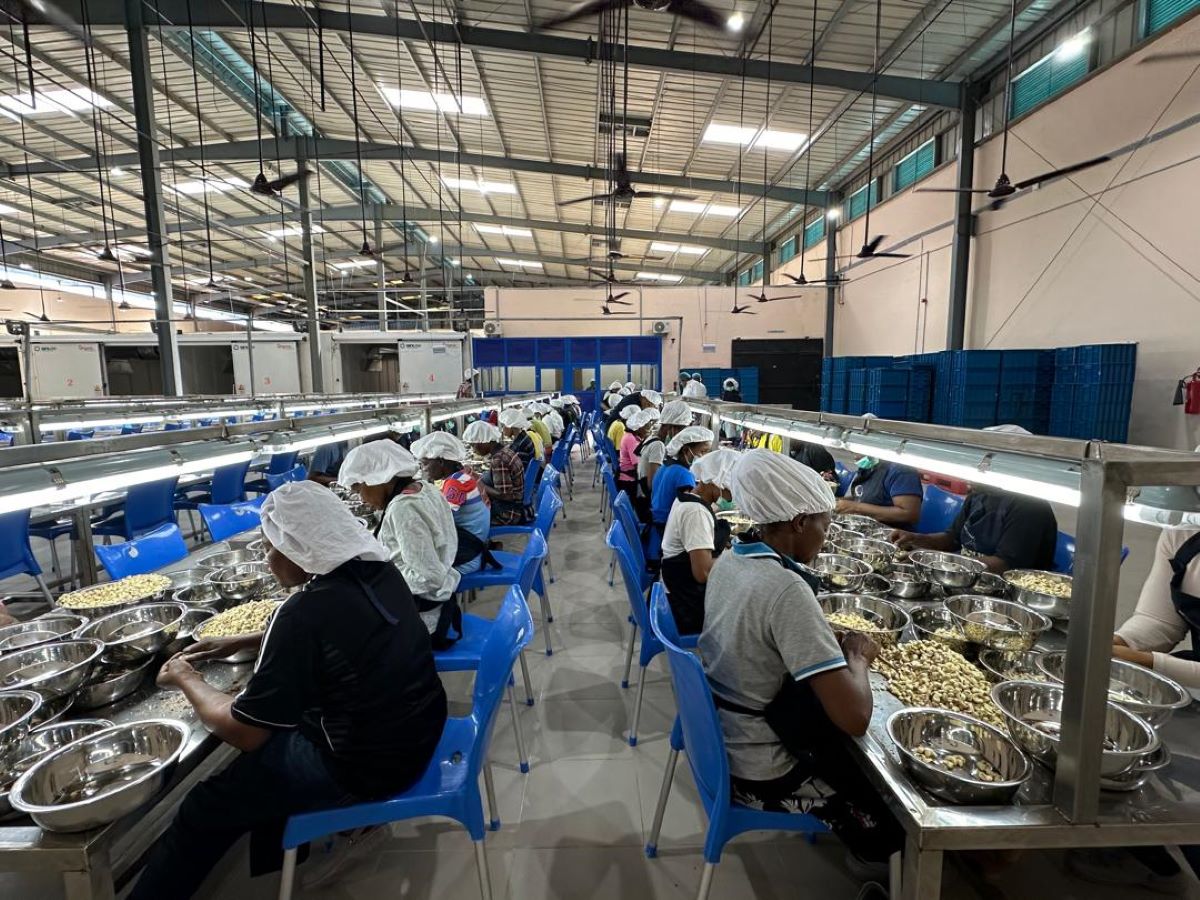
Sango Capital’s $120 million purchase of secondary stakes recycles capital in Africa. One of the biggest barriers to investing in Africa is investors’ fear of not getting money out. Africa’s growing secondary market is helping provide liquidity, especially for fund managers with strong track records. This week, Johannesburg-based Sango Capital acquired assets totaling over $120 million in four African funds from an institutional investor looking to rebalance its portfolio. Sango put up its own capital and raised more from African investors as well as US-based family offices making their first investments on the continent. The deal, which took around nine months to seal, involved 30 investments from the four funds, which had backed companies in financial services, consumer goods, infrastructure and light manufacturing in a dozen African countries. “In a healthy market, you have movement of investors,” said Sango’s Richard Okello.
- Track record. In 2024, secondary sales represented 32% of exits recorded in Africa, according to the African Venture Capital Association. British International Investment sold stakes in a fund by India-based Aavishkaar and Netherlands-based Goodwell Investments as part of its ambition to seed a secondary market in both regions. Last year, Switzerland-based Blue Earth Capital bought BII’s and employees’ stakes in Nigerian fintech Moniepoint. “The secondary transaction has a shorter runway to delivering returns, and so investors can participate in the development process,” Okello says (see, “To unclog private equity funding, Africa needs to develop a market for secondaries”). Last month, Sango created a continuation vehicle for its fund, which raised over $100 million in 2011 from global endowments, foundations, pension funds and family offices. Sango says the vehicle attracted new European LPs who provided additional liquidity to Sango’s original investors.
- Keep reading, “Sango Capital’s $120 million purchase of secondary stakes recycles capital in Africa,” by Lucy Ngige.
Agents of Impact: Follow the Talent
Suzanne Ashman, previously with Latitude, joins Sovereign AI Fund as managing partner… Sea Forward Fund welcomes Shey Dorji, previously with Bhutan for Life, as ocean impact metrics and reporting intern… ROC USA taps Danielle Bundrock, former cooperative housing director of NeighborWorks Montana, as network director to its board… The Council of Institutional Investors appoints Sara Murphy, director of systems-level investing at Sierra Club Foundation, to its advisory council for US asset owners.
Soros Fund Management is looking for a private credit research analyst in New York… Appalachia Funders Network is looking for a narrative and communications coordinator… Oregon Community Foundation is hiring a senior portfolio manager in Portland… Invenergy is on the hunt for a community engagement associate in Chicago… Kiva is recruiting an executive vice president of strategic partnerships… Google seeks a decarbonization portfolio analyst in San Francisco… Bank J. Safra Sarasin, a Swiss private bank, has an opening for a sustainable investment analyst in Zurich.
👉 View (or post) impact investing jobs on ImpactAlpha’s Career Hub.
Thank you for your impact!
– May 13, 2026