
Greetings Agents of Impact!
In today’s Brief:
- The data center power equation
- All Aboard Coalition’s latest deal
- Local, sustainable rare earth refining
- How faith-based investors can step up
Featured: Deploy!
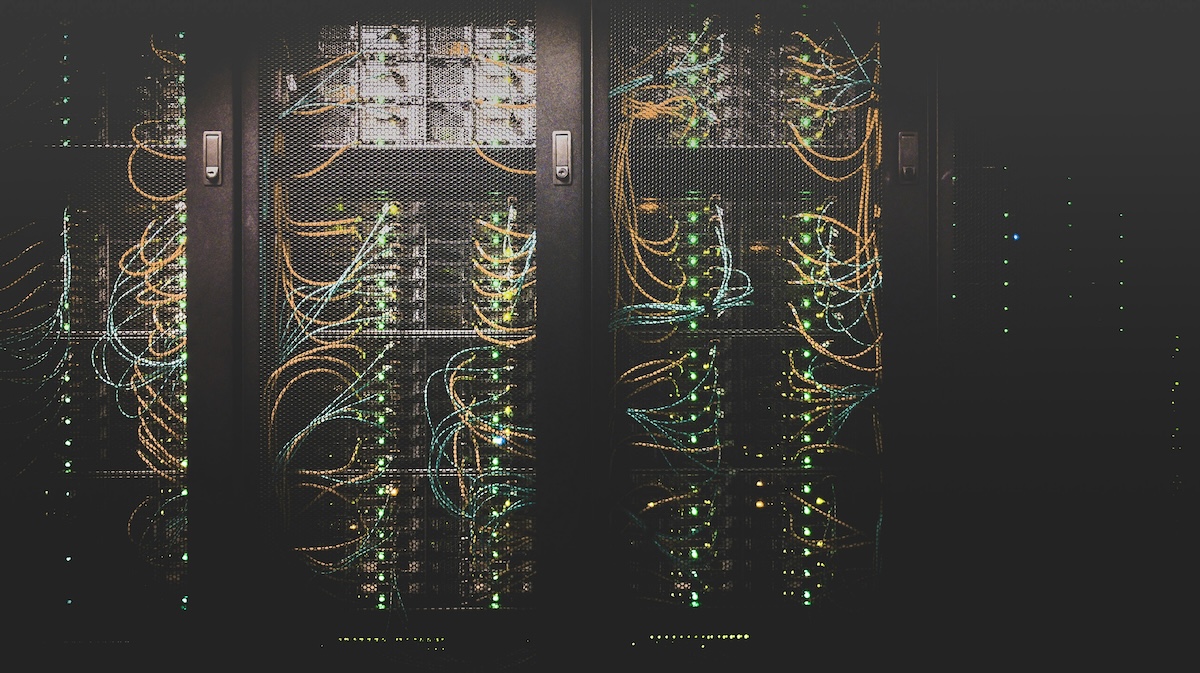
Renewable energy gains steam despite headwinds, as energy demand surges. Renewable energy sources are supplying about half of the electricity needed for the new data centers powering the AI revolution. Why not 100%? Power supply is the main constraint. Big tech and data center developers are scrambling to get electricity online as quickly as possible. Increasingly, that energy is generated by solar and wind power, with battery storage to smooth out the variability. Such systems often take the form of “behind-the-meter” energy production, co-located with the data center to avoid permitting and long wait times for grid connections. Renewables are now competitive with new gas on a levelized cost basis, even without subsidies, especially as the costs and wait for gas turbines have ballooned due to supply chain constraints, according to BloombergNEF. “The fastest and cheapest way to deploy energy today is through clean energy,” Majid Al Suwaidi of Alterra, the UAE’s $30 billion climate fund, said at the recent BNEF conference in New York, where AI-driven energy demand dominated the discussions.
- Firm power. The massive AI buildout represents an inflection point in the deployment of clean energy generation, which has been growing rapidly despite political headwinds. Yet even with the cost advantage of solar and wind, natural gas still captures half of data center demand. Eleven gas-fired data centers being built by companies including xAI, Meta, Microsoft and OpenAI will generate as much greenhouse gas emissions as some countries, a Wired analysis found. One reason behind gas’s appeal: the need for so-called firm power that can run reliably 24/7 and ramp up or down as needed. The default for such “baseload” energy is natural gas; hyperscalers are also lining up hydropower, nuclear energy and even fusion energy. The emergence of long-duration batteries that can store power generated from wind and solar for hours and even weeks is making renewable energy an increasingly viable firm power option, at least with grid or natural gas backup. “If you look at just our financing pipeline, renewable energy and storage – being that it’s still much faster and cleaner and cheaper – represents a lot of the new generation pipeline,” said Karen Fang of Bank of America.
- Ready-to-scale. Climate investment trends reflect the shift from early stage innovation to ready-to-scale deployments. Clean energy, energy efficiency and industrial electrification drove global energy transition investment to a record $2.3 trillion in 2025, up 8% from the prior year, according to BNEF. Early-stage climate tech deals, on the other hand, fell to their lowest level since 2020 according to a separate tally from Sightline Climate. Before they can be widely deployed, climate tech startups have to make the jump from promising technology to revenue-generating commercial production. That involves building their first plants, which are typically as novel as the technology they aim to produce. With the retreat of Breakthrough Energy Catalyst, a key first-of-a-kind, or FOAK, funder, the gap has become more acute. “Without that bridge to bankability for those FOAK projects, we delay resilient energy systems, domestic manufacturing, and local job creation,” Elemental Impact’s Dawn Lippert told ImpactAlpha.
- Keep reading, “Renewable energy gains steam despite headwinds, as energy demand surges,” by Amy Cortese and Erik Stein.
Dealflow: Low-Carbon Transition
All Aboard Fund backs ready-to-scale green cement maker Terra. An investment collaborative created to mobilize capital for ready-to-scale climate tech startups has made a $22 million investment in Terra, a green cement maker building its first commercial-scale production plant. It’s the second investment by the All Aboard Coalition, which was launched last year by investor and former TED curator Chris Anderson and more than two dozen climate tech investment firms to fill a funding gap for startups ready to commercialize (see, “All Aboard Coalition mobilizes co-investments in climate tech as federal funding falls”). The investment comes after coalition members Breakthrough Energy, Just Climate and GenZero backed the Golden, Colo.-based Terra’s $124.5 million Series B round in July (All Aboard co-invests when three or more of its member firms back a company). The additional funding brings Terra’s B round to $147 million, and will help it construct its plant for low-carbon cement in Celburne, Texas. “Terra is one of the only companies that has moved beyond the lab and built a commercially serious solution at a moment when the industry urgently needs one,” said All Aboard’s Jay Dessy. “Cleburne is the proof point this market has been waiting for.”
- Virtuous cycle. The investment by All Aboard is intended to send a signal to other investors that Terra is poised for breakthrough success. In January, the coalition invested in Salt Lake City-based Zanskar, which uses AI to supercharge geothermal exploration and development. The investment was part of Zanskar’s $115 million Series C round to support the development of a multi-gigawatt pipeline of geothermal power plants in the western US. Zanskar last month went on to secure up to $100 million in project financing in a deal led by Just Climate and Spring Lane Capital.
- More.
Argentina-based Alkemio closes pre-seed round to localize rare earth mineral refining. Rare earth elements are critical inputs for electric vehicles, wind turbines and smartphones, as well as defense. Yet most global refining happens in China. Alkemio, a Buenos Aires-based startup, has closed a $2 million pre-seed round to advance an organic, modular refining process designed to be used directly at mine sites, cutting the need to ship raw material overseas. The three-year old company says the approach cuts emissions by more than 70% and eliminates toxic solvents. Investors in the round include Mexico City-based Dalus Capital, San Francisco-based VU Venture Partners, Amplifica Capital, Argentinian oil-and-gas corporate venture fund VX Ventures, and Epic Angels. “The world urgently needs the ability to refine rare earths sustainably and reliably, wherever the deposits are,” said Maaike Doyer of Epic Angels. The funding will help Alkemio scale from a lab prototype to pilot project in the US.
- Stranded deposits. Conventional rare earth refining generally requires facilities so large they are only economically viable at massive centralized scale. Almost no country outside China has built one. Mining companies across Latin America have begun stockpiling material as trade tensions rise. “Rare earths are called rare, but they are present in almost the entire world, just in low concentrations. Every country is a potential place for a rare earth mine,” Alkemio’s Ailín Svagzdys told ImpactAlpha. With on-site processing, he envisions mining projects across a much broader geography. Given the scramble for such minerals, he added, “it will probably not take as long as people think.” Alkemio has signed letters of intent with mining companies in Latin America, the US and Canada.
- More.
Dealflow overflow. Investment news crossing our desks:
- Spain’s Solaria raised €300 million ($325 million) to expand its data center and battery storage operations, repositioning itself from a clean energy producer to a critical infrastructure operator in Europe. (Bloomberg)
- Octopus Energy Generation committed $500 million to reforestation projects developed by California-based Living Carbon and invested $13 million in the company’s carbon removal business. (Living Carbon)
- Copenhagen Infrastructure Partners acquired Ørsted’s European onshore renewable energy business and relaunched it as Perigus Energy. (Copenhagen Infrastructure Partners)
Impact Voices: Faith-Based Investing
How faith-based investors can do more to promote human flourishing. Can faith-aligned investors become known for what they are for, in addition to what they are against? That was the question posed by Martin Palmer, the founding president of FaithInvest and one of the primary conveners of last month’s Faith in the Common Good conference in Paris. For faith-inspired investors, few questions are more important, write Sorenson Impact Group’s Jim Sorenson and Impact Evaluation Lab’s Terrence Keeley in a guest post (disclosure: Sorenson Impact Foundation is an investor in ImpactAlpha). Faith institutions oversee at least $12 trillion in assets. The vast majority of that capital’s values-alignment comes in the form of negative screens for alcohol, tobacco, gambling and other “vice” industries. Sorenson and Keeley came to the conference with a white paper exploring investment strategies that “may promote more heavenly outcomes right here on Earth.” According to a survey of attendees, 90% believe that faith-based investors have unique value to contribute to global capital markets.
- World made new. “Our separate faith traditions – the Church of Jesus Christ of Latter Day Saints and Roman Catholicism – have always guided our personal and professional lives,” Sorenson and Keeley write. That belief helped lead Sorenson to align 100% of his foundation’s assets with positive impact beginning in 2017, and to collaborate with Keeley on the launch of Impact Evaluation Lab to measure the authenticity, impact and likely financial returns of such strategies. The Lab has also partnered with Sovereign Capital on a new faith-based impact measurement and management framework. At the conference, Sorenson and Keeley “volunteered to work with other attendees to help promote practical ideas – including better analytics and transactional opportunities,” to align investment capital and religious convictions. The pair say they can “imagine a day not far from now when all investors, perhaps led by the faith-based community, say not only how much their investments have made, but also how much good they have done.”
- Keep reading, “How faith-based investors can do more to promote human flourishing,” by Jim Sorenson and Terrence Keeley.
Agents of Impact: Follow the Talent
Don’t miss these ImpactAlpha partner events:
- May 12-14: Latin American Regenerative Investment Summit, Bogotá, Colombia. Use code ImpactAlpha for 10% off.
- May 13-14: Total Impact Summit, Philadelphia. Save $600 with code IMPACTALPHA.
- May 19-21: ReFed Food Waste Solutions Summit, Charlotte, NC.
- May 19-24: Brazil Climate Investment Week, São Paulo.
- May 26: LatAm Climate Innovation Summit, Mexico City.
- May 26-29: GLI Forum Latam, Lima, Peru. Save 15% on a Horizonte Global ticket with code IMPACTALPHAGLI26.
- May 27-29: Katapult Future Fest, Amsterdam. Use code IA-FRIENDS for 20% off.
- June 1-3: Impact Capitalism Summit, Charleston, SC. Save $200 with code IMPACTALPHA.
- June 1-5: Sustainable Finance Initiative’s Impact Week, Hong Kong.
- June 8-9: SuperReturn Energy Transition, Berlin. Take 10% off using code FKR3665ALPHA.
Justice Climate Fund promotes Elizabeth McKinsey to managing director of strategic partnerships… Social Finance taps Stephanie Van Sprang, formerly with Inspiring Minds, as senior associate of partnerships and philanthropy… Janet Yim, previously with Aetna, joins Town Hall Ventures as head of platform… Nonprofit Finance Fund seeks a loan origination director in New Jersey… Social Enterprise Finance Australia has an opening for a head of impact investment in Sydney… Swiss Youth for Climate is on the hunt for a program manager… Innovation Works will host its third annual Baltimore Neighborhood Economics Lab, Thursday, May 28 at the University of Baltimore.
👉 View (or post) impact investing jobs on ImpactAlpha’s Career Hub.
Thank you for your impact!
– May 4, 2026