
Greetings Agents of Impact!
In today’s Brief:
- Baking the next Fervo
- Financing ecosystem restoration in England
- Spiro’s fundraise for EVs in Africa
- Shaping markets with philanthropic capital
Featured: Investing in America
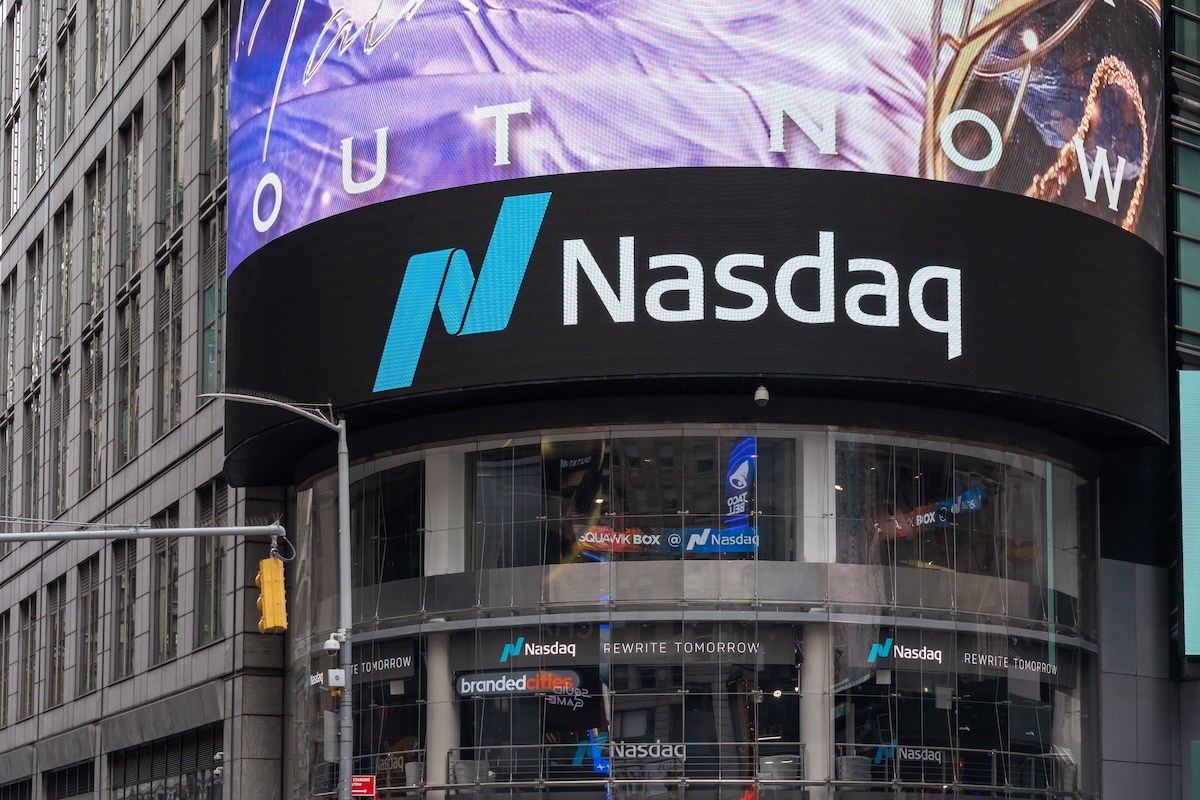
Fervo’s IPO recipe includes a dash of federal funding and a scoop of catalytic capital. When the co-founders of Fervo Energy rang the opening bell on the Nasdaq stock exchange on May 13, clean energy investors savored the moment. The geothermal energy developer raised $1.89 billion in an upsized and oversubscribed IPO that pushed the company’s valuation past $10 billion. The biggest clean energy public offering in Wall Street history raised hopes for other clean tech companies and their investors. “A spectacular IPO is like a Michelin three-star meal,” writes contributing editor Antony Bugg-Levine in his latest column, adapted from his new book, “Investing in America”. “Its effortless and complete appearance masks what you don’t see: the frantic kitchen, the years of experimentation and frustration, the supply chains it took to get the ingredients to the table.”
- Commercial scale. Fervo repurposes fracking technology developed by the oil and gas industry to unlock geothermal energy at commercial scale. “Fervo needed a specific sequence of investors before the IPO became possible, and the next Fervo will need the same. So will the one after that,” says Bugg-Levine. The Houston-based geothermal company’s path to its IPO led through the US Department of Energy, which supplied early grants through ARPA-E and later demonstration funding through the Geothermal Technologies Office; the nonprofit fund manager Elemental Impact, which made its initial equity investment in Fervo in 2020 (listen to the podcast, “Pulling climate tech to commercial scale with the energy demand from data centers”); and Breakthrough Energy Ventures, asset manager Capricorn Investment Group, and a range of other investors.
- Let’s get cooking. Many high potential energy innovations face “FOAK” risk – the uncertainty that comes with being the first commercial deployment of a new technology. Even proven technologies face another “Valley of Death,” which is the long, underfunded stretch between early validation and bankable scale. The All Aboard Coalition of leading climate venture capitalists backs ready-to-scale startups after three or more members have invested. In January, it invested $115 million in Salt Lake City-based Zanskar, which uses AI to identify promising geothermal sites and speed up development. What cleantech solutions need now, Bugg-Levine says, “are investors willing to staff the kitchen before the restaurant is full, before the reviews are in, before anyone knows it’s going to be a three-star meal. It’s time to roll up our sleeves and get cooking.”
- Keep reading, “Fervo’s IPO recipe includes a dash of federal funding and a scoop of catalytic capital,” by Antony Bugg-Levine.
Sponsored by Variant Investments
Channeling private credit to parched ground. Like water, capital tends to follow the path of least resistance. “That leaves vast stretches of the economy on parched ground,” writes Variant Investment’s Drake Hicks. Variant’s impact fund was built to nourish that ground, says Hicks. The fund channels asset-based private credit into markets too small or complex for traditional lenders, and embeds impact into the credit agreements. Variant’s portfolio spans motorcycle taxi drivers in Rwanda transitioning to electric vehicles, energy efficiency contractors in the US bridging project finance gaps, and affordable housing developers in California overcoming early-stage unbankability. “Covenants, advance rates, collateral structures and borrowing base structuring are not just risk-management tools,” writes Hicks. “Deployed with intention, they are the mechanisms with which we align capital around shared outcomes that persist long after the capital is returned.”
- Keep reading, “Channeling private credit to parched ground,” by Variant’s Drake Hicks.
Dealflow: Financing Nature
Big Nature Impact Fund secures £64.6 million for nature restoration in the UK. The blended capital fund is looking to raise up to £120 million ($160 million) to restore landscapes in partnership with landowners and project developers in England. Big Nature Impact raised £30 million in first loss capital from the UK’s Department for Environmental Food and Rural Affairs, or Defra. Defra will only receive distributions after private investors get their capital back plus a preferred return of 7%. “Structuring Defra’s capital as downside protection was fundamental to unlocking private finance at scale into what remains a relatively new asset class,” said Richard Speak of Finance Earth, the fund’s manager. Finance Earth’s team committed £2 million for the fund’s first close. Zurich Insurance Group, Admiral Group, Esmée Fairbairn Foundation and the Church of England’s social impact investing program also invested.
- Nature as infrastructure. Rather than depending on land appreciation, farming or commercial forestry for returns, the Big Nature Impact Fund will work with owners to restore woodlands, peatlands and other ecosystems and generate long-term revenue via carbon and biodiversity credits (see, “Can the UK’s market for trading nature credits deliver ‘biodiversity net gain’?”). “We designed the fund from the outset to target high-integrity nature restoration, working with landowners, project developers and local communities to fund the right activities in the right places,” said Speak. The initial close, he added, “proves that blended finance can successfully mobilize private capital to meet the UK’s climate and nature goals.”
- Share this post.
EV maker Spiro lands $215 million as African countries grapple with fuel costs. Dubai and India-based Equitane takes minority stakes in companies in addition to seeding eight of its own subsidiaries in infrastructure, renewable energy and other impact sectors. Its EV subsidiary Spiro, raised $215 million from Equitane and Impact Fund Denmark. Spiro operates in Kenya, Rwanda, Uganda, Togo, Benin, Nigeria and Cameroon. “We are bringing Danish pension capital into one of Africa’s most promising growth markets because we see potential for significant commercial growth in Spiro and electric mobility across Africa, as well as measurable climate impact,” said Impact Fund Denmark’s Lars Bo Bertram.
- Fueling protest. Spiro is riding a wave of support for solutions that lower fuel costs and boost local resilience. Fuel costs have spiked across Africa as shipments through the Strait of Hormuz have slowed to a tickle. In Kenya, a core market for Spiro, protests have erupted over high fuel costs. Nigeria, which scrapped a 50-year policy on fuel subsidies in 2023, has been among the hardest hit, with a 40% spike in fuel prices. Spiro says its e-motorbikes save owners up to 40%, or $2 a day compared to gas-powered motorcycles.
- Institutional support. Spiro will use the new capital to grow its battery-swapping network and e-bike sales and expand into new African markets. The capital infusion follows a $100 million funding round last year, backed by the African Export-Import Bank’s Fund for Export Development in Africa. Afreximbank topped up Spiro’s coffers with debt earlier this year, alongside climate-focused investors Nithio and Africa Go Green Fund. In 2023, Societe Generale and GuarantCo teamed up on an investment to help Spiro expand.
- More.
Dealflow overflow. Investment news crossing our desks:
- Nuveen adds another $100 million to Budderfly’s debt facility to help commercial building owners make energy upgrades, install usage monitors and survey energy consumption (see, “Nuveen reups debt financing with energy services firm Budderfly”). (Nuveen)
- Anthropic filed with the US SEC for its highly anticipated IPO. The filing comes just days after the AI juggernaut and public benefit corporation raised $65 billion in Series H funding. (Anthropic)
- San Diego-based Maxwell Power (formerly HDM Renewable Finance) secured a $750 million investment from Fairtide Partners to finance battery storage and solar projects. (Maxwell Power)
- BluePeak Private Capital provided a $16 million sustainability-linked loan to Groupe Centaures, a family-owned logistics company in the Ivory Coast, to support the company’s greenhouse gas emission reduction efforts. (BluePeak Private Capital)
Impact Voices: Market Shaping
Philanthropy can’t replace aid, but it can build markets. Meeting with farmers, technology entrepreneurs and local officials in Kenya recently, Rockefeller Foundation’s Elizabeth Yee kept coming back to the same question: Why isn’t this working? “A solution proves itself, generates strong results, generates excitement, and then… stalls out,” Yee writes in a guest post. “The problem isn’t a lack of solutions, it’s that markets aren’t functioning to deliver them.” The broken market mechanisms include supply without demand, demand without a reliable supply chain, or both without the policy or financing support to connect them. Solutions that succeed at scale work across supply, demand and local ownership simultaneously, says Yee, pointing to the Gavi vaccine alliance as an example. Yee urges foundation funders to “start with the market failure, not the instrument,” and “underwrite the exit from day one,” to identify who will take over the project when the philanthropic capital is gone.
- Derisking. In India, demand was strong for battery storage as the next stage in the country’s adoption of renewable energy. “What wasn’t yet known was whether those systems were actually financeable,” Yee says. The Rockefeller-backed Global Energy Alliance brought concessional capital to derisk the market, helping 100,000 people gain access to reliable power at half the previous cost while building a pipeline of $5 billion in deals that don’t need philanthropic support. A school meals program in a half-dozen countries builds connections with local farmers to reshape food economies. “The development model that defined the last generation is breaking down, and the next one isn’t yet built,” Yee writes. Philanthropy, she says, has leverage, “not in the scale-up itself, but in building conditions that make scale inevitable.”
- Keep reading, “Philanthropy can’t replace aid, but it can build markets,” by Rockefeller Foundation’s Elizabeth Yee.
Agents of Impact: Follow the Talent
Sandhya Nakhasi will step down as Common Future’s co-CEO on June 15. Co-CEOs, Jennifer Swayne Njuguna and Jess Yupanqui Feingold, will remain in their roles (disclosure: Common Future is an investor in ImpactAlpha)… Kate Dodsworth will become deputy chief executive of the UK’s Regulator of Social Housing after Jonathan Walter was promoted to chief executive last month… Antony Bugg-Levine joins Nine Dean’s workforce strategy council (see, “Nine Dean is building a holding company around quality jobs”).
Apis & Heritage Capital Partners welcomes Asad Siddiqui as investment associate director… New Story names Catherine Colyer, previously with WaterEquity, as CEO. Brett Hagler, New Story’s founding CEO, will become its board director… Mid Hudson Energy Transition seeks a lending and community capital program director in New York… Also in New York, The Clean Fight is looking for a senior analyst and a senior associate.
Community Investment Management has an opening for an impact and ESG analyst in Mexico City… Join Investors Circle at a convening on “Community, Capital and Impact” in Boston, Wednesday, June 10… Acumen and the University of Michigan’s William Davidson Institute are conducting a survey on the challenges facing social entrepreneurs in Africa, Latin America and India, and how well investors are meeting their needs.
👉 View (or post) impact investing jobs on ImpactAlpha’s Career Hub.
Thank you for your impact!
– June 2, 2026