
TGIF, Agents of Impact!
- Roundup: Node by node
- Podcasts: Ty Thomas, Rachel Sinha and This Week in Impact
- Overheard at Katapult Future Fest
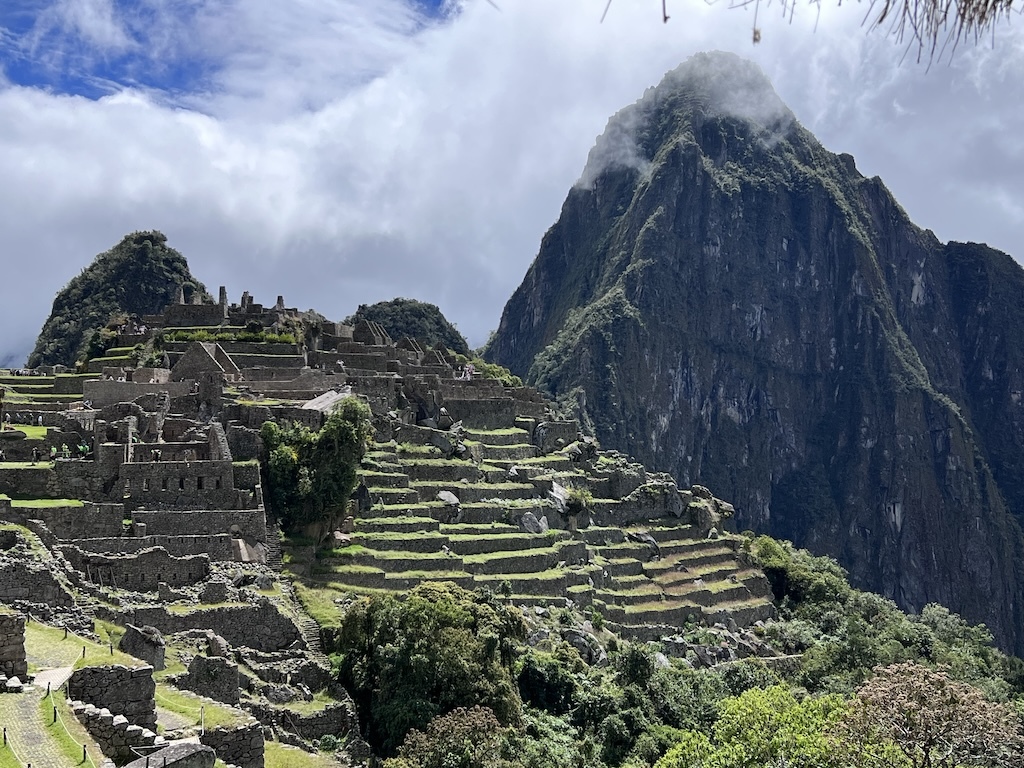
🗣Node by node. Impact investing’s rallying cry for many years has been, “from the margins to the mainstream.” But maybe it’s in the margins that the real action, and the real impact, takes place. In a short road trip through the highlands of Peru last week, we marveled not only at the precision agriculture and mind-blowing stonework of the Inca empire, but also at the textile cooperatives, high-altitude agribusinesses, and community-owned salt ponds operating today. Down in Lima, the (mostly) women at Pro Mujer’s GLI Forum Latam took on the challenge of expanding access to capital so such integral, local, semiautonomous economies can survive and thrive on their own terms. “We don’t have unicorns here in Peru in the startup ecosystem, so impact investing is not going to feel so odd and afar,” Aliados de Impacto’s Luis Lira told me.
It takes an ecosystem to build an impact economy, as Toniic’s Dipti Pratt highlighted in her own report from Lima. And it takes many pulsing, vibrant nodes, each growing in their own way, to form an ecosystem. Dennis Price went to Detroit to see how the Motor City is leveraging its real economy chops to establish itself as an AI-era launchpad, without the Bay Area’s overinflated valuations. “Places like Detroit, but maybe specifically Detroit, is where software meets the real world,” investor Dug Song said. In downtown São Paolo, Kasa Delas is rehabilitating empty buildings for workforce housing, bringing essential workers back into the city center, Luciano Gurgel of Ibirá Negócios Sociais wrote from Brazil. In Amsterdam, Jessica Pothering sampled the Katapult Future Fest (see below) and heard visions of a post-capitalist, regenerative, nurturing global economy, juxtaposed with calls for European self-sufficiency and self-defense.
The challenges of mobilizing global private capital for local economies in the Global South are evident in the efforts of Altérra, the United Arab Emirates’ ambitious, $30 billion effort to catalyze climate finance, as Erik Stein, Amy Cortese and I explored. “The development model that defined the last generation is breaking down, and the next one isn’t yet built,” wrote Rockefeller Foundation’s Elizabeth Yee, suggesting the philanthropy’s role is not to replace foreign aid, but to help build markets that can sustain themselves. And then there’s Fervo, the geothermal startup, which leveraged an ecosystem of government grants, catalytic capital and impact investments to prove out its thesis that fracking technology could be repurposed for low-carbon electricity, as contributing editor Antony Bugg-Levine detailed. Fervo’s $1.89 billion IPO last month was the largest clean-energy public offering, ever. That’s certainly mainstream, but the magic’s in the margins. – David Bank
- Must read. “Six lessons in becoming an AI native impact investor,” by Sorenson Impact Foundation’s Ibrahim Rashid.
This Week’s Podcasts
🎧 This Week in Impact. Host Brian Walsh takes up ImpactAlpha’s top stories with editor David Bank. Up this week: Unpacking Altérra’s ambitious effort to mobilize climate finance for the Global South; how Fervo Energy pulled off Wall Street’s biggest clean energy IPO; and Working Capital’s $31 million raise for worker power and resiliency in global supply chains.
- Listen to the new episode of This Week in Impact. Get the podcast in your feed by subscribing on Apple, Spotify or YouTube.
🦸 Agents of Impact: A $1,300 Harlem apartment led this fund manager to a $20 billion opportunity. At the institutional real estate developer Nuveen, Ty Thomas watched billions of dollars flow to luxury developments on the one hand, and deeply subsidized affordable housing on the other. Receiving less attention was the type of housing Thomas relied on early in his career: affordable workforce housing. Thomas launched Primary Housing to acquire and preserve naturally occurring affordable housing, or NOAH, which are market-rate assets affordable to households earning 80% or less of an area’s median income. “There are middle-income households out there that don’t qualify for affordable housing,” Thomas says on the latest Agents of Impact podcast. “I can help them.”
📯Criterion Institute Podcast: Disruption, fault lines and the moments that matter. Host Joy Anderson reframes moments of crisis: Instead of asking how to return to normal, she suggests, ask what disruption makes visible. Anderson explores the tensions of field-building with The Systems Studio’s Rachel Sinha, taking on questions of legitimacy and power, and who gets resourced and recognized.
The Week’s Spotlight
Opposites attract at Katapult Future Fest 2026. An invitation to meaningful and necessary change is not an invitation to ease, elegance or glamor. Organizers of last week’s Katapult Future Fest in Amsterdam invited hundreds of Agents of Impact to “Enter the Metamorphosis,” where the “structures of the old world dissolve and the blueprint of a new regenerative society” emerges. The three-day convening made visible and palpable the tensions and contradictions that come with any transformation. Between community and industry. Inclusion and exclusion. Conceptual and tangible. Humans and machines. People and planet. Also: LPs and GPs. Fair Capital Partners’ Jasper Snoek, in a discussion about common causes of tension between LPs and GPs, called for a recognition of complementary skills, experience and knowledge. “We need one another dearly.”
- At odds. Some of the contradictions on display were by design, and some not, at the gathering just outside of Amsterdam in the green artistic village of Ruigoord. The haven for creatives is in an industrial area owned by the Port of Amsterdam and populated with towering wind turbines. Oslo-based Katapult Ocean and Twist designed the convening as a “fusion of SOCAP, Burning Man and Singularity University,” so impact investors and social entrepreneurs could gather to work toward a future that is “regenerative, diverse, creative and radically collaborative.” In practice, wealthy communities in the Global North were overrepresented among participants. The “Solutions Stage,” where social entrepreneurs described real work on the ground, was located away from the big-picture, thematic discussions in the gathering’s main space. Visions of the post-capitalist, regenerative, nurturing global economy met calls for European self-sufficiency and self-defense. Asked to make sense of such contradictions, one participant offered, “Do they need to make sense?”
- Being human. The convening emphasized human connection to each other and to nature over humans’ relationship to, well, AI. “I think the more interesting question is, what is the future of being human?” said Indy Johar of Dark Matter Labs. “If you’ve got a portfolio focused on AI and you don’t have a portfolio focused on the future of being human, I think your portfolio is self-terminating. It’s a dead portfolio.” Herland Cerveaux of South Africa-based OceanHub Africa emphasized local culture, history, wisdom and lore in Africa’s blue economy with an animated narration of “the soul’s journey” by a Zulu historian and healer (very much worth a watch). British economist Kate Raworth, author of “Doughnut Economics,” led a high-energy, circus-style performance to help the audience visualize an economic system that discards “growth at all costs” to align with natural cycles and resources.
The Week’s Dealflow, Talent and Jobs
💼 See and share more than a dozen new impact jobs posted this week on ImpactAlpha’s Career Hub and view hundreds of more jobs in impact investing and sustainable finance. Have a job listing to post? Submit it here. And catch up on all of this week’s dealflow news.
ImpactAlpha contributing editor Antony Bugg-Levine joined Nine Dean’s workforce strategy council… Ownership Capital Lab tapped Luke Seidl, previously with Kiva, as innovation lab director, and Darcy Valenti, previously with the David Lynch Foundation, as development and philanthropic partnerships lead… Apis & Heritage Capital Partners welcomed Asad Siddiqui as investment associate director… New Story named Catherine Colyer, previously with WaterEquity, as CEO. Brett Hagler, New Story’s founding CEO, will become its board director.
Triodos Investment Management named Marie Heydenreich as fund manager of the Hivos Triodos Fund… Crux welcomed Eric Heintz, who spent 15 years with M&T Bank, as head of investments… Sandhya Nakhasi will step down as Common Future’s co-CEO on June 15. Co-CEOs, Jennifer Swayne Njuguna and Jess Yupanqui Feingold, will remain in their roles… Kate Dodsworth became deputy chief executive of the UK’s Regulator of Social Housing after Jonathan Walter was promoted to chief executive last month.
That’s a wrap. Have a wonderful weekend.
– June 5, 2026