Saludos, Agents of Impact!
In this month’s newsletter:
- Going down-market to uplift women
- Ecosystems for impact economies
- Impact bonds for water and marine conservation
- Financing supportive housing in São Paulo
Featured: Gender Smart
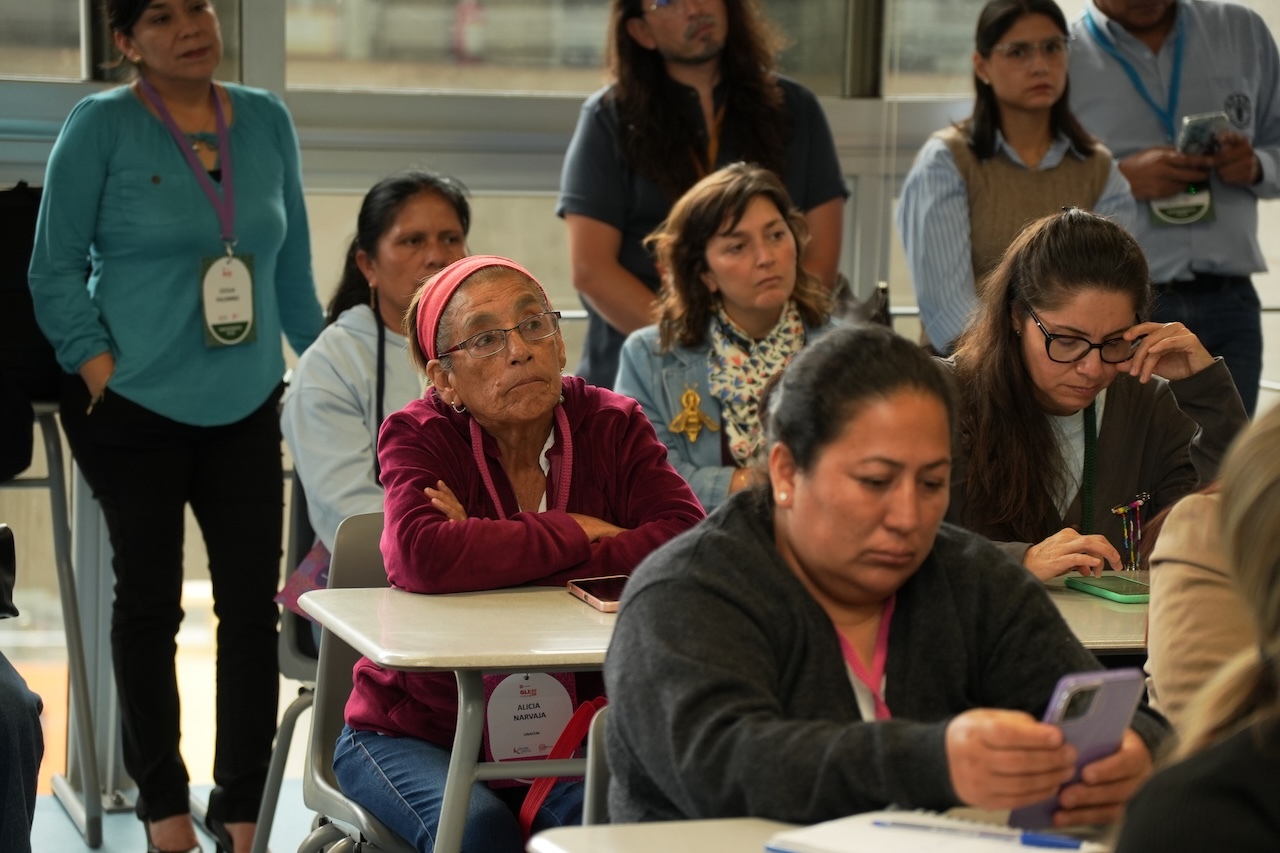
Building a women-led, impact-first economy in Latin America (videos). Peru is a small country. Businesses rarely take interest in low-income customers. And investing with a “gender lens” has fallen out of fashion in some circles. And yet, more than 1,000 practitioners from two dozen countries – call them agentes de impacto – convened in Lima last week at Pro Mujer’s GLI Forum LatAm to forge partnerships and reassert the primacy of their project: building just, inclusive and regenerative local economies, with low-income communities and women at the center. “The need is still there. Few organizations are still working with this population,” said Pro Mujer’s Carmen Velasco. “We may need a century to end inequality, but Pro Mujer can accelerate this if we meet the needs of clients.”
- It takes an ecosystem. “What does it actually take to build an impact economy?” asks Toniic’s Dipti Pratt in a guest post on ImpactAlpha. Pratt participated in a panel at the GLI Forum Latam, alongside New Ventures’ Sebastián Welisiejko, 2X Global’s Jessica Espinoza, Latimpacto’s Carolina Suárez, and Luis Lira of Aliados de Impacto, moderated by ImpactAlpha’s David Bank. “An impact economy is not simply about investors deploying capital differently,” she writes. “It is about how capital, policy, philanthropy, entrepreneurship, communities and financial institutions interact to shape outcomes together.” Gender equity, she says, cannot be siloed as a side strategy – it must be embedded into how capital moves across the entire ecosystem. Read more.
- Down market. Ventures that meet the basic needs of local populations are largely insulated from, and uncorrelated with, global capital markets. Small loans to rural women to build local businesses can co-exist with stratospheric IPOs for global AI juggernauts. “We see it as a market opportunity for these companies, because low-income people in Latin America are a huge mass that is underserved,” said Maria Pia Morante of ALIVE Ventures, an impact fund manager focused on the Andean region. ALIVE recently closed its second fund at $55 million to invest in companies that leverage technology to improve the lives of low-income customers. ALIVE’s portfolio company, Creditú, for example, provides mortgages for low-income families, with credit scoring adapted to the needs of informal workers. More than half of its borrowers are women.
- Local economy. The most valuable startup company in Peru is worth perhaps $100 million, several orders of magnitude smaller than the trillion-dollar “kilocorns” coming to market in the United States. That can make financial comparisons in Peru more favorable to impact investments. “We don’t have unicorns here in Peru, so investing in impact investing is not going to feel so odd and afar from what regular investors are used to right now,” says Lira of Aliados de Impacto, the national advisory board that brings together Peru’s impact investors with policymakers and corporate leaders. “‘We cannot have successful companies in failing countries,’” Lira said one CEO told him. “Impact investing is the way that private companies growing fast in the Peruvian ecosystem can commit, in order to help develop a country that is in need.”
- Keep reading, “Building a women-led, impact-first economy in Latin America,” by David Bank. Watch video interviews with ALIVE Ventures’ Morante and Aliados de Impacto’s Lira.
Dealflow: Impact Bonds
IDB Invest raises $127 million for water and marine conservation in Latin America and the Caribbean. The Inter-American Development Bank’s private-sector arm used its annual Sustainability Week in Barbados to announce new commitments for conservation and job creation. IDB Invest announced a Swiss franc-denominated impact bond on the SIX Swiss Exchange, raising 100 million francs ($127 million) for water management and marine conservation. IDB Invest also committed $30 million to Trinidad Tissues Limited, which is among the largest tissue manufacturers in the region, where many countries remain reliant on imports from China, the US and Turkiye.
- Small business finance. A $10 million working capital facility approved by IDB Invest will let Sygnus Investment Bahamas provide invoice-based financing to small businesses. A $5 million guarantee to Occidental Bank will help the financial institution expand trade financing. IDB Lab, IDB’s venture arm, is partnering with the University of Guyana to bring precision agriculture, artificial intelligence and smart sensors to farmers in Guyana.
- More.
Dealflow overflow. Investment news crossing our desks:
- The Canadian government committed C$2.7 billion ($2 billion) to scale its development bank FinDev Canada’s climate investments in emerging markets. (FinDev Canada)
- Atlas Renewable Energy, owned by BlackRock’s Global Infrastructure Partners, has put roughly $1 billion of planned solar and wind energy investments in Brazil on hold because of grid constraints. (Reuters)
- Check out more recent impact deals in Latin America and the Caribbean.
Impact Voices: Affordable Housing
Kasa Delas models how to finance supportive housing in downtown São Paulo. Where and how people live matters just as much as how much housing is available. In São Paulo, many low-income households are pushed to the periphery of the city in search of affordable housing. Living at a city’s edge often means long commutes to work and lower quality of life, especially for women. Kasa Delas, a partnership of building renovation specialist Citas and impact investment firm Ibirá Negócios Sociais, draws inspiration from workforce housing models in Denver and Atlanta, and the strategies of Jonathan Rose Companies in New York, Luciano Gurgel of Ibirá Negócios Sociais writes in a guest post. Gurgel explains how the project offers affordable rents as well as supportive services to help low-income, women-led households achieve stability and graduate into other housing.
- Buy low, rent low. “In a traditional ‘buy low, sell high’ play, an investor would retrofit for high-end tenants, leading to displacement,” Gurgel writes. “Kasa Delas inverts this logic.” The community’s units have a rent cap of 30% of tenants’ income. NGO partners offer social services on-site. The partners sourced 20-year project financing – the kind more commonly used for toll roads or energy grids that have steady cash flow-generating assets. “This long horizon is the secret to lasting impact, as it allows the debt service to be calibrated to intentionally lower rents,” Gurgel says. “It proves that there is not an inevitable link between revitalizing a city center and gentrification.”
- Go deeper. This project spotlight is part of ImpactAlpha’s partnership with Aliança pelo Impacto, the Brazilian national advisory board for impact investing.
Agents of Impact: Follow the Talent
Don’t miss these upcoming events in the region:
- August 17: Demographic Intelligence for Investments with Purpose, Montevideo, Uruguay.
- September 8-11: Latimpacto Impact Minds, Manaus, Brazil.
- October 1-4: Caatinga Climate Week, Pernambuco, Brazil.
- October 26-27: Aliados de Impacto Impact Investing Summit, Lima, Perú.
GSG Impact released results from an impact accounting pilot in Colombia that explored how monetizing social and environmental outcomes can influence business and investment decisions… Swiss impact investor responsAbility has an opening for a debt-focused investment associate for Latin America, based in Lima.
EY seeks a junior consultant for climate risk and sustainability in its financial services practice in Mexico City… Finance in Motion is hiring an analyst for structured debt and hybrid finance transactions in Latin America… IDB Invest seeks a senior associate for its financial institutions team in São Paulo… Patria Investments is recruiting a finance associate for portfolio valuation and asset management in Bogotá.
👉 View (or post) impact investing jobs on ImpactAlpha’s Career Hub.
Thank you for your impact!
– June 4, 2026