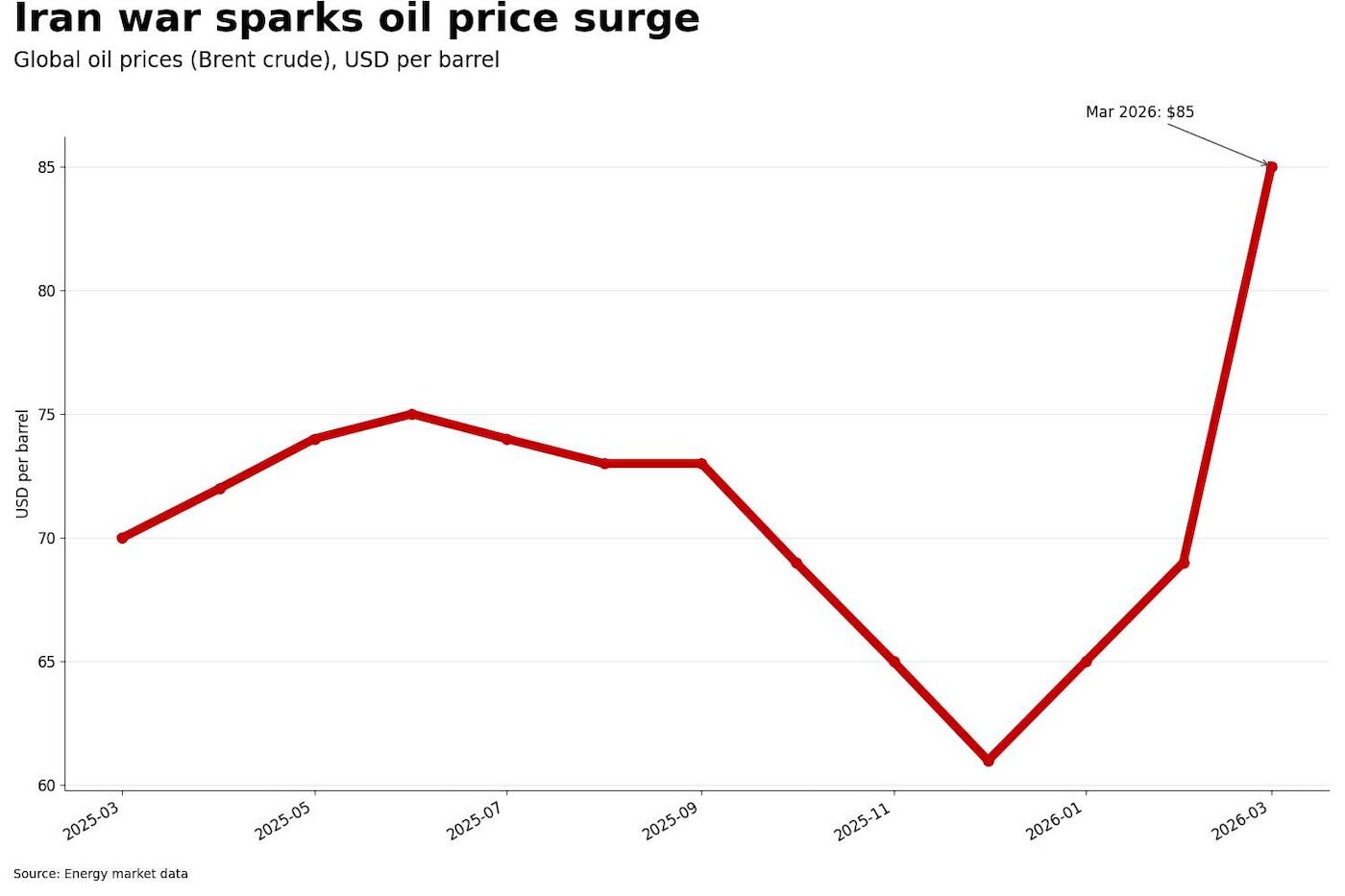

The US strikes on Iran and retaliatory attacks have shut down oil and gas shipments through the Strait of Hormuz and debilitated oil refineries and liquified natural gas terminals in neighboring states. Oil and gas prices have spiked, making heating homes, filling gas tanks or running factories more costly.
It’s the second such shock in less than five years — prices spiked even higher after Russia’s 2022 invasion of Ukraine. With energy sovereignty an increasing watchword for nations in a volatile world, the war, instigated by a pro-fossil fuel president, could backfire on the industry.
“For oil and gas, the Strait of Hormuz is a lose-lose,” quips Zach Stein of Carbon Collective.
Low prices at the end of last year eroded profits for oil and gas producers, and made all but the lowest-cost producers economically unviable. High prices now may goose profits, “but lead to demand destruction,” Stein tells ImpactAlpha. Cheap solar, wind and battery storage provide both energy sovereignty and price security.
Stein says there’s no way “things like this don’t hasten the energy transition.”