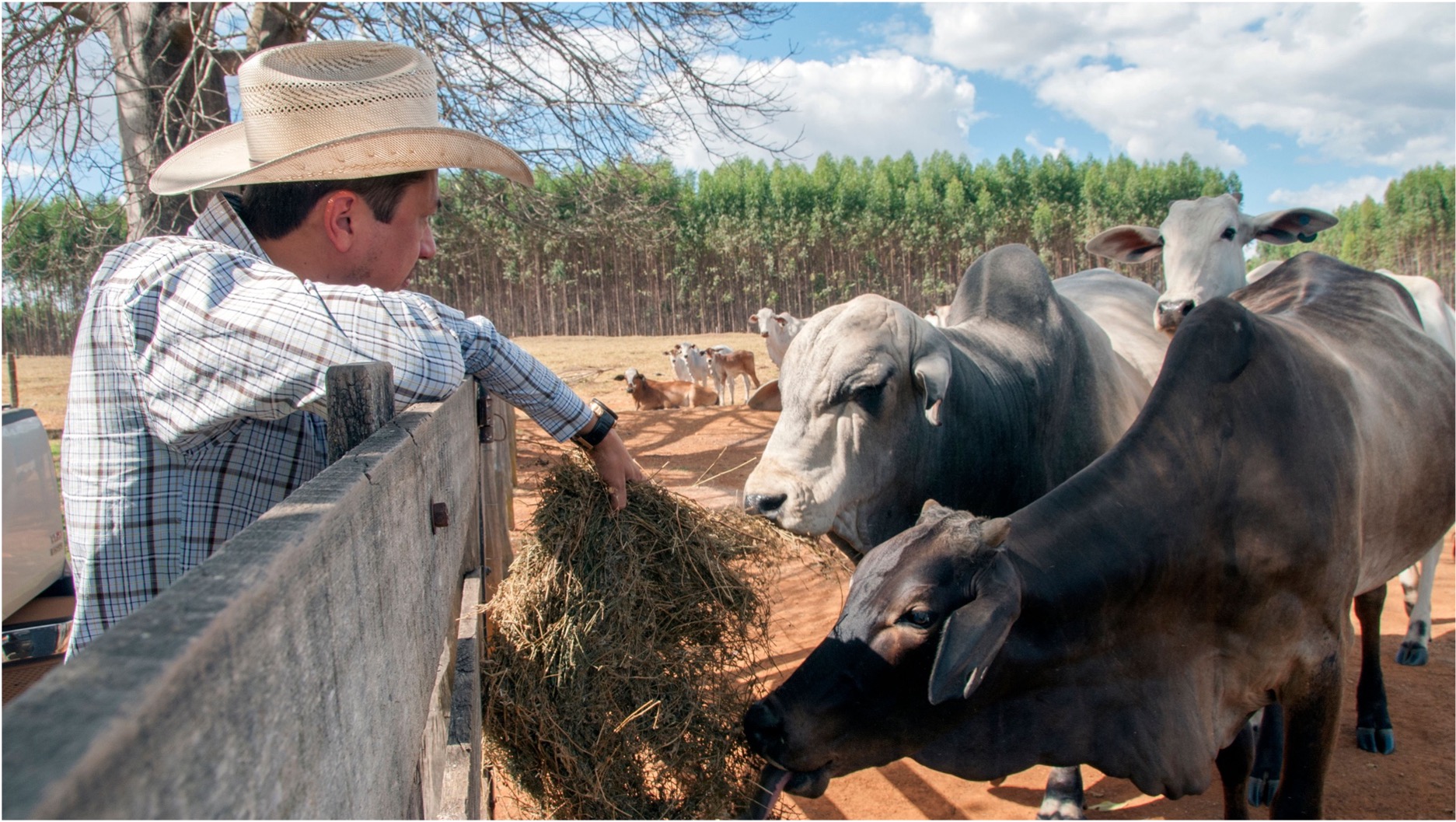

Brazil is the world’s largest poultry exporter and one of its biggest dairy producers, yet the small and mid-sized farmers who supply those chains are nearly invisible to the credit system.
Between 2021 and 2023, only 15% of family farmers accessed rural credit, and 38% had never received formal financing, according to the Climate Policy Initiative and Brazil’s Confederation of Agriculture and Livestock. Lenders treat these producers as too risky to underwrite. But the data says the opposite: In late 2024 their default rate was 6.9%, the lowest in the sector, against 10.2% for large producers. That distance between perceived and real risk is where the opportunity sits.
As an investor backing agrifood and climate companies in Latin America, I have reached a conclusion that still surprises many allocators: When credit is built around the rhythm of a farm rather than the templates of a bank, it can raise a producer’s income and cut emissions at the same time.
AgroForte, a Brazilian lender focused on poultry and dairy, is the clearest evidence I have seen. Instead of demanding land titles, it underwrites based on production and delivery data shared by agro-industry partners, then deducts repayments from future deliveries. Disbursement can take 48 hours, and nearly 2,000 producers have borrowed through the model. The open question was whether that credit genuinely improved sustainability or just felt like it did, so we set out to measure it.
Risk the market keeps mispricing
Conventional credit asks for collateral, paperwork and approval timelines that a producer leasing a barn simply cannot meet. The production cycle compounds the problem. Poultry farmers carry steep upfront costs for energy and inputs but only get paid when the cycle closes, while dairy farmers face constant feed and price volatility.
When financing arrives late or in the wrong shape, producers postpone the upgrades, from ventilation to climate control to better nutrition, that protect both output and animal health, just as hotter and more erratic weather eats into yields. AgroForte’s two lines answer that timing problem directly: working capital to cover costs through the cycle, and investment credit for infrastructure, animal welfare and efficiency.
Measuring what was only felt
Believing in impact and proving it are not the same thing. With Credit Saison Brazil and The Yield Lab Latam, AgroForte built an ESG and impact monitoring system anchored in indicators producers already track: milk yield, somatic cell and bacterial counts, feed conversion, mortality and flock performance.
The analysis compared borrowers against similar producers who did not borrow — over time and across producer size, gender and age. The aim was not a glossy report but evidence on whether tailored lending actually moves the metrics that signal welfare, efficiency and emissions.
Income and emissions, together
Among medium-small dairy producers, investment loans raised milk output by up to 29% and gross revenue by 25% to 36%, while greenhouse gas emissions per liter fell between 17% and 21% and emissions efficiency improved 20% to 27%. Working capital produced faster, lighter gains, lifting milk volume 18% to 28% within months by smoothing feeding cycles and avoiding stockouts.
In poultry, investment loans to larger producers raised processed birds and revenue by roughly 20% within two years, with better thermal control reducing mortality. The environmental and economic wins were tied together, with healthier, better-housed animals producing more from each unit of feed.
One instrument does not fit all farms
The most useful lesson for other lenders is that impact is not uniform; it tracks the borrower. Investment credit drove structural change, while working capital brought stability.
Producers under 45 years old turned credit into both profit and efficiency, with emissions per liter down as much as 36%, while older producers used early loans to consolidate hygiene and quality. The patterns split by gender too: Smaller female dairy producers improved milk quality and environmental efficiency rather than chasing scale.
For an investor, the alpha is in the matching. Pairing the right instrument to the right profile is what turns a loan into a measurable outcome instead of a hopeful one.
The signal for impact capital
There is a broader takeaway here. Animal protein is essential to Brazil’s economy and badly exposed to climate risk, and its smallholders are a large, creditworthy market that mainstream finance keeps underpricing.
Credit underwritten on delivery data rather than collateral is a replicable structure: it lowers default risk, deepens the tie between producers and industry, with more than 75% of borrowers saying it made them likelier to stay integrated with their agro-industry partner, and, paired with measurement, proves its own ESG case.
For allocators weighing agrifinance in emerging markets, the lesson is not that credit is charity. It is that, designed well, the same dollar can earn a return, lift a family’s income and lower emissions. And now we can show it.
Andressa Esteves is an ESG and Impact Officer AVP for Credit Saison Brazil.
Disclosure: Credit Saison Brazil is an investor in AgroForte.
Guest posts on ImpactAlpha represent the opinions of their authors and do not necessarily reflect the views of ImpactAlpha.