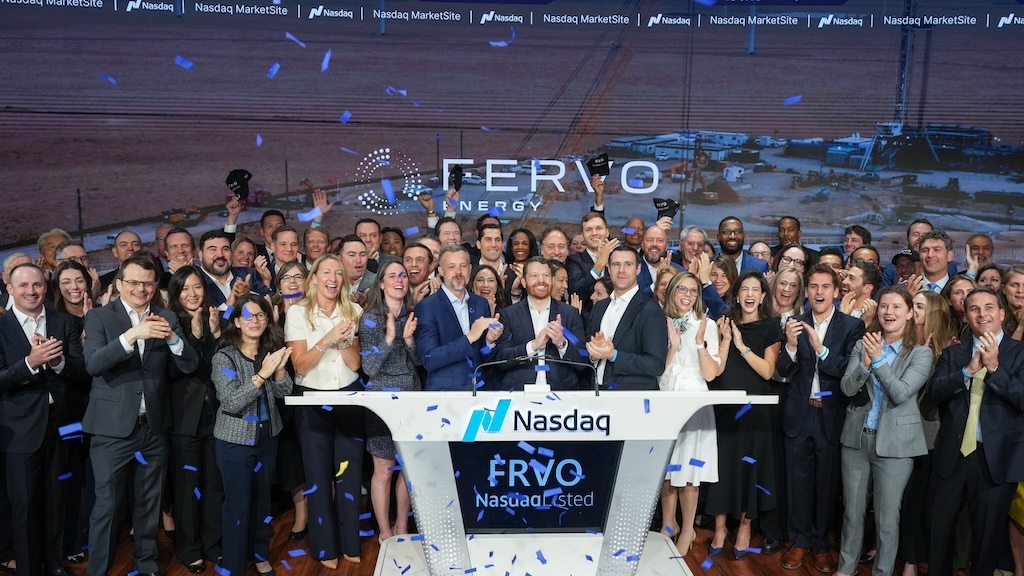

When SpaceX completed its IPO last month, many investors celebrated one of the most successful technology investments in modern history. The company raised more than $75 billion in its offering at a valuation of $1.77 trillion, the largest public offering in history. OpenAI and Anthropic may not be far behind, and are likely to raise tens of billions on near trillion-dollar valuations.
For impact investors, these milestones provoke a difficult question: How can we influence the trajectory of society-shaping technology when it is financed by capital flows so large that impact investors cannot realistically hope to influence it through scale alone?
As I began researching my new book, “Investing in America,” out this month, I generated a list of the national challenges most Americans agree need solving: housing affordability, healthcare access, educational opportunity, worker financial security, and reliable energy. Within months it became clear that making sure technology becomes broadly beneficial belonged on that list as well.
But the flood of investment capital into tech can easily drown efforts to make technology more democratic, inclusive and responsive to social concerns. The big four hyperscalers alone are set to spend some $650 billion on the AI buildout this year, and AI-related infrastructure could hit up to $8 trillion over the next five years. Many people fear that the technology will take away their jobs, create oligarchs with untouchable wealth, and destroy their communities with resource-depleting data centers.
That leaves impact investors facing a paradox. We cannot exert influence by outspending conventional investors. But neither can we afford to walk away. Instead, we need to focus on the places where relatively small amounts of capital can still influence who benefits from technology and who gets to shape its future.
The investors who are financing a better future through technology are answering two essential questions:
- How do we ensure that more people gain access to technology?
- How do we ensure that more people gain influence over technology?
Can you hear me now?
All the hype about trillion-dollar IPOs obscures the clearer and more present technology challenge facing many Americans – the lack of high-speed internet access at all. Approximately one in five American households still lack broadband service at home, limiting access to education, healthcare, employment, and financial services.
Lack of access particularly affects rural areas. The economics of rural broadband remain misaligned with conventional investment models. Extending fiber or fixed-wireless infrastructure to sparsely populated areas can cost as much as urban builds, but serves far fewer customers per mile. A well-run rural broadband network can generate reliable profits, but not at the level that would attract private equity investors. Mainstream debt providers, for whom the returns might work, often consider these investments too risky.
The technology exists. Demand exists. The bottleneck is financing.
Connect Humanity was created to address exactly this problem. The nonprofit investment fund works with local internet service providers and community partners to expand broadband access in places that larger providers often ignore.
In Enfield, North Carolina, Connect Humanity partnered with Open Broadband, a locally focused provider, to finance broadband expansion throughout the community. Residents who previously relied on expensive and unreliable internet gained access to affordable high-speed service that opened the door to telehealth appointments, online education, remote work opportunities, and modern financial services.
Communities lacking broadband access, digital infrastructure, and digital skills will increasingly be excluded from the opportunities created by technological progress. Ensuring broad access to technology may not be as glamorous as backing the next AI unicorn, but it could ultimately matter just as much.
Going the distance
Given the central importance of venture financing to set up new technologies for success, who decides which entrepreneurs receive financing will help determine the kind of country we will live in. For decades, the technology industry has been shaped by a remarkably narrow set of decision-makers. Venture capital remains one of the least diverse segments of the financial industry, and investment decisions continue to be concentrated among a relatively small group of investors operating in a handful of geographic markets.
Tech veteran Mitch Kapor and Freada Kapor Klein built Kapor Capital around the belief that expanding who receives venture capital requires expanding who has access to venture capital in the first place. Rather than treating inclusion as a side objective, they integrated it into the core of their investment process.
The firm has backed entrepreneurs building products and services designed to expand opportunity in education, healthcare, employment, and financial services while demonstrating that founders from historically overlooked backgrounds can build highly successful companies. They also developed an investment framework that considers the “distance traveled” by entrepreneurs, recognizing that achievement looks different for a first-generation college graduate from a state university than for a legacy student from Stanford.
https://impactalpha.com/freada-and-mitch-kapor-write-the-book-on-startup-investing-to-close-gaps-of-equity-and-opportunity/
Some bets will go bad, such as Kapor Capital’s early support for Bitwise Industries, which blew up in 2023. But if technology is increasingly determining economic opportunity, then ensuring a broader group of Americans can influence its direction becomes an essential impact investing objective.
The room where it happens
As technology companies become large enough to shape society itself, some impact investors are asking a new question: what role can ownership play in influencing their direction?
That question motivated Omidyar Network, joined by the Ford Foundation and Nathan Cummings Foundation, to purchase Anthropic shares that became available in 2024 through the FTX bankruptcy proceedings.
The investment was not primarily an effort to determine whether Anthropic would succeed commercially. By that point, the company already had access to vast amounts of conventional capital. Instead, it reflected a recognition that ownership can create opportunities to influence conversations around governance, safety, transparency, and the broader public-interest implications of artificial intelligence.
“When an AI company draws a line against autonomous weapons and mass surveillance—and holds it under enormous government pressure—that’s our investment thesis in action,” Omidyar Network’s Mike Kubzansky told ImpactAlpha in March. Kubzansky recently left the philanthropic group to launch a responsible AI fund.
As AI systems become more capable, investors who possess ownership stakes and governance rights will have a voice alongside governments and civil society in shaping outcomes.
A similar logic sits behind investor and open-internet activist Frank McCourt’s People’s Bid for TikTok. The proposal raised an important question: should platforms that increasingly shape public discourse be governed solely by commercial incentives, or should users and citizens have greater influence over how they operate? The People’s Bid sought to give users greater control over their data and digital experience, challenging assumptions about both ownership and governance. The bid was not successful, but the effort spawned McCourt’s Project Liberty to “advance human agency” in an AI-powered world.
These efforts point toward an emerging role for impact investors. The challenge is no longer simply financing innovation. It is helping shape the governance of technologies that increasingly shape all of us.
Stay in the game
Throughout “Investing in America,” I profile people trying to solve national challenges by expanding who gets access to fair financing. They are helping workers buy companies, families buy homes, students pay for education, and communities finance affordable energy.
Technology presents the same challenge in a different form: ensuring that access to financing is available to people building AI-focused funds and enterprises that serve people and preserve human agency.
We need more Americans to access the technologies increasingly required to participate in modern life, and more Americans to influence the decisions that determine which technologies get built and whose problems they solve.
Impact investing has never been about matching conventional capital dollar for dollar. It has always been about identifying leverage points where capital can expand opportunity, influence, and participation. The challenge is to invest where our influence still matters.