The places that need climate capital the most have long gotten the least.
The outcome of global efforts to mitigate the worst effects of climate change will be determined largely in the developing economies of Africa, Asia and Latin America. Direct investments in low- and middle-income countries, which account for three-quarters of global greenhouse gas emissions, deliver far deeper reductions in greenhouse gas emissions per dollar than do investments in more developed economies.
Yet, the case for private climate investments in the Global South has been undercut by project setbacks, currency fluctuations and political risk.Emerging markets and developing economies receive just 14% of global climate finance. The war with Iran has sent oil and gas prices surging, making the transition away from fossil fuels even more urgent.
One of the most ambitious efforts to overcome these obstacles and mobilize private capital for the low-carbon transition has been Altérra, the $30 billion commitment announced by the United Arab Emirates at the COP28 climate summit in Dubai in December 2023.
Two-and-a-half years later, the initiative has attracted some additional capital – and underscored the challenges in raising the estimated $1 trillion in private capital needed each year by 2030 to meet climate goals, even with catalytic or concessional capital on the table.
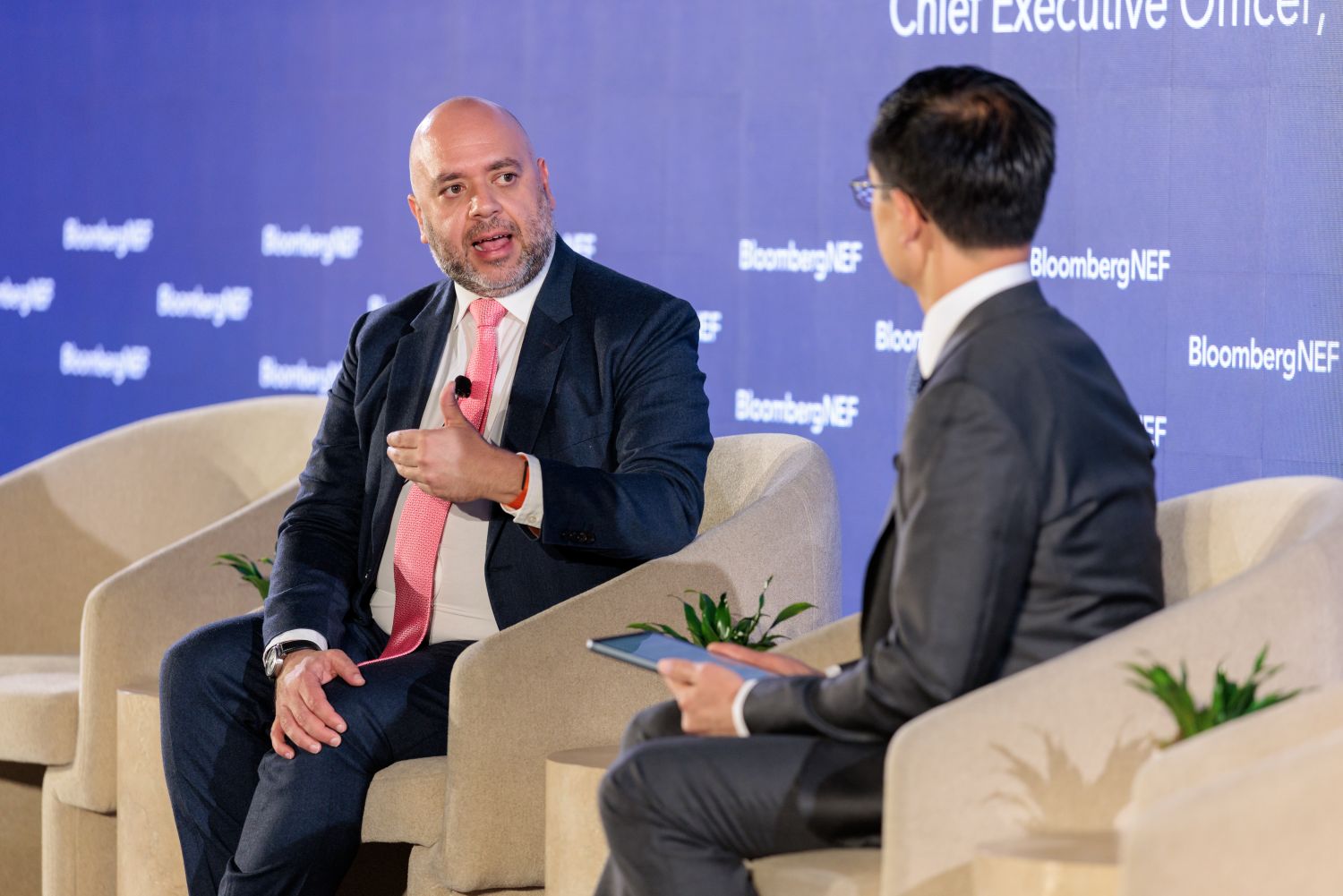
“One of our top line goals is to mobilize capital, and we’ve done really well,” Altérra’s Majid Al Suwaidi told ImpactAlpha at the Milken Global Conference last month. “We have helped move the needle, with new climate vehicles continuing to emerge and strong interest in building more. The best minds are now focused on how to partner with us to deploy capital at scale into the climate transition.”
Unpacking Altérra’s performance reveals a more complicated picture. The commitment was divided into two parts, a $25 billion “Acceleration” fund for commercial investments through asset managers like Brookfield Asset Management, TPG and KKR; and a $5 billion “Transformation” fund for catalytic investments specifically targeted to the Global South.
The Acceleration investments, which anchors large climate vehicles in developed markets without concessional structuring, have indeed helped attract commercial investors. Seeded by Altérra, Brookfield’s Global Transition fund and TPG’s Rise Climate fund have mobilized roughly nine dollars in outside capital for every dollar invested, well above early projections.
In contrast, Altérra expects its investments from the Transformation Fund, in funds targeting the Global South, are expected to ultimately mobilize about only four dollars for each dollar it invested, or about $6 billion. So far, they have attracted about $2.4 billion, but Altérra says they are on track to meet fundraising targets. Altérra’s Transformation investments do include caps on its own returns, a form of catalytic or concessional features designed to boost returns for other investors.
The fundraising shortfall highlights one of the central challenges facing climate finance. Even with a deep-pocketed sovereign investor capping its own returns to provide anchor capital, attracting commercial investors to climate infrastructure in frontier markets continues to be an uphill climb.
“I came into this space as a diplomat and engineer rather than a finance professional, and what has been most surprising is seeing the strength of the opportunities, with high quality investments delivering returns that exceeded expectations,” Al Suwaidi said in the interview.
“The other surprise was the appetite from investors for the vehicles we created with Brookfield and TPG. Consultants told us we might achieve mobilization of one or 1.5 times. Getting nine and four on those two funds shows there’s real institutional appetite to invest in the Global South, and that wasn’t expected.”
Usual suspects
A closer look at the fundraising behind both vehicles underscores the challenge in attracting the kind of commercial investors the initiative was targeting. Instead, much of the capital raised to date has come from Altérra itself, the fund managers and development finance institutions.
TPG’s Global South Initiative, for example, has raised approximately $2.38 billion in total, according to the firm’s most recent reports. That figure includes the original $500 million commitment from Altérra and a further $1 billion allocation from TPG’s own Rise Climate II strategy – making one TPG fund the biggest investor in another.
Excluding those commitments, TPG’s Global South Initiative vehicle has attracted roughly $880 million from third-party investors, leaving it about $120 million short of its stated outside-capital target ahead of an expected final close later this year. In 2024, TPG said Altérra had been joined in the Global South Initiative by “a broad and diverse set of institutional investors from across Asia and North America.”
Geopolitical uncertainty and a broader retreat from climate-focused investing was made fundraising difficult for TPG and other climate funds. Investors that TPG has disclosed include International Finance Corp. and the Asian Infrastructure Investment Bank, both institutions with mandates to deploy capital into developing economies. By building dedicated Global South funds, TPG and Brookfield created a structure that matched both the geographic mandates and scale requirements of such investors, who might not have been able to invest in the firms’ broader climate strategies.
Fundraising for Brookfield’s Catalytic Transition Fund tells a similar story. The vehicle reached a $2.4 billion first close in 2024, anchored by the $1 billion commitment from Altérra. Investors included the Canadian pension fund La Caisse (formerly CDPQ), Singapore-based Temasek and GIC and Prudential. A subsequent $100 million commitment from IFC, along with a $75 million co-investment envelope, brought the total capital associated with the strategy to roughly $2.6 billion. Beyond that, Brookfield has not publicly disclosed any new institutional investors.
Combined, the two managers and their UAE backer supplied roughly $3.5 billion of the $4.8 billion raised across both strategies. Less than half came from outside investors.
TPG’s Global South Initiative was structured as a sidecar to Rise Climate II. The initiative closed its inaugural deal in late 2025, acquiring Siemens Gamesa’s onshore wind manufacturing business in India and Sri Lanka, now rebranded as Vayona Energy. The new company, which inherited two manufacturing plants and roughly 1,000 employees from Siemens Gamesa, makes, installs and services onshore wind turbines across India and South Asia.
TPG’s second deal was a $1 billion commitment to HyperVault, Tata Consultancy Services’ push to build gigawatt-scale, clean-energy-powered AI data centers across India. TPG structured the investment jointly through the Global South Initiative and its Asia Real Estate platform.
Brookfield has moved faster deploying capital on the ground. The firm’s first investments from the Catalytic Transition Fund have focused on Southeast Asia, including the acquisition of Alba Renewables, a 1.8 gigawatt portfolio of wind, solar and battery storage assets in the Philippines and Thailand. Brookfield has also backed a 100-megawatt contracted wind project in central Vietnam and formed a joint venture with Malaysian-listed solar developer.
“What surprised me was the breadth of deal flow, we’re getting fantastic returns. That has genuinely surprised me,” Al Suwaidi said. “People see that clean energy is a cheaper and faster form of power to deploy, and it delivers strong returns. It is a great investment, and we believe that story will only continue to grow. Our partners share the view that these are long term trends that make economic sense.”
Altérra is expanding its partnerships with new commitments to firms including Copenhagen Infrastructure Partners and KKR. In April, the firm announced a commitment from its Acceleration Fund to KKR’s Global Climate Transition Strategy, adding large-scale climate infrastructure and industrial decarbonization to the platform.
Altérra is also moving beyond anchoring third-party funds and into building investment platforms of its own.
In January, the firm partnered with Spanish banking giant BBVA to launch the proposed $1.2 billion Altérra Opportunity Fund, a climate co-investment vehicle focused on North America, Europe and Latin America. The partnership grew out of a meeting between Al Suwaidi and BBVA chairman Carlos Torres Vila.
“The team loves your strategy and loves your framework. Why don’t we create a global fund together?” Al Suwaidi recalled in a public interview this spring.
BBVA committed $250 million as a strategic investor. The vehicle consolidates Altérra’s co-investments into a dedicated structure and is already roughly one-third deployed. With General Atlantic, the Opportunity Fund in March backed Wireless Logic, which focuses on reducing energy consumption through connected devices, and Jeppesen, the Boeing spinout developing aviation software that cuts fuel burn.
“The scale of our capital is catalytic in itself,” Al Suwaidi told ImpactAlpha. “Think about how much Brookfield and TPG were investing in climate before we came along. We have helped move the needle, with new climate vehicles continuing to emerge and strong interest in building more. The best minds are now focused on how to partner with us to deploy capital at scale into the climate transition.”
Under-mobilization
The modest mobilization of capital for frontier economies reflects structural realities that long predate Altérra’s efforts.
Even before the Paris climate accords of 2015, developed nations had committed to providing at least $100 billion per year to help less-developed countries navigate the low-carbon transition. That target was met only in 2022.
A new “collective quantified goal,” agreed to at COP29 in Baku, calls for developed nations to provide or mobilize at least $300 billion for less-developed countries by 2035.
Even that will fall far short of what’s needed. Experts estimate that emerging and developing economies must mobilize $2.4 trillion per year by 2030 to meet the scale of the climate challenge. As much as $1.4 trillion can come from domestic sources, leaving $1 trillion to be mobilized from private sources. In 2023, international private climate finance reached only $36 billion, meaning it must grow 28-fold in just the next four years.
“The bench of private equity money seeking emerging-market climate impact and infrastructure returns — rather than tech returns — is not huge,” says Jonathan Phillips of Duke University’s Energy Access Project, which focuses on the mobilization of climate capital in emerging markets. “There are others waiting to see how, where, and in what form these funds deploy.”
Currency risk, weak utility balance sheets, policy uncertainty and permitting constraints mean that catalytic structuring can help move capital, but it cannot create investment-grade projects where the underlying conditions do not support them.
“Emerging-market climate infrastructure is not short of theoretical opportunity,” Phillips says. “It is short of bankable, de-risked, executable projects at institutional scale.”
Altérra’s agreement to cap its own returns to improve returns for other investors differs from classic blended-finance models that use grants or first-loss reserves to reduce risks for commercial investors.
“It’s a bit murky where the downside sits, how much return they’re foregoing, and whether the risk enhancements they’ve built into the structure are sufficient to unlock investments in challenging emerging markets,” Phillips said.
In their Global South vehicles, both TPG and Brookfield have gravitated toward mature power markets and growing industrial economies — corporate decarbonization strategies, data-center demand and acquisitions of operating renewable assets in Thailand, Malaysia and the Philippines — rather than the energy-access projects in sub-Saharan Africa and other frontier markets where both climate impact and investment risks may be higher. The assets share characteristics that institutional investors already seek: scale, contracted cash flows, proven technologies and strong corporate counterparties.
“These are obviously not risk-free investments, but neither are they the frontier markets or underserved sectors that many people associate with catalytic climate finance,” Phillips said.
Would the projects have been completed absent Altérra’s investments?
“My sense is probably yes, but a little slower,” Phillips says. “So we are showing that institutional capital can participate in the energy transition where market fundamentals are already attractive. But are we expanding investment into places and sectors that would otherwise struggle to attract capital? My sense is probably not.”
Marilyn Waite of Capital for Sustainability said blended-finance funds that seek to mobilize mainstream or commercial capital are aiming too low.
“The players refer to historical mobilization rates as a basis,” says Waite, who previously led investments for the Climate Finance Fund at the Hewlett Foundation. “Since historically those leverage ratios have been very low, the system has been stuck in a vicious cycle of under-mobilization.”