
Greetings Agents of Impact!
☎️ Tomorrow’s Call: Crafting a positive agenda for faith-based investors. Can faith-aligned investors become known for what they are for, not just what they’re against? To help such investors move beyond negative screens to a positive agenda, Impact Evaluation Lab’s Terry Keeley and John Coleman of Sovereign’s Capital have developed metrics for “human flourishing” for both fund managers and portfolio companies. Sue Ernster of the Franciscan Sisters of Perpetual Adoration, and Jean Baptiste de Franssu, until recently president of the Vatican Bank, will join Keeley and Coleman on the next Agents of Impact Call, Wednesday, July 15, at 7am PT / 10am ET / 3pm London. RSVP today.
- Background reading. “How faith-based investing could and should become more impactful,” by Jim Sorenson and Terrence Keeley.
In today’s Brief:
- Tokenizing community ownership and governance
- Expanding access to pediatric mental health services
- Impact lessons from Islamic finance
Featured: Ownership Economy
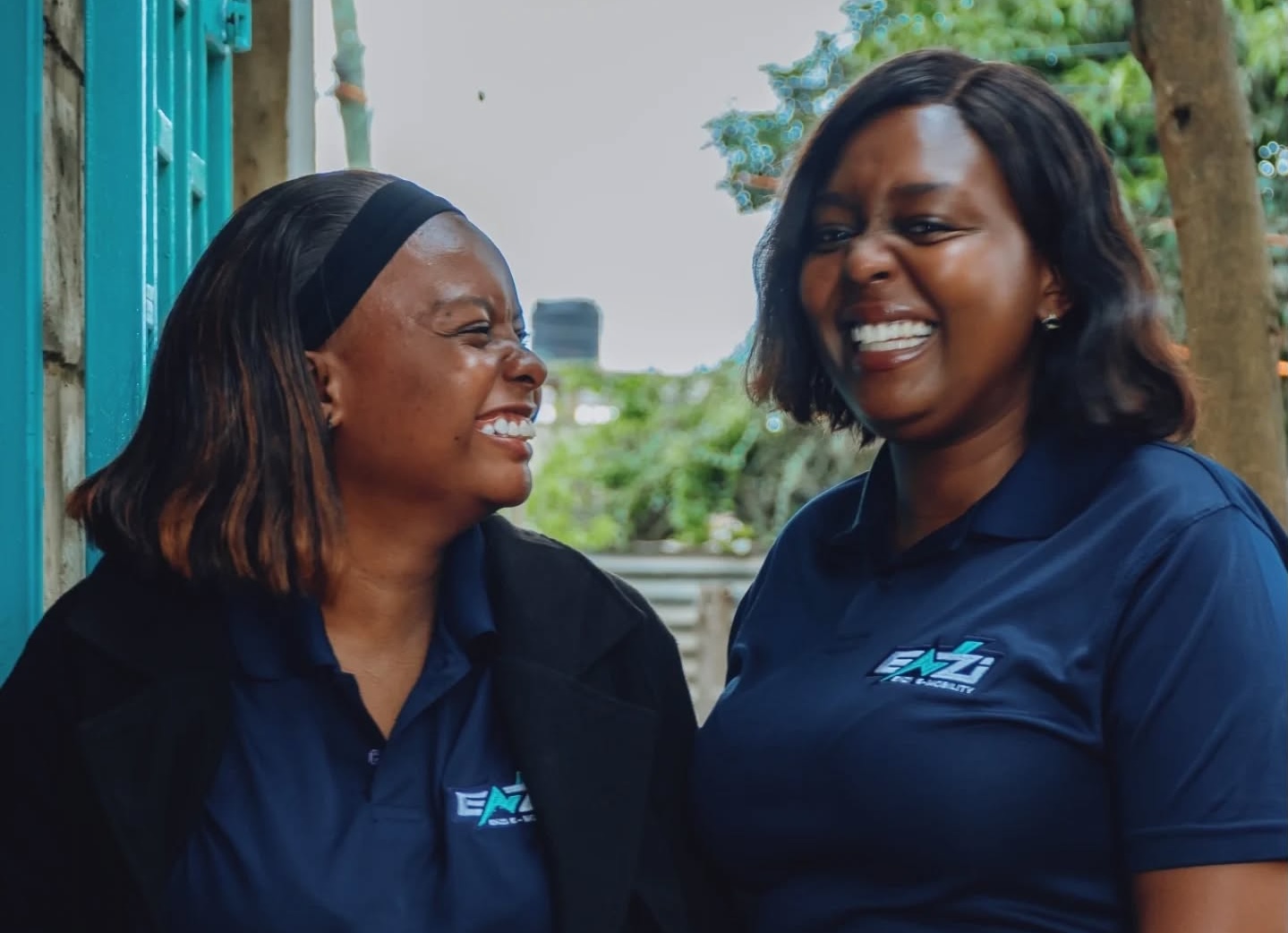
Kula’s crypto solution to community ownership and governance of impact enterprises. To Silicon Valley, blockchain may seem so 2022. In Kenya, Zambia, Nepal and elsewhere, blockchains are solving real-world problems, and evolving to give communities a stake in the game. The crypto startup Kula was launched by Chris Turner, Samuel Chen and Micah Yeackley in 2023 – the same year that VC investment in crypto and blockchain companies nosedived – to funnel capital to clean water, energy access, electric mobility and sustainable agriculture. Its founders were looking for an alternative to traditional development finance, Turner tells ImpactAlpha. “There’s always a great set of principles and processes, but local communities and local stakeholders are overlooked, displaced or not involved in project development.” The idea: Work with local partners to set up high-impact projects, then “tokenize” the governance of the projects and sell the tokens on crypto platforms to retail investors. Local communities are automatically cut in, sharing both decision-making and financial upside. Kula has raised more than $17 million and signed up five projects, including a hydropower project in Nepal’s Tsum Valley and an agriculture initiative with a mining partner and local tribe in Zambia. Its latest project is a partnership with Enzi Electric Motors to help informal motorcycle taxi drivers in Kenya adopt electric motorbikes and design financing tools to improve their livelihoods.
- Little and local. Born in the aftermath of the 2008 financial crisis, crypto currencies and blockchain platforms promised to decentralize and democratize finance and data. Anonymity and the absence of regulation, however, made crypto trading platforms a hotbed of criminal activity and fraud, exemplified by high profile cases like the Binance money laundering scandal and the FTX fraud case. That’s one reason investment has slumped in recent years. Blockchain also hasn’t yet delivered on large-scale, industry-wide traceability and transparency. What inspired Turner and his co-founders to start Kula was blockchain’s potential in highly specific, localized contexts – particularly in vulnerable communities. “There’s a way to use this technology to audit financials and impact, so you’re able to deeply verify at the grassroots what changes happen – or not,” Turner says.
- Good governance. Kula identifies a local partner and sets up a local entity for each impact project. It then tokenizes that asset, and tokens are allocated to local stakeholders along with Kula, its project partners and investors. Token holders get both a governance stake and a share of profits. Governance tokens aren’t tradable on exchanges. Kula also has a tradable token that offers a stake in its treasury and underlying assets. Capital raised from the liquid tokens helps fund the local projects. In its work with Enzi, for example, the electric motorcycle company’s drivers have a governance stake, and can vote on how both funding and resources are used. The drivers, largely informal workers, proposed setting up an accident emergency fund and a micropension scheme. Enzi’s late founder, Bill Schafer, had touted Kula’s capital and model for enabling the company “to scale clean mobility in a way that puts riders at the center.”
- Keep reading, “Kula’s crypto solution to community ownership and governance of impact enterprises,” by Lucy Ngige.
Dealflow: Healthy Youth
Handspring Health raises $19 million to grow the pipeline of youth mental health therapists. Handspring Health hires licensed therapists and offers ongoing training in evidence-based approaches like cognitive behavioral therapy, dialectical behavior therapy and exposure therapy. The New Jersey-based company also offers one-on-one support and consultation groups to sharpen therapists’ clinical skills. “Good therapy depends on the therapists, so we built the company around ours, with training, supervision and regular clinical consultation, instead of just matching families to whoever is available,” said Handspring’s Sahil Choudhry. “That’s what lets us care for a child whether their needs are mild or severe.” Handspring’s therapists have provided virtual mental healthcare to more than 4,000 families in nine US states, providing care for children as young as eight, as well as teenagers and young adults. The company offers parent coaching for families with children as young as two. Most families pay less than $30 per session, with many major insurance plans accepted.
- Investing in health. Handspring is forming value-based care partnerships with insurers and expanding to other US states. The company is also developing a “complex care” program for high-risk youth without access to good or affordable mental care and who are often turned away from traditional outpatient services. The Series B round was led by RPS Ventures, with participation from new investor Angelini Ventures and existing investors Cobalt Ventures, NextView Ventures, NVP Capital, Hyde Park Angels and Cornucopian Capital. The round comes a year after Handspring’s $12 million Series A round.
Dealflow overflow. Investment news crossing our desks:
- Singapore-based FAST-P raised $1.1 billion to invest in green energy in Asia. (Pentagreen Capital)
- Abu Dhabi-based Masdar reached a financial close on a $6.1 billion solar-and-storage project in Abu Dhabi, including $5.1 billion in debt from 13 local and international banks. (Masdar)
- Following its SPAC merger with Spring Valley Acquisition Corp. III, General Fusion began trading on Nasdaq under the ticker symbol GFUZ. The 26-year old company, which harnesses magnetized plasma to create a fusion reaction, is the first publicly traded fusion company. (TechCrunch)
- Incofin provided the equivalent of about $3.5 in local-currency financing to Azerbaijan’s TuranBank to expand lending to small and medium-sized businesses. (Incofin)
Impact Voices: Faith-Based Investing
The impact portfolio hiding within US Islamic finance. Impact investors have spent a decade looking to the qualities US Islamic finance was built on: non-extractive returns, real-asset backing, shared risk, ethical screens and capital that stays close to the communities it serves. “Those screens come from religious rules. But the financial structures underneath them do not,” HalalWallet’s Kyle Natter writes in a guest post. “They are the same risk-sharing arrangements impact investors say they want, sitting in a market most of them have never examined.” Islamic law forbids charging or paying interest, so Shariah-compliant products replace interest-bearing debt with arrangements that let both sides share in real economic activity. Investors and capital earn their returns from ownership, profit and rent rather than from interest on loans.
- By another name. The Islamic faith explains where these approaches come from, but they can be useful to anyone, Natter argues. Equity-based home financing replaces the mortgage with co-ownership: The institution and the buyer hold the property together and the buyer gradually buys out the institution’s share. Similarly, a Musharakah commercial deal is a profit-and-loss partnership, not a loan. A Wakalah agreement pays the provider on shared revenue rather than a fixed rate on debt the borrower owes no matter what.
- Financial products. New York-based Wahed, backed by Saudi Aramco’s Wa’ed Ventures and Qatar Development Bank, in April launched the first fully Shariah-compliant single-family rental fund, open to non-accredited US investors with a $100 minimum. It includes zero-debt financing and a target of 5-7% net annual returns. Guidance Residential and Ijara CDC have financed billions in co-ownership home purchases over two decades. SP Funds’ flagship Shariah-screened equity fund has crossed $2 billion in assets, and ShariaPortfolio’s group of companies passed $3 billion. “The products exist, they have traction and they are under-capitalized,” Natter says. “The only thing missing is investors who look past the label and see the instrument.”
- Keep reading, “The impact portfolio hiding inside US Islamic finance,” by HalalWallet’s Kyle Natter.
Agents of Impact: Follow the Talent
Dalberg’s Kusi Hornberger, a long-time contributor to ImpactAlpha, will depart the consulting firm at the end of July to join IDB Lab as chief strategy officer (see his guest posts on impact fund reporting, private investor climate allocations and paradigm shifts needed to scale impact investing)… Incofin Investment Management promotes Aparna Pittie to partner and fund manager of the Water Access Acceleration Fund… Norfund promotes Naana Winful Fynn to executive vice president for financial inclusion… The International Finance Corp. appoints Olivier Buyoya as division director for Nigeria and Central Africa.
Conservation International is recruiting a senior financial analyst… Neuberger Berman is hiring an equity research analyst for impact investing in New York… CalPERS seeks an associate investment manager for sustainable investments in Sacramento, Calif… The International Finance Corp. seeks an investment analyst… Acumen is hiring an investment manager in India.
👉 View (or post) impact investing jobs on ImpactAlpha’s Career Hub.
Thank you for your impact!
– July 14, 2026