
Slow and steady wins the… credit rating.
London-based AgDevCo has for more than 15 years been meeting the financing needs of African farming cooperatives and agriculture businesses. By mixing concessional and non-concessional capital to make debt and equity investments, the London-based investment firm has built a portfolio and a track record to showcase the investability of a seemingly high-risk sector in a seemingly high-risk geography.
An “A- issuer credit rating with a stable outlook” from S&P Global Ratings is a solid point of validation for AgDevCo’s thesis and work.
“Getting to this point now where we have the same investment-grade rating as some pretty serious corporations is an important milestone,” AgDevCo’s Daniel Hulls tells ImpactAlpha.
“Having the credit rating makes it a lot easier to approach a whole range of funders, from the fully philanthropic to the fully commercial,” adds AgDevCo’s Chris Isaac.
The bond rating will enable AgDevCo to issue investment-grade bonds in the market and potentially raise capital from pension funds, insurers and other institutional investors. That, in turn, could drive more and lower-cost private capital to African agribusinesses.
Capital mobilization
AgDevCo, which invests out of a permanent capital vehicle, has until now largely been funded by the UK government and development finance institutions.
“Every blended finance structure is bespoke, and they’re understandably difficult for investors to get their head around,” Isaac says.
AgDevCo invests in some of Africa’s least invested markets, including Malawi and Sierra Leone, where financing options for farmers and agriculture businesses is limited and expensive.
“Often the perceived risk of investing in these markets is higher than the actual risk,” wrote Regina Vasarais of Convergence, the blended-finance network. Lack of investment-grade ratings – a rating of BBB or higher – has been cited as an inhibitor to emerging market blended finance funds and structures, like AgDevCo’s.
The bond rating will enable AgDevCo to issue investment-grade bonds in the market and potentially raise capital from pension funds, insurers and other institutional investors.
Underserved markets
A small number of blended-finance fund managers in Africa have secured positive credit ratings while moving capital to underinvested markets and sectors on the continent. Emerging Africa and Asia Infrastructure Fund, part of the Private Infrastructure Development Group, or PIDG, secured an A2 issuer rating from Moody’s in 2022, for its investments in African infrastructure projects.
Issuer credit ratings have similarly supported the flow of capital to underserved communities in the US. The Reinvestment Fund is one of a small number of community development financial institutions that have achieved an investment-grade rating; access to the public capital markets both lowers the CDFI’s cost of capital and expands its investor base.
Up and down market
AgDevCo has about $340 million in assets under management across a portfolio of more than 20 businesses in 11 African markets. The firm was founded in 2008 by the UK Government; its investments are to this day cushioned by the government’s first-loss capital. It started out writing checks as small as $250,000.
Over the years, it has grown its average ticket size to about $7 million, “which is driving our ability to be profitable and investable,” says Hulls. “There’s a need for capital and development of both really early-stage and later-stage businesses.”
At the same time, he adds, “we are true to our roots and impact.”
Last year, the firm launched a new facility, for which it is looking to raise $50 million to keep the money flowing to smaller, earlier-stage businesses needing anywhere between $1 million and $3 million.
“We want to grow these businesses so that they’re profitable and can have impact at scale,” says Isaac.
Success case
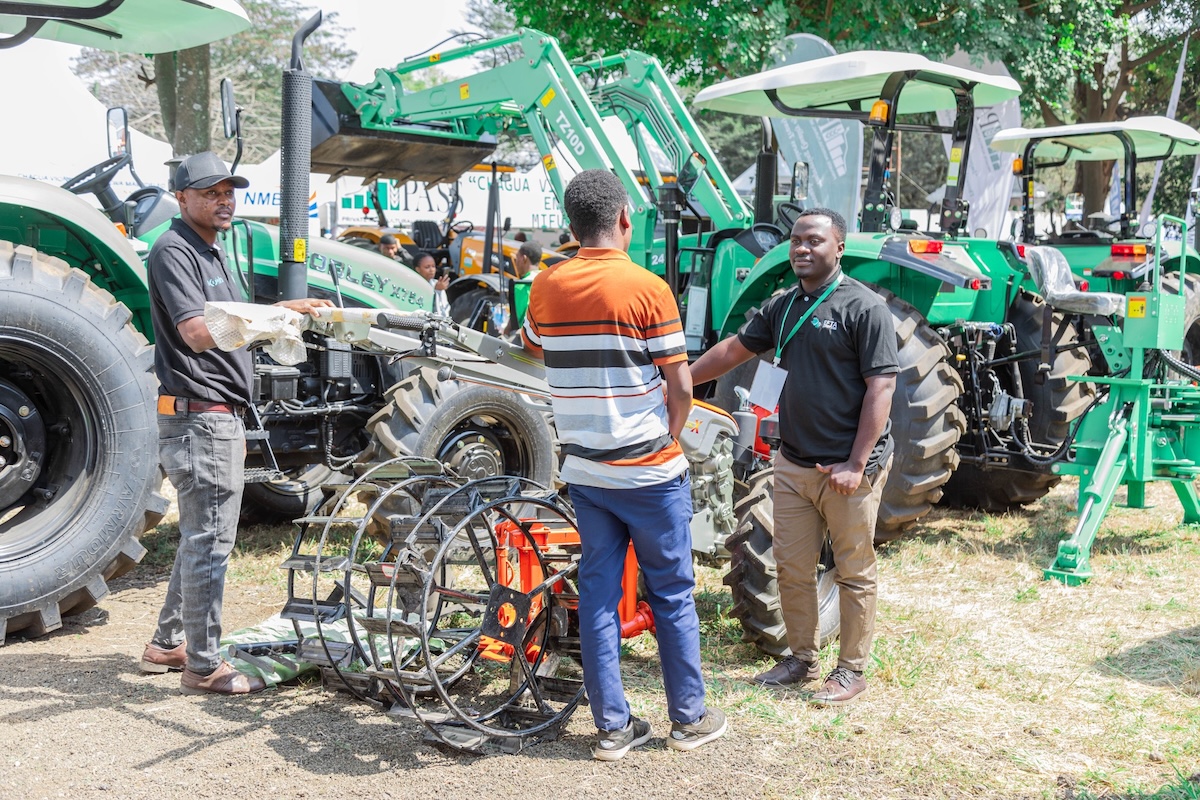
AgDevCo invested more than a decade ago in Tanzanian equipment leasing company EFTA. It’s reupped several times with the company, investing more than $17.5 million through both debt and equity. In 2020 it was acquired by Mauritius-based EFAfrica Group, which AgDevCo recently provided capital to extend its leasing services to corporate agribusinesses.
Last month, EFTA raised 33 Tanzanian shillings ($13 million) from local retail and institutional investors through a bond listing on the Dar es Salaam Stock Exchange.
“It’s taken 10-plus years to get to this point where they’re able to raise private capital to fuel their continued growth,” says Isaac.
The deal underscores why AgDevCo invests in both small companies and growth-stage ones – and why the credit rating will ease the task of fueling the growth of African agribusinesses.
“We’re trying to balance staying to our DNA – agriculture, early stage, at the frontier, using blended finance in a smart way – while being as catalytic with private capital as we can be,” Hulls says.