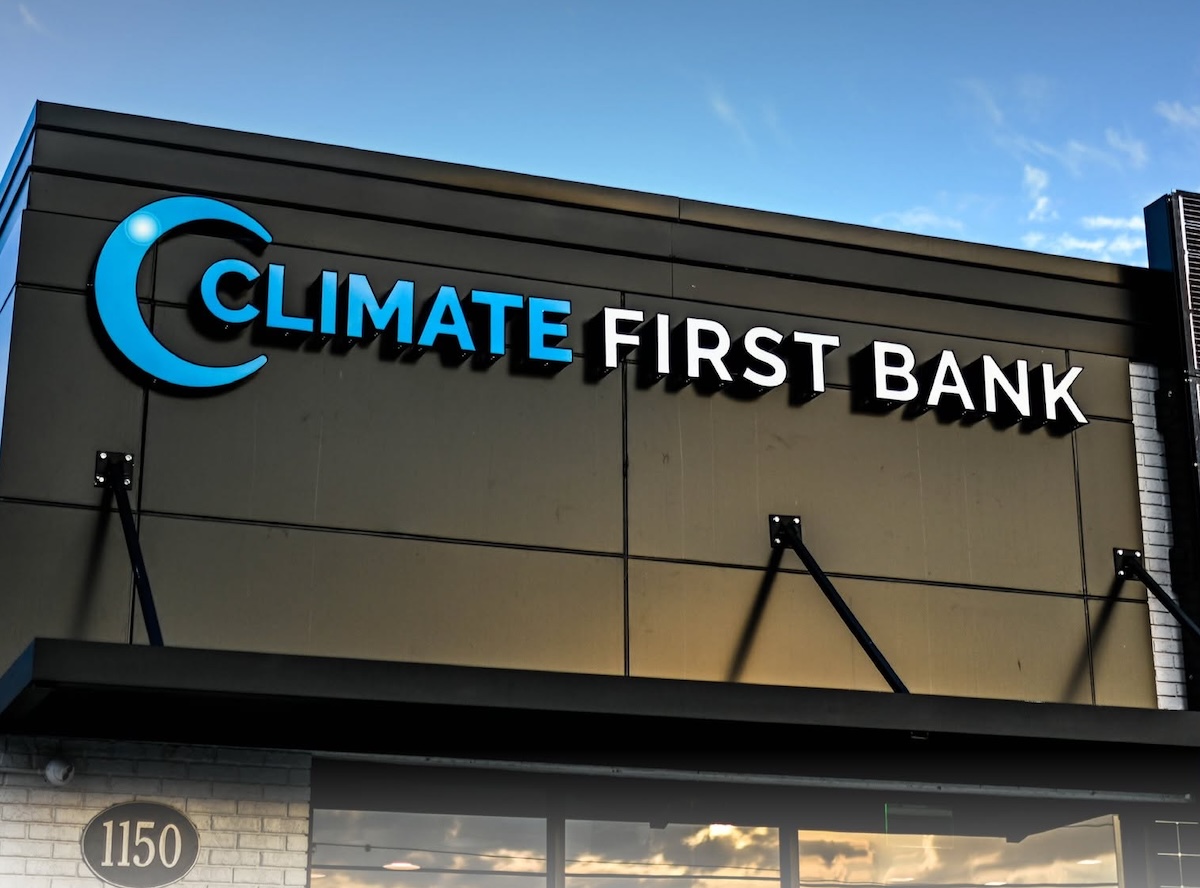

One look at the big ugly bar charts illustrating banks’ addiction to financing fossil fuels would make anyone rethink who they bank with. Climate First Bancorp launched its green banking products in 2021 to give US bank account holders an alternative.
“Ultimately it’s our individual deposits that are financing a lot of the problems in the world, whether it’s climate-related and oil and gas infrastructure, whether it’s weapons manufacturing, whether it’s private prisons,” said Climate First’s Chris Castro.
The company’s mission is to be an institution “where individuals and businesses can have their deposits in a place where they’re leveraged for good,” he said.
The Florida-based company operates Climate First Bank, a FDIC-insured bank, and OneEthos, a regulated fintech company supporting solar lending for both lending institutions and installers.
Wellington Management and Alliance Bernstein are backing the company with $67 million to grow its base of green banking customers and its support for solar installations, which stands at more than 9,000 projects.
Retail impact investing
Climate First Bank began accepting checking, money market and personal and business loan customers in 2021. Five years later, it has more than $1.8 billion in assets by offering high-yield impact checking and savings accounts; accounts that donate accrued interest to regeneration or LGBTQ+ organizations; commercial and personal solar loans; employee-ownership lending; home mortgages; and impact-focused money market accounts.
The bank’s growth is primarily driven by the quarter of its portfolio that is in renewable energy. That’s despite the Trump administration’s efforts to kill momentum on climate and renewable energy investments.
“The demand is still there for people looking at the economics,” said Climate First’s Ken LaRoe.