Geopolitical uncertainties and shifting policy environments have global fund managers and operators in search of impact capital flocking to the relative stability of Singapore.
Many have found a receptive ear at Temasek, the US$400 billion state-owned investment fund that calls itself a “generational investor.” Temasek has been one of the most visible global investors, with major partnerships with asset managers like Leapfrog, Brookfield and BlackRock.
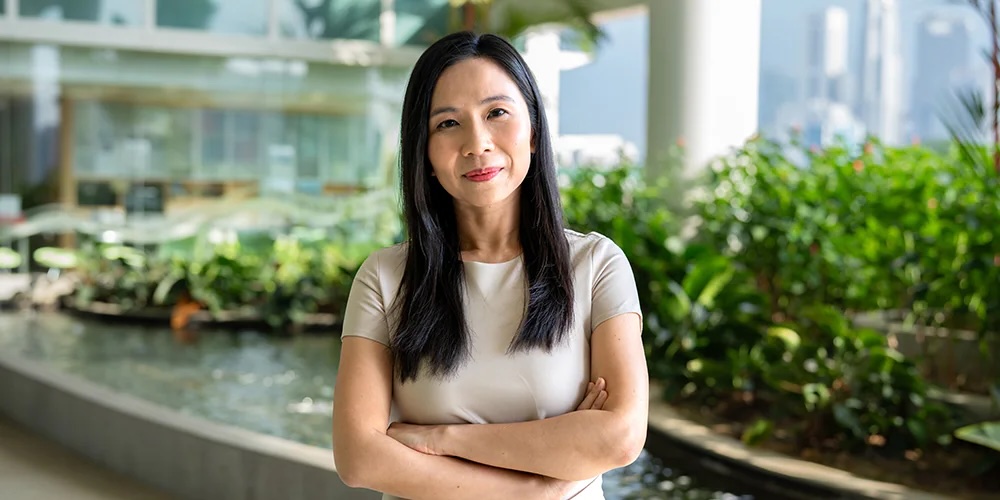
“We always say there are no returns from a dead planet or a divided society,” Eliza Foo, who leads Temasek’s impact investing team, says on the latest Agents of Impact podcast. “So I think it’s really our responsibility to leave the planet a better place for future generations as well.”
Temasek has also backed managers such as North Carolina-based Aurora Sustainable Lands, which has established a permanent capital vehicle for sustainable timber and carbon credits; Zürich-based Emerald Technology Ventures, which has raised its second Global Water Fund; and Stegra, which is building one of Europe’s largest green steel plants in Sweden.
Temasek’s sustainability report, released this month, details S$49 billion (US$38 billion) in investments aligned with “sustainable living,” one of four structural trends guiding Temasek’s investments (the others are digitization, the future of consumption and longer lifespans). The impact investing portfolio sits within the Sustainable Living strategy, which is focused on net-zero greenhouse gas emissions, nature-positive solutions and inclusive growth.
“We have a dual mandate to deliver market financial returns, but also positive impact at scale,” Foo says. “Practically, that means focusing on underserved communities in Asia, but also in Africa and Latin America, across financial services, healthcare and climate solutions.”
This week, Temasek participated in the $31 million Series B financing for Rize, which helps smallholder rice farmers reduce water use and methane emissions. Temasek, with Breakthrough Energy Ventures, helped establish Rize in 2022.
Pragmatic ambition
With cutbacks in development funding and foreign aid, Foo says family offices, institutional investors and other private capital allocators must step up.
“We’ve sat in rooms where people were debating whether impact is real investing. But we’ve also sat with families in informal settlements, whether in India and Indonesia, where a single access to financial product can change the trajectory for their kids,” Foo says in the podcast conversation. “ After that the debate becomes like a luxury. I think we really feel that the opportunities are real, the returns are real and the needs won’t wait.
Liquidity is the key to unlocking more capital, she says. Enabling LPs and other asset allocators to recoup their investments through exits, including secondary sales, will serve to recycle capital for fund managers and founders (for background see, “Liquidity for sellers, discounts for buyers in budding impact secondaries market”).
“The fund that can really solve DPI (the ratio of distributions to paid-in capital) in emerging markets will define the next decade,” Foo says. “Because what’s important is that the capital coming back can also be capital that we put to work again, whether it’s to the next entrepreneur or to the next community.”
Temasek’s sustainability report affirmed its commitment to reaching net-zero carbon emissions by 2050, but said it would miss its interim goal to halve emissions (from 2010 levels) by 2030. The firm said the miss is a function of adverse global policy shifts, as well as a commitment to help decarbonize hard-to-abate sectors, which can cause short-term increases in portfolio emissions as companies work through transition plans. Foo characterized Temasek’s stance as “pragmatic ambition.”
“It’s understanding that we’re staying committed to our long-term sustainability and impact goals,” she says, while recognizing the realities of geopolitics, the capital constraints caused by the AI buildout and other factors, “and to pivot accordingly where it makes sense.”
Adaptation opportunities
The report acknowledges that the world has already breached the 1.5 degrees Celsius increase in global temperature that was supposed to represent a kind of firewall for climate change. That has led Temasek to increase its focus on climate adaptation; in a report last year on private equity opportunities, prepared with BCG, Temasek called climate adaptation “one of the defining markets of the future.”
Foo acknowledges that most climate financing flows to mitigation – think renewable energy, or electric vehicles – because such sectors are more familiar and easier to underwrite. As a private equity investor with Carlyle Asia Partners, Merrill Lynch and Goldman Sachs, Foo was an early investor in renewable energy projects in Asia.
“Adaptation today actually feels like renewables back then. Earlier, harder, less crowded,” she says. Temasek is seeing opportunities in adaptation, such as climate-resilient agriculture and infrastructure, cooling solutions and water. “A lot of the emerging market solutions are now becoming cost competitive, or actually cheaper than the incumbent.”
Foo is particularly excited about “core-plus” infrastructure, which combines traditional utilities with growth opportunities in AI data centers, renewable energy and the low-carbon transition. Temasek has helped anchor Singapore’s Green Investments Partnership, a sustainable infrastructure debt provider, which has raised more than $800 million to help finance a green transition in South and Southeast Asia.
By 2050, today’s emerging markets are expected to be home to the majority of the global population “So the underserved won’t be niche. In fact, they’ll be the majority,” she says. “We are quite excited about the opportunities and the proof points are really accumulating as well.”
Impact hub
Temasek, which operates independently, and GIC, the city-state’s sovereign wealth fund with $936 billion in assets, anchor Singapore’s investment ecosystem. But other family firms, family offices and family foundations are helping create a vibrant impact investing hub. Tsao Pao Chee and the NO. 17 Foundation are hosting the At One Impact Week in September (see, “From Singapore, Tsao Family Office expands the LP pool for impact strategies in Africa”).
Temasek hosted its 12th annual Ecosperity Week in May with the theme, “powered by innovation, driven with intent.”
“Intent actually changes who the innovation is designed for,” Foo says. “Intentional innovation asks, Does this serve the last mile, the informal economy?”
She cites the example of the Unified Payments Interface, or UPI, in India, which has unlocked credit, savings, insurance for hundreds of millions of people previously in the informal economy. “If you have technology without intent, it creates a further divide.”
Foo said Singapore plays a unique role as a trusted hub – neutral, well-regulated and steeped in Asia’s tradition of family-owned companies that operate with a generational perspective.
“There’s a natural orientation towards long-term, patient capital. It thinks about generations. It thinks about long-term stewardship,” Foo says. The region also has the opportunity to leapfrog older technology into newer mobile, digital and AI-powered models.
“We’re starting to see a lot of capital, talent and convening sitting here as well. So hopefully, we can encourage more to come, and then build this ecosystem on its own.”
Get Agents of Impact and all of ImpactAlpha’s podcasts in your feed by subscribing on Apple, Spotify or YouTube.