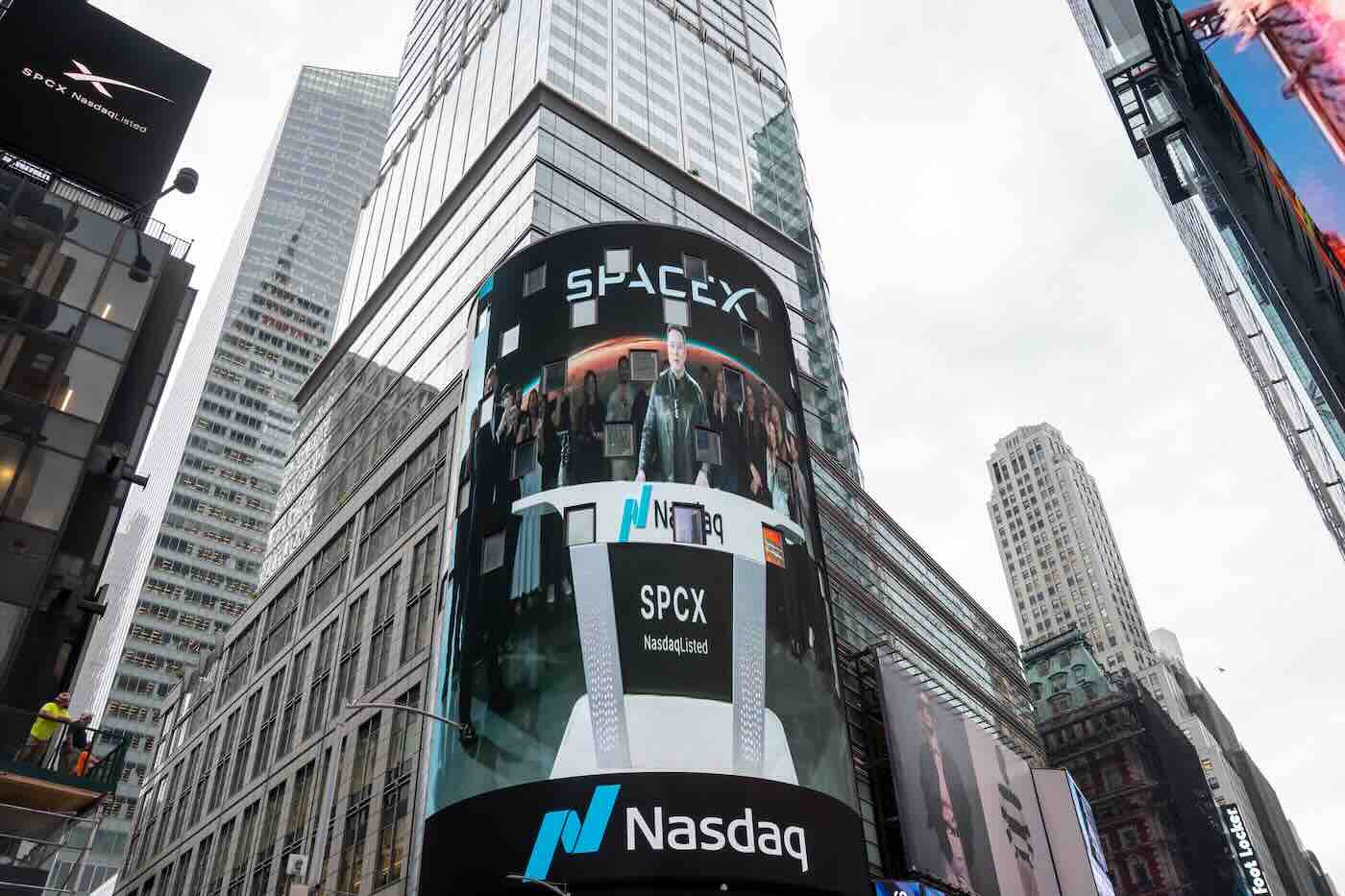

You could forgive foundations for nervously watching the stock market as a tech sell-off gained traction this week. The unlikely focus of their attention: Elon Musk’s SpaceX, which is poised to deliver a huge payload, and much-needed liquidity, to institutions with exposure to the reusable rockets company.
Those investments were largely made through LP commitments to funds managed by DBL Partners and Capricorn Investment Group, two pioneering managers that introduced many foundations to venture investing and advanced the case that impact can drive outsized value creation. Both funds were also early investors in Musk’s Tesla, the electric vehicle and clean energy company with a market cap today over $1 trillion.
Among the LPs in the DBL and Capricorn funds — many in both — are the Surdna, Sand Hill, Santa Barbara, California Wellness, Marguerite Casey and McKnight foundations. The Skoll Foundation, which is closely linked to Capricorn as it was initially set up to manage Jeff Skoll’s money, will also see a windfall.
“This one is really going to matter to these investors,” said Adam Connaker of Surdna Foundation, which made a $5 million investment in DBL Partners III in 2017 as part of the foundation’s first $100 million impact commitment.
“When you think about liquidity, we’re not used to it coming in these massive chunks like this,” Connaker tells ImpactAlpha. “Typically it’s a smaller, more consistent drip, but these are big chunks coming after nothing.”
The SpaceX exposure, he says, “has the potential to drive the bulk of the liquidity needs for the next 18 months.”
Liquidity rush
At the time of first DBL and Capricorn investments, SpaceX was building out its Starlink satellite constellation with the aim of delivering affordable, universal internet access — an appealing impact thesis. SpaceX went public earlier this month and finished trading on Tuesday valued at over $2 trillion.
The SpaceX IPO is the most recent event in a broader cycle of impact-oriented IPOs that could unlock billions in long-awaited liquidity for foundations and other mission-driven investors. In May, geothermal power company Fervo went public following earlier investments from funds from Capricorn, Elemental Impact, Galvanize and Breakthrough Energy Ventures.
Next up: Anthropic, the frontier AI company, is expected to make its public debut later this year at another trillion-dollar-plus valuation. Ford Foundation, Omidyar Network and Nathan Cummings Foundation invested a combined $7.5 million for just under 250,000 shares of Anthropic, acquired at auction from FTX Trading, the bankrupt crypto exchange once headed by the now-convicted Sam Bankman-Fried.
Even that small stake from the three philanthropies has already swelled more than 50-fold. Nathan Cumming’s $1 million stake has the potential to return 3 or more times the amount it allocates in grants each year.
The foundations are among the impact investors increasingly interested in responsible technology and inclusive AI. Anthropic, a public benefit corp that is governed by a “long term benefit trust,” has positioned itself as the responsible AI giant, against OpenAI’s more aggressive approach.
The liquidity rush is good news for impact LPs that have been hamstrung by the lack of exits over the past few years, freeing up capital for new investments.
California Wellness, for example, is below its private equity target so has not had a liquidity crunch, but the foundation’s Javier Hernandez noted “the slowdown in distributions from private funds, which has reduced the amount of capital being returned to LPs and available for redeployment into new commitments.”
For Cal Wellness, which has a mission to improve the health and wellness of the state’s residents, “any liquidity from these positions would provide welcome flexibility as we head into what is going to be an elevated spending next year,” Hernandez says.
“I suspect many foundations that increased commitments over the past year or so are viewing this as a timely source of liquidity and an opportunity to support grantmaking and other priorities without putting additional pressure on the rest of the portfolio.”
Returns on impact
The foundation investors have spent the past two weeks trying to figure out the likely size of their returns, often spread over two or more funds, and the timing. Fund managers are often under legal constraints and have been mum on timelines.
The funds are not able to reap gains until a lockup period expires, which could stretch from several weeks to several months. DBL’s Ira Ehrenpreis is on the board of SpaceX, which introduces further restrictions on when the firm can sell, potentially locking the firm up for a year.
DBL declined to comment and Capricorn did not respond to a request for comment.
And, as this week’s tech market sell-off shows, what public markets giveth, they can take away.
SpaceX raised nearly $86 billion in its June 12 IPO. After investors pushed the stock price over $200 last week, SpaceX closed at $156 yesterday, still above its $150 opening price. The slump was prompted by a concern about the company’s massive AI spending after it floated a $25 billion bond less than two weeks after the IPO.
The wild swings can make a difference of tens of millions of dollars for LPs. Even so, for early investors, the multiple gains will ensure a rich payout. SpaceX was valued at $21 billion in 2017, and about $350 billion by the end of 2024. It was worth $1.75 trillion at its IPO, making Musk the world’s first trillionaire.
The impact returns are a different story. In the nearly decade since some of the early impact investments in the space company, Musk has cozied up to the Trump administration, presided over the dismantling of many government aid and social programs, and fomented racial divisions on his social media platform, X (now part of SpaceX).
In February, Musk merged SpaceX with xAI, his fledgling AI contender. Some of the company’s data centers have been powered by unpermitted gas turbines sited next to low income and Black communities in the South.
Correction: Whoops. An earlier version of this story said Ford Foundation, Omidyar Network and Nathan Cummings Foundation’s combined $7.5 million stake in Anthropic had already jumped by 30x. According to the latest valuation, it is roughy 52x.