
Greetings, Agents of Impact!
🚀 Get the ImpactAlpha Edge. ImpactAlpha’s new intelligence platform maps LP/GP allocations and relationships to help you quickly spot signals and identify partners. Take advantage of our preferred subscriber rate to upgrade to firm-wide access to ImpactAlpha Edge and all of ImpactAlpha. Learn more and book a demo.
In this week’s LP/GP:
- Athletes get in the impact game
- Relevance Ventures’ Indigenous-focused health investing
- Allianz’s private credit fund for Asian infrastructure
- British International Investments looks to take on more risk
Featured: Athletes for Impact
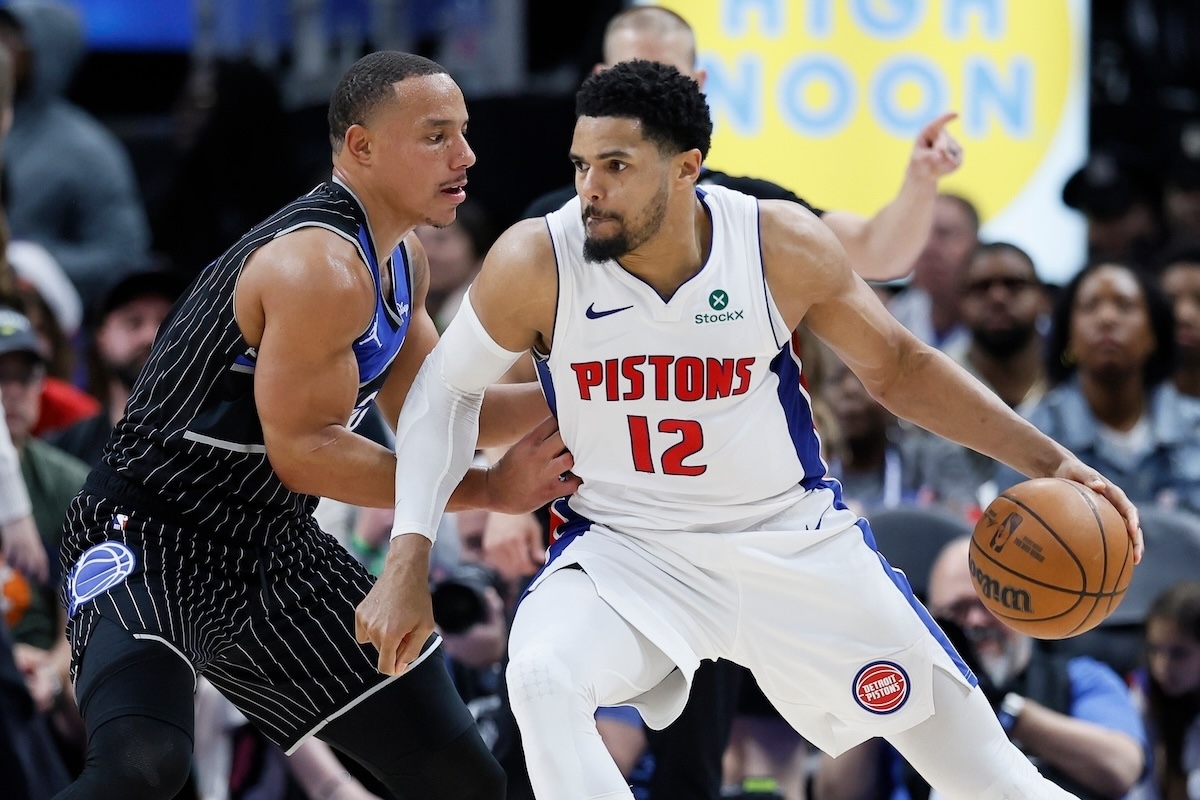
Wealthy athletes are getting into the impact investing game. Tobias Harris is trying to keep the Detroit Pistons alive in the NBA playoffs, where they trail his former team, the Orlando Magic, three games to one. But he also has found time to create a fund to help first-time homebuyers in Detroit come up with the down payments they need. Athletes have long been told to stick to sports. A new generation is turning to cap tables. Harris is expanding the Tobias Harris Homeownership Initiative using a small portion of his roughly $300 million in career earnings. “The thesis is to build a market for the city of Detroit through this program, and at the same time, allow the hard-working people who live here to own their properties,” Harris tells ImpactAlpha. At this week’s Mission Investors Exchange conference in Atlanta, tennis superstar Serena Williams talked about some of the 90 investments she has made as an angel investor and through her venture capital firm, Serena Ventures. She is raising a second fund after anchoring the firm’s $111 million inaugural fund with her own capital (see, “Serena Williams, Agent of Impact”). Building a successful business takes a “champion’s mindset,” Williams told the audience. “You understand the hard work and the dedication and the values and the sacrifice that you have to make. You understand exactly what it takes to get to the top.”
- MVP LPs. Athletes have become so active as limited partners they can fill up almost an entire fund. Teampact Ventures, a Paris-based firm that invests in early-stage climate and health tech startups, has raised over €20 million ($23.4 million) for its first fund from more than 60 French athletes, including former professional soccer player and World Cup champion Raphael Varane, French heavyweight fighter Cyril Gane, and rugby player Antoine Dupont. Before starting Serena Ventures, Williams had invested as an LP in funds like Bumble Fund, after she learned that women and people of color receive less than 2% of venture capital. An MVP GP: Former Golden State Warriors sixth man Andre Iguodala, co-founder and managing partner of Mosaic General Partnership, a $200 million early-stage fund that backs diverse and underrepresented founders.
- Net impact. Boston Celtics guard Jaylen Brown declared he would bring “Black Wall Street to Boston” after signing a five-year, $304 million contract two years ago. Brown launched XChange, an accelerator and incubator program for creative and social entrepreneurs, in partnership with the JLH Social Impact Fund, a fund created by Brown’s former teammate Jrue Holiday (see, “Putting superstar power behind inclusive wealth”). Brown and XChange co-founder Jason Kidd, head coach of the Dallas Mavericks, aim to recruit other professional athletes to generate $5 billion in net wealth for marginalized US communities. Chris Paul, an NBA All-Star who retired in February, is an ambassador and investor in Turner Impact Capital’s Multifamily Impact Funds. Magic Johnson has invested in infrastructure, job creation and minority-owned small businesses in overlooked urban communities; Lebron James’ SpringHill Company produces mission-driven content focused on social justice and empowering athletes.
- Fair share. The Tobias Harris Homeownership Initiative works with Homium, a New York-based provider of fair-shared appreciation notes, effectively a second-lien mortgage designed to make buying a home more accessible without increasing what owners pay each month. The Detroit fund has raised $4 million to provide up to 40% of a home’s purchase price in down-payment assistance to some 50 first-time home buyers in Detroit. Other early backers include the Michigan State Housing Development Authority, Harris’s former teammate Jon Leuer, and Pistons owner and private equity investor Tom Gores. “I’ve met with one of the families, and I tell them, ‘We’re in this together. My goal is for you to be living in this home, and for you to never have to give up this home, unless you want to move on,’” says Harris.
- Keep reading, “Wealthy athletes are getting into the impact investing game,” by Roodgally Senatus.
Live on Edge: Athlete Impact Investors
15 athletes championing and making impact investments. Detroit Pistons’ Tobias Harris and tennis megastar Serena Williams (see Serena Ventures’ profile on ImpactAlpha Edge) are among more than 15 elite athletes and their investment vehicles that are moving beyond endorsements into impact investment. See how this ecosystem is growing in this new collection of athlete GPs and LPs on ImpactAlpha Edge.
GP Snapshot: Indigenous Finance
Native-owned Relevance Ventures builds Indigenous access into health investing. Dean Newton, a former music and technology lawyer in Los Angeles, and his brother Cameron, an investment banker, are members of the Patawomeck Indian Tribe of Virginia. In 2018 they bought out the partners of a small Tennessee-based venture firm called Relevance Ventures, raised $50 million and relaunched it as one of the first independently owned Indigenous venture capital firms in the US. The brothers have since launched a second fund and are aiming to raise $150 million to put an explicit focus on Native communities. “We either find people who are already leaning into Indian country, or we build into our investment program an obligation for them to do so,” Newton told ImpactAlpha. Relevance has made two investments from the new fund and is in talks with a Montana tribe about an anchor partnership. The new fund, aiming to surpass its predecessor’s $50 million, is organized around four forms of health: personal, community, digital and financial. A Native Impact Council vets investments for their potential impact for Native communities and works with founders to create and track impact metrics.
- Intentional impact. The new fund sharpens Relevance’s Indigenous impact mandate. When the Newtons tracked the diversity of their portfolio for the first time, after the 2020 murder of George Floyd, they found just over half of their portfolio companies had founders who were people of color, women or members of underserved communities. But there was no Native American representation. Not in the portfolio companies, not in the pipeline, not on boards. The broader ecosystem, they realized, looked the same. Indigenous founders received just 0.004% of the $330 billion in venture capital deployed in 2021. “It was like somebody had come in and sucked all the Native American people out of the financial system,” Newton told ImpactAlpha. The realization forced a shift in how Relevance thought about impact, from incidental to intentional.
Dealflow: Low-Carbon Transition
Allianz Global Investors’ Asia Pacific Infrastructure Credit Fund secures $270 million. Urbanization, energy demand and infrastructure gaps are pulling institutional capital into Asia. Allianz is stepping up with private credit for mid-sized infrastructure companies. “Addressing infrastructure financing gaps in South and Southeast Asia is critical to sustaining growth, strengthening job creation, supporting the energy transition, and expanding access to essential services,” said Allen Forlemu of International Finance Corp., an LP in Allianz’s Asia Pacific Infrastructure Credit Fund. The Indonesia Investment Authority, one of the country’s two sovereign wealth funds, also committed to the fund’s $270 million first close. INA’s Merlissa Trisno said the fund “creates a pathway for international institutional capital to support Indonesia-linked opportunities and generate broader multiplier effects.”
- Green infrastructure. Allianz will make loans to operating or holding companies secured by infrastructure assets with predictable cash flows. The Asia Pacific Infrastructure Credit Fund will invest in renewable energy, power transmission and distribution, as well as digital infrastructure such as data centers and telecommunication networks. The fund will also target water, wastewater and other environmental infrastructure. The infrastructure private credit fund builds on Allianz’s other Asia Pacific lending strategies.
- Share this post.
Dealflow overflow. Investment news crossing our desks:
- Philadelphia-based SustainVC reached a first close of its third impact fund, anchored by Pennsylvania’s State Small Business Credit Initiative program (see, “Why early-stage capital matters most”). (SustainVC)
- Paris-based private equity firm Abenex raised more than €75 million ($87.7 million) toward a goal of €150 million to invest in decarbonizing industrial companies in France, Italy, the Netherlands and Belgium. (ImpactLoop)
- Denver-based Blackhorn Ventures, another decarbonization-focused investment firm, raised $40 million for the first close of its planned $150 million Industrial Impact Fund. (Axios)
Signals: Catalytic Capital
BII increases its risk appetite to mobilize institutional investors in emerging markets. With its new five-year strategy for private capital mobilization in emerging economies, British International Investment is promising to do what many development finance institutions won’t: take more risk. “The structuring of deals, the technical financial engineering is now what we are using to enable this mobilization effort,” BII’s Leslie Maasdorp tells ImpactAlpha. “The risks are still there. We are just willing to take more risk” than than private investors. Between 2026 and 2031, BII aims to drive £15 billion ($20 billion) of new investment capital to emerging markets. Just over half – £8 billion – will come from BII directly. It hopes to rally the other £7 billion from insurers, pension funds and asset managers, a 40% increase from the previous five-year period. “The next five years will be about working hand in glove with these large institutions,” says Maasdorp, who has led BII since 2024 (listen to ImpactAlpha’s Agents of Impact podcast conversation with Maasdorp). “We know these markets much better than [institutional investors]. We have people on the ground. We have a pipeline of investments that we can put in front of them.”
- Strategic evolution. Last year, amid budget constraints and increased defense spending, the UK government cut its development aid budget to its lowest level since 2008. The government has been moving more overseas development funding to investments, rather than aid, which Maasdorp says is largely “no longer fit for purpose” and “not sustainable in the long term.” Under the new strategy, BII will direct 40% of its capital to climate opportunities, 30% to gender-focused opportunities, and 25% to the least developed countries, such as Sudan and Cambodia. BII’s track record in such frontier markets has come under scrutiny recently by the UK network for development NGOs, Bond, which called out BII investments that went to “billionaire-owned companies” developing luxury hotels, fossil fuel-based fertilizer and dual fuel power plants. BII disputed the numbers in the report. Maasdorp says the hope for capital mobilization efforts from BII and other DFIs is to drive greater local ownership and agency. “Foreign players can, at best, complement, reinforce and support.”
- Keep reading, “BII increases its risk appetite to mobilize institutional investors in emerging markets,” by Danielle Rossingh and Jessica Pothering.
Agents of Impact: Follow the Talent
Richard Brandweiner, chair of Impact Investing Australia, is named CIO of Australia’s Future Fund… Matt Christensen departs his role as global head of sustainable and impact investing at Allianz Global Investors… UNDP Colombia seeks a national project coordinator for sustainable finance and the circular economy in Bogotá… Acumen Latin America is hiring a senior associate for its portfolio team in Bogotá… JPMorgan Chase’s Center for Carbon Transition is hiring an analyst in New York.
The World Wildlife Fund seeks a senior director of community bioeconomy finance in Washington, DC… Also in DC, the International Finance Corp. is recruiting a director of strategic investor relations… Capital for Climate, Converge Capital, the Institute for Climate and Society and the Nature Investment Lab announced the third Brazil Climate Investment Week, set for Tuesday, May 19 in São Paulo, with matchmaking sessions and optional nature-based solutions field trips running through May 24.
👉 View (or post) impact investing jobs on ImpactAlpha’s Career Hub.
Thank you for your impact!
– April 29, 2026