Greetings Agents of Impact!
In today’s Brief:
- Community-owned solar in Argentina’s Patagonia
- Exclusive: Deployment grant fund to accelerate adoption of climate solutions
- Valuing caregiving in Latin America
- Tokenizing Brazil nuts to preserve the Amazon
Featured: Ownership Economy
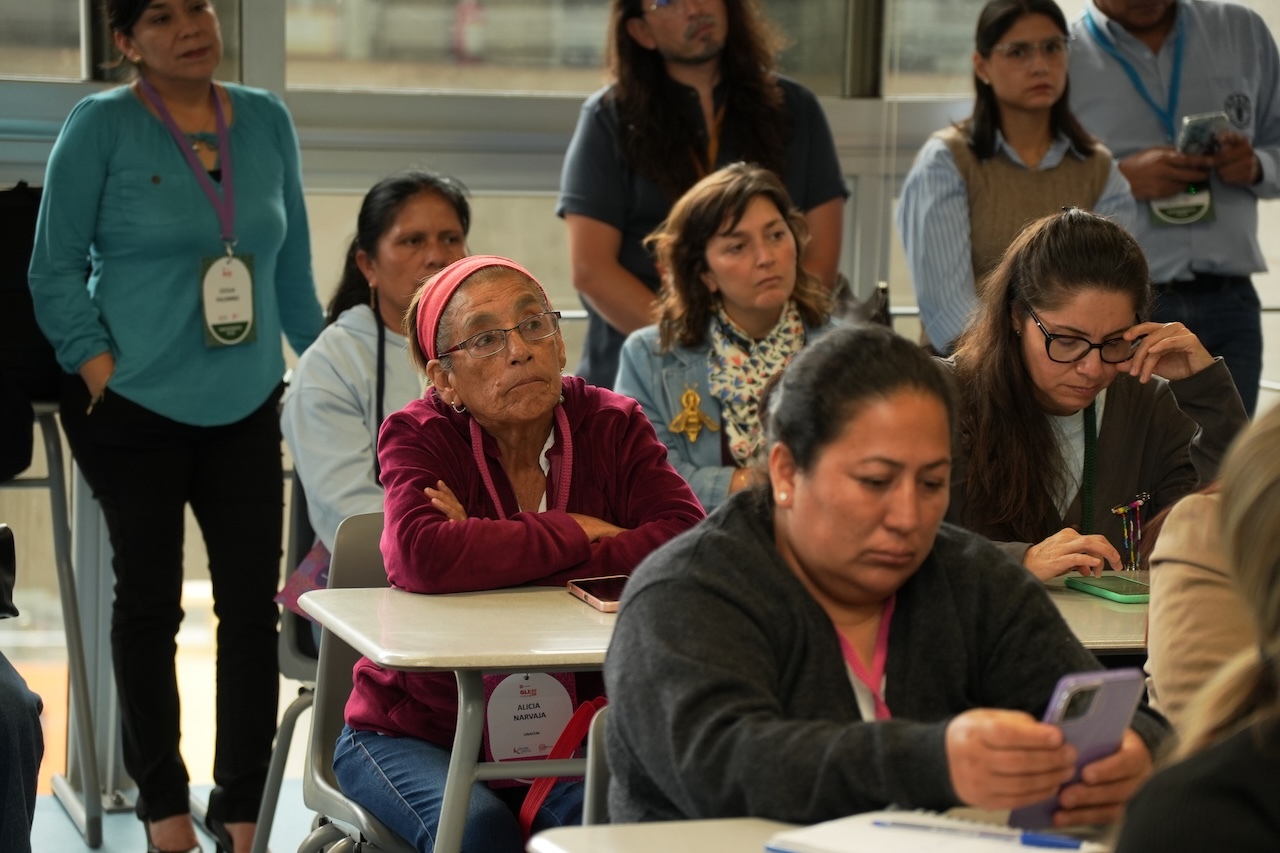
Meliquina models Indigenous ownership in Latin America’s energy transition. Ecuador-based solar developer Meliquina and the Indigenous Mapuche Millaqueo community in Argentina are modeling Indigenous equity and asset ownership in Latin America’s clean energy boom. Collaboration on an 18-megawatt solar project offers the community, which holds the rights to valuable land but has little financial capital to invest, an equity stake and share of future profits. Antú 1, as the project is called, is being developed on 25,000 acres of Mapuche Millaqueo land in Argentina’s Patagonia region. The community’s engagement with investors and regulators has helped derisk Antú 1 in ways that would not be possible without their involvement. “We know the local actors, politics and companies, but no one had ever proposed that we be part of development – sharing in the profits, the costs, and the decision-making,” Stella Zapata, a Mapuche leader and a key voice in the development of Antu 1, tells ImpactAlpha. “That was something totally new.”
- Community co-design. Antú 1 – named for the Mapuche word for “sun” – has been in the works for seven years. The project is part of Meliquina’s blended-finance Community Equity Opportunity Fund, which aims to catalyze local investment and ownership of renewable energy projects in Latin America. The fund structure, supported by Climate Policy Initiative’s Global Innovation Lab for Climate Finance, brings in tranches of capital to match the stages of a project’s development. Donor funding defrays early project planning costs. A mix of grants and loans covers construction costs. Once sites are operational, Meliquina puts up guarantees to help communities secure debt to cover their ownership stakes. Communities and Meliquina coordinate on planning and execution. The Mapuche Millaqueo have “participated from scratch in the design” of Antú 1, says Meliquina’s Juan Dumas.
- Indigenizing catalytic capital. Meliquina’s Community Equity Opportunity Fund builds on models elsewhere that are resetting economic agency and ownership around communities that have historically been overlooked or sidelined. In the US, Indigenous-owned Navajo Power is co-developing utility-scale solar, cutting tribal nations in on profits and governance of projects on their lands (see, “Navajo Power is building a pipeline of utility-scale solar projects to model a just climate transition“). In Canada, Indigenous First Nations and Métis communities have acquired equity in more than 200 medium- and large-scale clean energy projects. In Nepal, local communities secured the right to invest in state-run hydro projects after organizing and legal action. “The biggest barrier isn’t technical or legal – it’s mental,” says Zapata. “Developers come in expecting conflict. But when you treat communities as partners, you save time, reduce risk and build something that actually lasts.”
- Keep reading, “Meliquina models Indigenous ownership in Latin America’s energy transition,” by Erik Stein. Our monthly newsletter, ImpactAlpha Latin America, drops today. Opt-in to receive ImpactAlpha Latin America as part of your subscription.
Dealflow: Climate Finance
Exclusive: Builders Vision, Breakthrough Energy and The Clean Fight to accelerate building decarbonization with $10 million grant fund. Most of the decarbonization solutions needed to slow climate change already exist. Getting customers to adopt them is another matter, especially now that government incentives for clean technologies in the US have been throttled. “Risk is a barrier. Cost is a barrier. Uncertainty is a barrier,” said Kate Frucher of The Clean Fight. The nonprofit has been testing the catalytic impact of grant funding to accelerate deployment of climate solutions in New York state for the past five years. It has teamed up with Builders Vision and Breakthrough Energy Ventures to take the program national. Builders Vision’s philanthropic arm is anchoring the Deployment Grant Fund, which aims to raise $10 million to accelerate climate solutions. Breakthrough Energy Ventures is providing technical expertise.
- First of many. The fund will make grants of $50,000 to $250,000 to startups and building owners to scale energy innovation and resilience projects in buildings. “One of the most impactful uses of these small-dollar grants is unlocking additional funding to support projects,” Frucher told ImpactAlpha. The grants, she said, can be used to lower the upfront costs of initial deployments, enable developers and customers to test new business models, and provide credit enhancement for what she calls “first of many” projects.
- Funding catalyst. The backing by Builders Vision represents an early grant in its strategy to fund clean energy, one of its three focus areas alongside oceans and food and agriculture. “We’re looking at utilizing our capital collectively, from philanthropy to market rate, in a way that helps to accelerate these sectors,” said Goldberger, who heads Builders Vision’s philanthropic strategy. The Grant Deployment Fund is reviewing grant applications for a pilot program to identify solutions and business models that can speed adoption of climate solutions and be replicated elsewhere.
- Gift this post.
T. Rowe Price backs PayJoy to expand smartphone access in emerging markets. San Francisco-based PayJoy is scaling access to smartphones and credit for underserved populations in Latin America, Africa and Southeast Asia. Nearly half of PayJoy’s users are women; many use their devices for gig work and household income. The public benefit corporation’s $250 million PayJoy Asset Fund secured a commitment from T. Rowe Price. “The mobile phone is essentially an entry ticket into our increasingly connected world. We believe PayJoy is a tech-enabled, data-driven innovation that can fuel sustainable and responsible economic growth,” said T. Rowe Price’s Samy Muaddi.
- Digital inclusion. The PayJoy Asset Fund allows investors to co-invest in smartphone loans originated by PayJoy. Half of PayJoy’s 15 million customers are new to credit; one in three is accessing a smartphone for the first time. The fund is structured to grow to $1 billion in step with PayJoy’s expanding portfolio.
- Gift this post.
With $120 million fund, RA Capital seeks planetary health and near-term profitability. RA Capital Management, a multi-stage health and biotech investor, has closed its first Planetary Health Fund. The strategy “represents a natural evolution of our mission to back transformational science and technology to improve human wellbeing,” said RA Capital’s Peter Kolchinsky. The fund is on the hunt for early-stage energy, manufacturing, agriculture, critical minerals and environmental services companies. Many of these sectors enjoy policy tailwinds, but RA Capital is looking for market-ready companies that can become profitable without government subsidies. The fund will write checks of up to $10 million in seed to Series C-stage financing rounds.
- Deep tech. The Planetary Health Fund has backed seven companies, including Indiana-based Sortera Technologies, which uses AI and advanced sensors sort and recycle critical metals; Denver-based Koloma, which is drilling for natural hydrogen stored underground in the US Midwest; and San Francisco-based Optivolt, which has developed shade-tolerant technology for generating solar power.
- Gift this post.
Dealflow overflow. Investment news crossing our desks:
- Zvilo secured a line of credit from Fasanara Capital to provide working capital for micro, small and mid-sized enterprises in emerging markets. (EU-Startups)
- African Development Bank will inject $40 million in Project Zafiri, an investment strategy it launched with the World Bank and other partners to expand distributed renewable energy in underserved parts of Africa. (APEN)
- Zurich-based Emerald Technology Ventures secured €20 million ($23.5 million) from US water company Veralto Corp. for its second global water fund. (Veralto)
- Ambienta acquired Agronova Biotech, a Spanish maker of bio-based crop treatments, from private equity investor Magnum Industrial Partners and the founding Casanova family. (Ambienta)
Impact Voices: Valuing Aging
Putting a price on care to unlock Latin America’s ‘biggest investment opportunity’. Caregiving worldwide is typically the domain of women. The work of caregivers – for children, for the elderly, for households and communities – is often unseen and therefore undervalued by the global economy. If it were fairly valued, unpaid care work could represent 9% of global GDP, and as much as 25% in Latin America, outpacing many traditional sectors. “This is a costly oversight, and one of the region’s most overlooked investment opportunities,” write Rebecca Fries of Value for Women and Carmen Correa of Pro Mujer in a guest post. An emerging crop of companies are developing models to prove out the business and investment case for the care economy.
- Care innovation. In Mexico, Hipocampus partners with employers to establish workplace childcare centers. Symplifica in Colombia is bridging informal caregiving and formal labor markets by connecting thousands of care workers to education, insurance and work contracts. “These innovations offer more than investment opportunities,” write the authors. “They simultaneously close the childcare gap and advance gender equity by formalizing – and making visible and remunerated – roles that traditionally fall on women.”
- Keep reading, “Putting a price on care to unlock Latin America’s ‘biggest investment opportunity’,” by Rebecca Fries and Carmen Correa.
Tokenizing the Amazon: Unlocking capital to preserve forests and generate local income. Using blockchain technology, financial service providers are turning real-world things into assets that can be traded by everyday investors. The “tokenization,” of art, startups and real estate is part of the broader crypto boom. In Brazil, fintech startup ForestiFi and forest products producer Zeno Nativo are running an experiment to unlock capital for forest preservation and strengthen the livelihoods of traditional communities… by tokenizing the Amazon nut. In April, ForestiFi and Zeno Nativo successfully transformed 1,850 kilograms of Amazon nuts, aka Brazil nuts, into digital assets, raising 114,700 Brazilian reais ($21,000) in investments from 82 investors. Capital raised from the initiative is directly channeled to over 50 families in the Acará River region of Pará, the source of the tokenized nuts.
- From Brazil nuts to digital assets. Interest in tokenizing Brazil nuts stems from their potential to generate income for players in the sustainable supply chain. “This allows small producers, traditionally excluded from the financial system, to access resources,” says ForestiFi’s Glauco Aguiar. The startup forged a partnership with Zeno Nativo through AMAZ, an impact business accelerator in northern Brazil. “We are demonstrating that the Brazil nuts extracted annually are a legitimate asset, capable of serving as collateral for fundraising.”
- Keep reading, “Tokenizing the Amazon: Unlocking capital to preserve forests and generate local income,” by AMAZ’s Daniela Lopes.
Agents of Impact: Follow the Talent
The US Department of the Treasury appoints Dietrich Douglas as acting director of the Community Development Financial Institutions Fund, replacing Pravina Raghavan, who resigned in June… Karl Nehamer, previously Chancellor of Austria, will replace Thomas Östros as vice president of the European Investment Bank in September… Jaime Sotomayor, previously from Worthit VC, joins Impacta VC as a venture partner.
National Cooperative Bank welcomes Jazlyn Benitez, previously with Institutional Shareholder Services, as a renewable energy portfolio analyst… Black Farmer Fund is looking for a development associate and an impact investment associate… Equitable Facilities Fund is recruiting a vice president of credit in New York… Also in New York, Hines is looking for a global sustainability reporting analyst, and Gensler has an opening for a sustainability strategy specialist… Blueprint is on the hunt for a sustainability analyst.
Equity LifeStyle Properties is hiring a sustainability manager in Chicago… The Center for Global Development is searching for a senior fellow of sustainable development finance in Washington, DC… The Global Alliance for Improved Nutrition seeks senior associates of nutritious foods financing in Kampala and Kigali… Impactual is hiring a program manager and an associate… The Menke Group is on the hunt for an ESOP investment banking analyst.
👉 View (or post) impact investing jobs on ImpactAlpha’s Career Hub.
Thank you for your impact!
– July 23, 2025