
Greetings Agents of Impact!
📞 Sharing the wealth through employee ownership. Fund managers are introducing a range of new models for investing in employee ownership transitions. Essential Owners Fund’s Malini Ramanarayanan Moraghan, Social Capital Partners’ Jon Shell, Ownership Capital Lab’s Alison Lingane, Lafayette Square Institute’s Jack Moriarty, and other Agents of Impact will share emerging strategies for financing employee-led buyouts, March 26 at 10am PT / 1pm ET / 5pm London. RSVP today.
🎥 Re:Construction North Carolina – A playbook for shared prosperity. GOOD TRBL’s Napoleon Wallace and ImpactAlpha’s David Bank will welcome Agents of Impact to the Ackerman Center for Excellence in Sustainability at the University of North Carolina, Friday, April 4. Join Self-Help’s Martin Eakes, ncIMPACT Initiative’s Anita Brown-Graham, Partners in Equity’s Wilson Lester, Symphonic Capital’s Shruti Shah, and dozens of other leaders building North Carolina’s impact ecosystem and advancing models for shared prosperity. The free, daylong event will include a special screening of “Equity & ownership: Napoleon Wallace and the Reconstruction of Black wealth.” RSVP today.
In today’s Brief:
- How female fund managers are bridging capital gaps in Africa
- Greenhouse Gas Reduction Fund court win for “green bank” awardees
- Impact debt for affordable housing
- High net worth investors take on systems change
Featured: Gender Smart
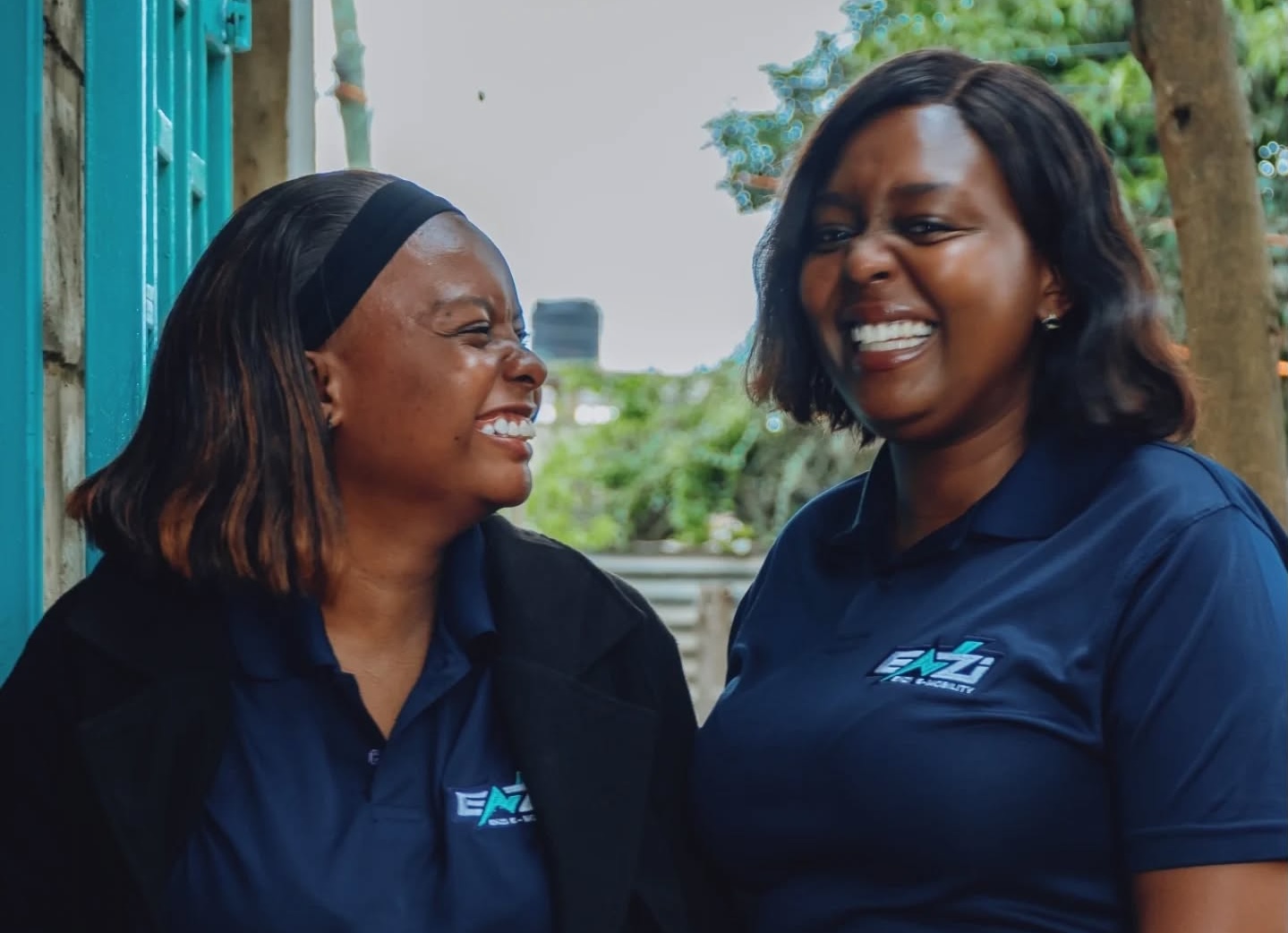
In Africa, female fund managers step up to bridge gaps in foreign finance. Organizations and projects that had received some of the $40 billion in annual funding from USAID are winding down their work. As leaders they take stock of the damage, some quietly admit that overseas aid was chronically inefficient, unsustainable and often served to entrench global power imbalances. Emerging market entrepreneurs, fund managers and impact ecosystem builders are rethinking how to raise and deploy capital (for background see, “African GPs are trading out their LPs”). Women, in particular, are stepping up with strategies to improve local economic stability, agency and growth for the long-term. “As a woman, I was struggling to access capital, despite being the [one of the] best performing funds in the market,” Jenni Chamberlain of South Africa and Kenya-based Altree Capital said on the sidelines of this month’s Collaborative for Frontier Finance gathering in Naivasha, Kenya. “I just felt that that wasn’t equitable.” Altree provides flexible, revenue-based financing and convertible debt to small and mid-sized businesses addressing climate and gender challenges. Says Chamberlain, “We need to have dedicated pools of capital to ensure that women can grow their businesses.”
- Balancing act. Fund managers like Chamberlain are threading a difficult needle. They’re trying to meet local entrepreneurs’ need for accessible, affordable and flexible financing, while making the case for such “alternative” investment strategies to risk-averse pension funds, insurance companies and other local asset owners. Their use of non-traditional debt and equity structures can make investors uncomfortable, even if they achieve better outcomes and financial returns. “It does take a lot of education,” says Chamberlain. Altree’s capital has helped portfolio companies increase revenues by at least 50% and up to 250%. HEVA Fund, which offers flexible debt to Kenyan businesses in the creative economy, says its default rates are far lower than banks. “We’ve been able to move capital to a sector that previously was not able to access tools like debt,” HEVA’s Wakiuru Njuguna tells ImpactAlpha.
- Reprieve for USAID – for now. A US federal judge in Maryland ruled Tuesday that Elon Musk and the Department of Government Efficiency likely acted unconstitutionally in their dismantling of the US Agency for International Development. US District Court Judge Theodore Chuang sided with USAID employees and sought to halt the agency’s premature shutdown as litigation proceeds. Judge Chuang also found that Musk may need to be confirmed by the Senate for his leadership role at DOGE.
- Returns on inclusion. Local capital providers in Africa are working to ensure that women and gender considerations are represented as investment attitudes on the continent shift. HEVA launched two new credit programs in collaboration with Longitude Capital, Kenya Bankers Sacco and others that will provide $5 million in debt to 7,000 creative entrepreneurs, mostly young women. In Ghana, Hamdiya Ismaila founded Savannah Impact Advisory to direct capital to local fund managers with a gender-lens. Evelyn Castle, a healthcare entrepreneur in Nigeria, built Eha Impact Ventures to make debt and equity investments in women-owned healthcare and food businesses. Coordinated education campaigns with institutional investors are starting to yield results, but there’s still a long way to go. Castle has been focusing on “much smaller organizations, small family foundations,” she says. “They’re receptive to working with us because they’re focused on how to make the most impact with as little money as possible.”
- Keep reading, “In Africa, female fund managers step up to bridge gaps in foreign finance,” by Lucy Ngige on ImpactAlpha.
Situational Awareness: GGRF
EPA can’t cancel ‘green bank’ funds without due process. US District Court Judge Tanya Chutkan blocked attempts by the Environmental Protection Agency to recoup $20 billion in Greenhouse Gas Reduction Funds that have been deposited at Citibank. In a ruling late Tuesday, Chutkan said the EPA must provide legal justification for cancelling the grants that were awarded last year, which the EPA has so far has failed to do. “There are serious due process concerns and questions of whether EPA defendants’ actions were ‘arbitrary, capricious, an abuse of discretion, otherwise not in accordance with law’,” Judge Chutkan wrote. For now, the funds will remain frozen at Citi, where they are held under a custodial agreement. The decision “is a strong step in the right direction,” said Beth Bafford of Climate United, which sued the EPA, along with Power Forward Communities and Coalition for Green Capital. The coalitions of green lenders will next seek a preliminary injunction to gain access to the congressionally appropriated funds.
Dealflow: Affordable Housing
SDS Capital Group provides ‘impact debt’ to lower the costs of affordable housing. Affordable housing developers in the US aren’t waiting for the axe to fall on federally backed financing programs. They’re pulling together private financing to meet surging demand for housing and finding cheaper ways to build. Los Angeles-based SDS Capital, through a new asset-backed lending business, is looking to originate at least $1 billion in financing over the next 18 months for the creation of 4,000 affordable housing units in low-income communities, making a small dent in the national shortage of more than four million affordable homes. SDS, which has typically focused on equity financing, is seeking ways to lower borrowing costs for affordable housing developers as well. Higher debt costs “really put deep strain on these affordable housing deals,” SDS Capital’s Deborah La Franchi told ImpactAlpha. The debt strategy is targeting large development projects and is looking to secure $20 million or more in financing. It offers developers below-market interest rates, higher leverage ratios, and longer amortization timelines than traditional financing sources.
- Innovative finance. SDS expects to roll out loans quickly in Los Angeles, where it has already invested equity in affordable and permanent housing for the homeless, as well as Texas, North Carolina and Washington states (see, “SDS Capital deploys private equity to finance permanent housing for homeless Californians”). “We’re seeing an enormous amount of demand on the developer side,” said Jason Riffe, who is leading SDS Impact Debt. “There’s a lot of appetite,” including among institutional investors interested in SDS’ bonds, Riffe told ImpactAlpha. By purchasing debt that goes into affordable housing projects for extremely low-income individuals, Riffe says investors are driving impact as well as financial returns. He added that SDS expects to bring in between $400 million to $500 million by August this year.
- Going private. La Franchi says SDS Impact Debt is key to integrating debt and equity financing for impact-focused affordable housing projects nationwide. “We’re looking to help our sponsors amplify their impact in the marketplace by being a programmatic financial partner for them,” she said. SDS has worked with housing developers using historic tax credits and other federal government programs, but it is uncertain about the future of government funding sources. There is real concern “about execution and what’s going to happen with those programs,” La Franchi said. SDS has $1.7 billion in assets under management across five impact funds and co-investments.
- More.
Accion and Mastercard support Frubana to extend credit to Brazil’s small food businesses. Sao Paulo-based Frubana is supporting small food businesses and farmers by helping them connect through an online marketplace. It’s now expanding into financial services through a partnership with Accion and the Mastercard Center for Inclusive Growth. Frubana’s embedded credit service will provide access to working capital and inventory finance for 200,000 businesses that otherwise struggle to access affordable financing. “For micro-enterprises to take full advantage of digital procurement, they need to be able to access financial services,” Accion’s Iain Brougham told ImpactAlpha. “They can’t order goods and inventory consistently if they are not able to access working capital.”
- Alt-credit scoring. Accion and Mastercard Center for Inclusive Growth offer technical assistance to microfinance institutions and digital services companies developing new financial products and services for small businesses. With Frubana, the partners have helped create an alternative credit scoring model that uses a business’s data, like its procurement history on the marketplace or logistics engagements, to gauge creditworthiness. Frubana has already provided 80,000 working capital loans, a third of which support first-time borrowers.
- Embedded finance. Accion and Mastercard have provided similar support for Ethiopian bank Dashen, Indonesian peer-to-peer lender Amartha, and Indian small business marketplace Bizom. The pandemic made clear the enormous opportunity to digitalize informal and largely offline small businesses in emerging markets. The troves of data collected by companies like Frubana, Bizom and others can rapidly accelerate financial inclusion, said Brougham (for background see, “Why ’embedded finance’ is emerging as the future of global financial inclusion“). “We’re interested in creating commercially sustainable and viable models for improving the lives of micro and small enterprises, so that there can be follow-on investment from the private sector.”
Dealflow overflow. Investment news crossing our desks:
- The California State Teachers’ Retirement System and Microsoft’s Climate Innovation Fund anchored Just Climate’s $175 million raise for its Natural Climate Solutions fund for sustainable land use projects. (Just Climate)
- MPower raised $2.7 million from the Foundation for Clean Energy and Energy Inclusion for Africa and crowdfunding platforms Klimja and Republic to grow its network of solar energy distributors in West and Southern Africa. (Tech in Africa)
- Nuveen affiliate Arcmont Asset Management €475 million ($520 million) from pension fund APG and TIAA, for a new impact lending strategy focused on companies addressing climate, health, education and sustainable economic growth. (Arcmont)
Impact Voices: Systems Change
Systemic investing as a transformative strategy for impact. A growing number of high-net-worth investors want to go beyond dealmaking to address the root causes of complex global issues with “systemic investing.” The emerging approach is situated “at the nexus of impact investing, philanthropy and sustainable finance,” write Falko Paetzold of the Center for Sustainable Finance and Private Wealth and Jason Jay of MIT Sloan Sustainability Initiative in a guest post on ImpactAlpha. CSP and MIT have released a guide to demystify the practice for investors. Key to successful systems-level investing is active cooperation among wealth holders, wealth managers, financial service providers, researchers, public funders and field builders. Last week, such stakeholders gathered at the Systemic Investing Summit in London to discuss “the value and necessity of collaboration, the feasibility of market rate returns without being extractive, and the ‘taxes’ of learning, building, and orchestrating as a pioneer in systemic investing,” the authors share.
- Systems investing in practice. Several organizations are already actively practicing systemic investing. The Good Investors, a family office collective, focuses on transforming essential systems like food and water by addressing industrial agriculture’s “reliance on resource-intensive, unsustainable practices.” CO_, another collective, targets alternative food systems to counteract how “dominant industrial food models drive inequality, biodiversity loss and poverty.” Tara Health Foundation takes a philanthropic approach to improve reproductive health access and outcomes through “grantmaking, impact investing and catalytic funding mechanisms.” Ultra high-net-worth communities like The ImPact are also engaging with systemic investing. The Investment Integration Project has developed the Systems Aware Investing Launchpad, or SAIL, with answers to frequently asked questions, practical tools and support for system-level investing.
- Keep reading, “Systemic investing as a transformative strategy for impact” by Falko Paetzold and Jason Jay on ImpactAlpha.
Agents of Impact: Follow the Talent
Generate Capital names Paul Ross, formerly with Bridgewater Associates, as global head of investor solutions… John Sneed, director of the Department of Energy’s Loan Programs Office, is leaving the agency. A new director will be named in the coming weeks… Net Purpose taps Caroline Brady, an impact fund advisor at Duke University’s Fuqua School of Business, as head of partnerships.
The California Infrastructure and Economic Development Bank appoints Andy Nakahata, previously with TD Securities, as chief deputy executive director and chief operating officer… Ownership Works is looking for a marketing and communications director in New York… Builders Vision seeks a portfolio analytics vice president in Chicago… Capital Impact Partners is hiring a loan officer in Atlanta… ImpactAssets has an opening for an investment services associate… Advantage Capital is on the hunt for a communications intern in St. Louis, Mo.
The US Green Building Council is searching for a sustainable finance principal… PepsiCo is recruiting a director of global public policy, sustainable reporting and human rights… California public pension funds CalPERS and CalSTRS are co-hosting an emerging and diverse manager forum, May 12-13 at the SAFE Credit Union Convention Center in Sacramento, Calif… FSD Africa is accepting request for proposals from fund managers to manage its Rwanda SME Growth Fund by Friday, April 4.
👉 View (or post) impact investing jobs on ImpactAlpha’s Career Hub.
Thank you for your impact!
– March 19, 2025