
Greetings Agents of Impact!
In today’s Brief:
- Social benefits of biochar
- African local-currency bonds attract global investors
- Recovering stranded energy for data centers
- The UK’s bid for global climate leadership
Featured: Carbon Removal
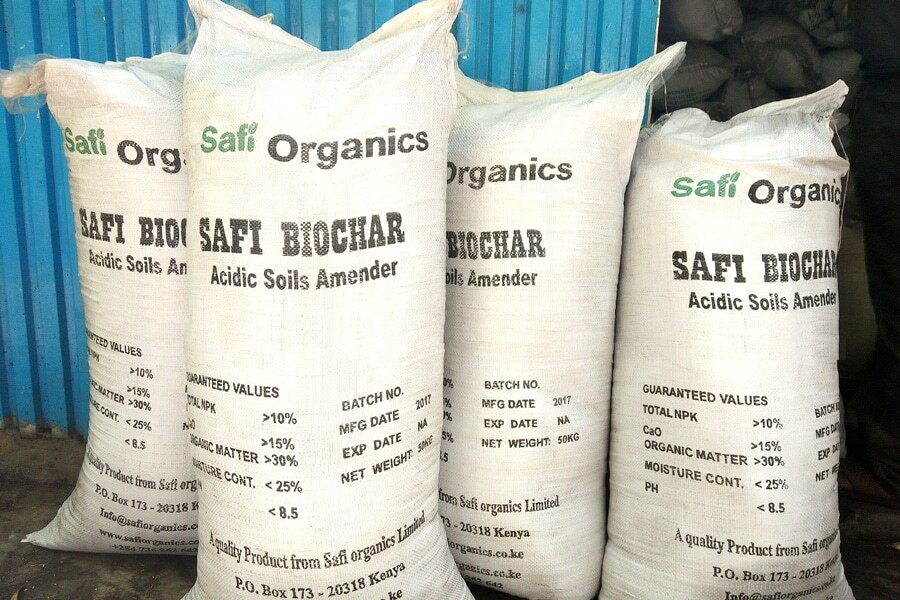
Beyond storing carbon, biochar’s co-benefits bring early customers and revenues. Biochar is having a moment. Through the process of pyrolysis, agricultural waste and other biomass can be turned into stable carbon and stored in soil or other sinks, removing carbon from the atmosphere. And as a fertilizer, biochar restores soil health, increasing farmers’ yields and incomes and reducing the need for synthetic fertilizers. Those carbon removal capabilities give biochar a competitive advantage over other fertilizers. High-quality carbon removal credits from biochar are fetching $120 per ton or more. The additional revenue can be used to reduce fertilizer prices to farmers and improve returns to biochar producers, creating a virtuous circle. That’s how Africa Climate Ventures, a venture-building studio and early-stage investor, sized the market opportunity. The investment firm considered launching its own biochar venture in-house after evaluating 30 biochar companies already in the market. Instead it found Safi Organics.
Safi Organics was started a decade ago by Joyce Kamande and Samuel Rigu. They launched the company in Mwea, one of Kenya’s largest rice growing regions, which had an ample supply of rice husks for its biochar production. Safi claims its product improves crop yields by about 30%, outperforming synthetic fertilizers in its controlled trials. And Safi’s operations provide an additional co-benefit: jobs for local youth, whom Safi recruited to operate the company’s pyrolysis kilns to create the biochar. A team of 15 young people working three shifts per day can produce about a ton of biochar daily. Africa Climate Ventures acquired a 30% stake in Safi with a $750,000 investment last year. “We ended up investing in them because we wanted to be a fertilizer-first company,” Africa Climate Ventures’ CJ Fonzi tells ImpactAlpha. “We saw biochar as a neat way to turn carbon into a subsidy for making these products.”
- High-quality credits. Carbon removal is rapidly moving up climate investors’ agenda, as it becomes clear that renewable energy and decarbonization can’t scale fast enough to address the growing carbon load in Earth’s atmosphere (see, “Corporate buyers nudge voluntary carbon markets toward higher-quality projects”). Direct air capture technologies remain expensive – with prices of up to $600 per ton – making biochar and other nature-based solutions the lower-cost alternative for high-quality carbon removal credits. Houston-based Mati Carbon this spring won $50 million in the XPRIZE Carbon Removal competition for its “enhanced rock weathering” process that also sequesters carbon in soil and improves soil health. Finalists like Applied Carbon, Mash Makes and Takachar use biochar. In Nigeria, Releaf Earth launched the country’s first industrial biochar plant in May. The company uses palm kernel shells as its primary raw material. Releaf Earth just secured its first carbon removal client via the Milkywire Climate Transformation Fund backed by the Swedish bank Klarna, Salesforce and Spotify.
- Keep reading, “Beyond storing carbon, biochar’s co-benefits give it early customers and revenues,” by Lucy Ngige.
Dealflow: Local Currency Investments
African Local Currency Bond Fund lands first international private institutional investor with $30 million bond issuance. The bond fund was founded in 2012 by German development bank KfW to develop the local bond market in Africa. It has anchored bonds floated by African companies to bring in nine times its capital, or some $3.4 billion, from local investors like pension funds, banks and insurance companies. Now, the African Local Currency Bond Fund, or ALCB, is turning to international investors. The latest issuance, which secured a relatively strong Baa1 rating from Moody’s, was floated on the International Stock Exchange. An unnamed British insurance company funded the entire $30 million bond. The bond fund’s Brock Hoback said the transaction advanced the ALCB’s strategy to mobilize private capital for the Sustainable Development Goals. “We’ve historically required local co-investment on every bond we support,” he said. “With this issuance, we’re now leveraging our capital structure to mobilize international institutional investors directly.”
- De-risking. The 10-year bond was issued under ALCB’s Euro Medium Term Note program, a framework that allows an issuer to issue multiple debt securities over a decade. ALCB, which is managed by Cygnum Capital, has since 2012 deployed over $420 million in 67 companies that are driving financial inclusion, clean energy and affordable housing in Africa. It aims to reduce risk for private investors with technical assistance for borrowers and local-currency corporate bonds.
- Green infrastructure. In a separate deal, Africa Go Green Fund, an energy transition fund also managed by Cygnum, provided $18 million in senior debt to Cold Solutions Kazi in Uganda for energy-efficient cold storage. The company will offer temperature-controlled packhouses for food and pharmaceutical companies that have long been constrained by infrastructure gaps. The aim is to reduce post-harvest losses, improve food and pharmaceutical storage, and cut greenhouse gas emissions across Uganda’s supply chains.
- More.
Argentina’s Unblock clinches $13.5 billion to use stranded energy for data centers. The Buenos Aires-based company builds and deploys modular data centers co-located with remote energy production sites in Argentina. With wind and solar installations, Unblock taps “curtailed” energy, or the surplus that grids cannot handle, to power data centers (see, “Spring Lane Capital commits $30 million to Soluna for green data centers”). Unblock also works with oil and gas producers to capture gas that would otherwise be flared and turn it into power. Gas flaring is a major source of methane, a potent greenhouse gas. Unblock says it unlocks revenue for producers and prevents the release of more than 142,000 tons of emissions annually. “We are at the crossroads of AI’s explosive energy demand and Latin America’s vast bottleneck energy resources,” said Unblock’s Tomas Ocampo. The company has partnered with Argentina oil producer Pluspetrol on a flare gas mitigation site in the country’s Vaca Muerta oil deposit, where generators were dumping excess electricity.
- Waste to value. New York-based Collaborative Fund and Goldcrest Capital, a Dallas-based venture capital investor, led Unblock’s undisclosed investment round. “This investment felt so obvious to us, as it sits right in our sweet spot of ‘good for you and good for the world,’” Craig Wilson of Collaborative Fund wrote. Unblock has added 15 megawatts of installed capacity in the past year and aims to double that number by September. Reflecting the strange bedfellows that such deals are bringing together, Argentinian energy companies Pampa Energia and Grupo Sielecki joined the round with FJ Labs, Luxor Technology, Sunna Ventures, bitcoin financial services company NYDIG, and several Latin American angel investors.
- Gift this post.
Dealflow overflow. Investment news crossing our desks:
- Ontario-based Minus Waste Solutions secured a growth equity investment from Canada Business Growth Fund to transform organic waste into animal feed, clean energy and other resources. (Minus Waste Solutions)
- Rivian spin-off Also, a maker of lightweight electric vehicles, raised $200 million from San Francisco-based Greenoaks Capital, bringing its valuation to $1 billion. (Bloomberg)
- Boston Metal secured a $51 million convertible note from Breakthrough Energy Ventures, BHP Ventures and other investors for a plant in Brazil that will recover critical metals like niobium, tantalum and tin from mining waste. (Boston Metal)
- International Finance Corp. and Proparco will invest up to $50 million in the UK’s Helios Sports and Entertainment Group to create employment opportunities for creatives in Africa’s sports and entertainment sectors. (IFC)
Signals: Institutional Impact
UK’s Labour Party looks to fill the vacuum of global climate leadership. When all around you are losing theirs… keep calm and carry on, as the Brits like to say. Last month’s London Climate Action Week was bigger, buzzier and more global than ever before, as the UK climate crowd looks beyond the now climate-antagonistic US. In other words, it was the perfect backdrop for the UK to stage its bid for global climate leadership, writes ImpactAlpha contributing editor Imogen Rose-Smith in her latest Institutional Impact column. “Our mission is to make Britain a clean energy superpower,” declared UK energy secretary Ed Miliband. In the year since the Labour party took back 10 Downing Street, it has reversed its predecessor’s climate-regressive policies, lifting an effective ban on onshore wind and vowing to triple solar capacity and quadruple offshore wind power by 2030. In June, the UK unveiled a £30 billion ($40.8 billion) green industrial strategy for domestic green energy. Like the Inflation Reduction Act – the US’s landmark climate legislation now being dismantled by President Donald Trump – the strategy will offer incentives to producers to create domestic supply chains that make the UK more resilient and create good local jobs.
- Business case. As a center of finance and insurance, London fancies itself as the new global hub for tackling the climate crises. Climate solutions and innovation could help address the gaping wide hole that Brexit left in the UK’s finances. Its exit from the EU could shave 4% a year off the UK’s GDP. Investment in the country is 13% lower as a result. Investment in the net-zero transition, conversely, could lead to net GDP growth of 4%. “The new UK government has an opportunity to rebuild the United Kingdom’s reputation as a climate leader,” notes Climate Action Tracker. The group rated the UK’s goals as “insufficient” last year; it has not yet updated its assessment under Labour Prime Minister Keir Starmer.
- ‘Ghastly reality.’ If London Climate Week was about wishful thinking and optimism in the face of gale-force headwinds, a group of climate scientists behind the Global Tipping Points reports were confronting a “new kind of ghastly reality,” says Mark Campanale of Carbon Tracker. Planetary systems are approaching their breaking points much faster than predicted, warned Johan Rockstrom of the Potsdam Institute for Climate Impact Research and Tim Lenton of the Global Systems Institute at the University of Exeter, which hosted an event after London Climate Week. The reality check may dampen some of the feel-good Climate Week vibes. “How do we take some of the urgency that we saw at Exeter into the otherwise stodgy ‘It’s going to be fine’ narrative of very gentlemanly, very British discussions we saw in London?” asks Campanale.
- Keep reading, “UK Labour Party looks to fill vacuum for global climate leadership,” by Imogen Rose-Smith.
Agents of Impact: Follow the Talent
Impact Capital Managers promotes Rafe Monteiro to head of finance and operations… Aqua-Spark taps Glenn Flanders, previously at Tidal, and Bert van den Hoek, previously with Hook Impact Capital, as partners… Variant Investments taps Drake Hicks, previously with Manifest Climate, as vice president of impact… The Good Economy welcomes Samantha Semanek Renninger, previously with the US International Development Finance Corp., as a senior impact analyst… Illumen Capital is recruiting part-time fall interns… Quona Capital seeks a strategic relations manager in Washington, DC… Also in DC, Arnold Ventures is on the hunt for a housing infrastructure director… Wellington Management Company is hiring a climate innovation principal in New York.
Join Investors Circle, on Wednesday, July 16, for “Investing through philanthropy: Impact showcase,” featuring Global Roundtable Leadership’s Lori Hanau and Tristan Toleno, Navajo Power’s Brett Isaac and Michael Cox, and Cooler’s Charlie Crystle (see related, “Why the smartest money in philanthropy isn’t being used”)… Acumen is hosting a webinar to explore the critical role impact investors and philanthropic and public funders play in supporting and building impact market ecosystems, Wednesday, July 23. for impact markets.
👉 View (or post) impact investing jobs on ImpactAlpha’s Career Hub.
Thank you for your impact!
– July 14, 2025