
“The status quo is stupid, expensive and unfair.”
That’s the first line of David Erickson’s book, “The Fifth Freedom,” which makes the case for good schools, well-funded libraries, safe streets and public spaces, quality health care, spiritual refuges and accessible transportation to help kids and communities thrive.
Erickson and his team at the Federal Reserve Bank of New York have turned such ideas into Making Missing Markets, an initiative to connect the builders of health, wealth and vibrant communities with the “buyers,” including hospitals, insurers and corporations as well as government agencies, such as Medicaid. He says such collaborations could finance “upstream” interventions that deliver such outcomes at far lower cost than downstream remediation.
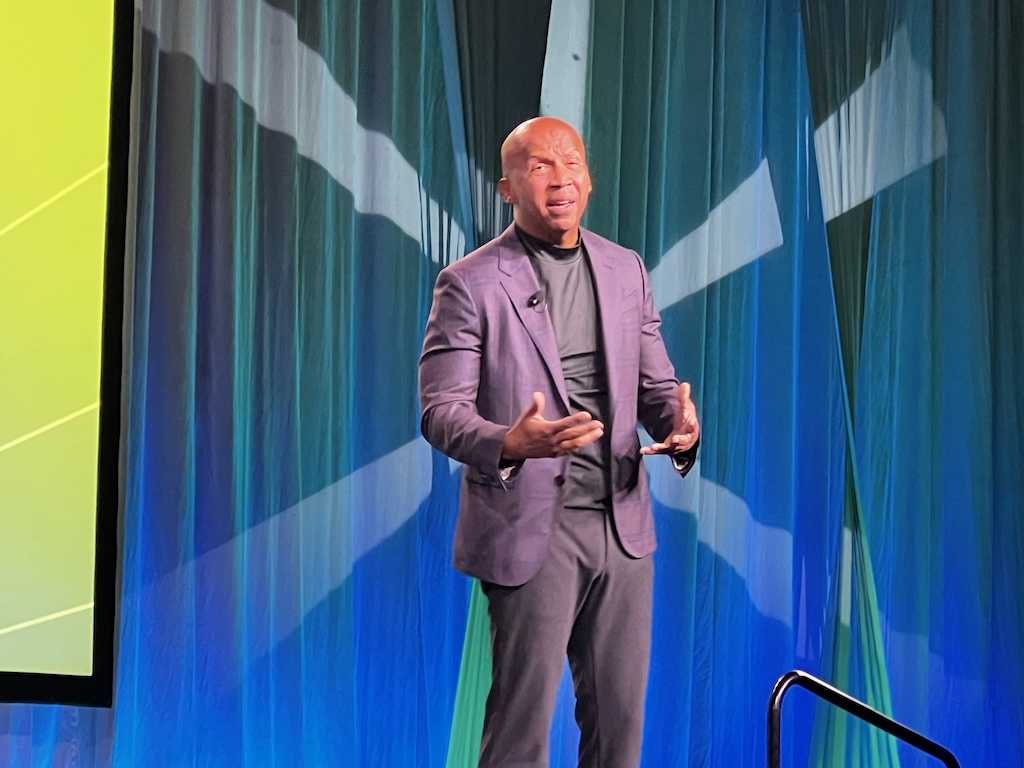
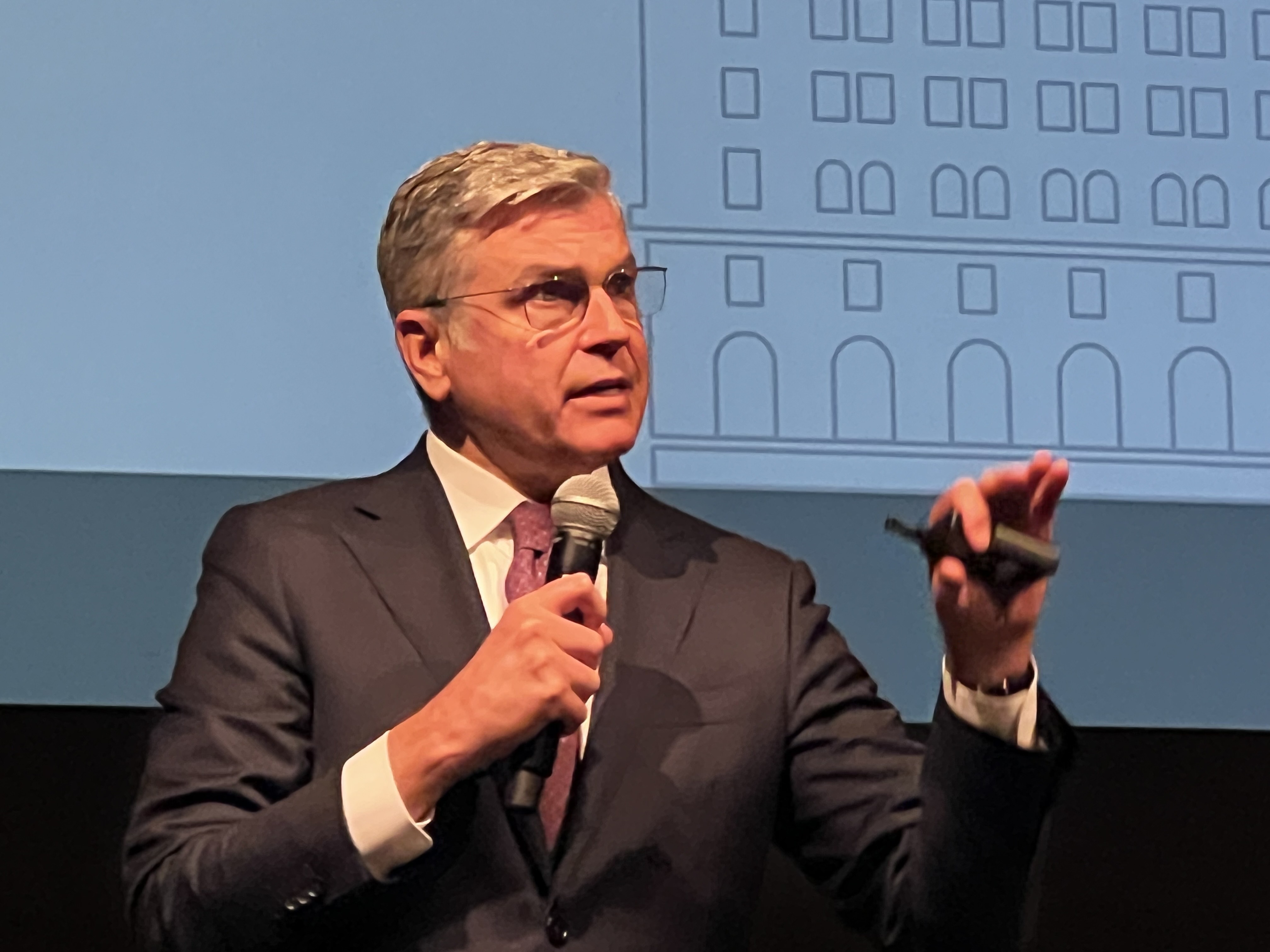
“There’s this old phrase, ‘It’s as expensive to send a kid to prison as it is to send them to Harvard,’” Erickson told me in our onstage conversation at the gathering of the Making Missing Markets initiative at the New York Fed. “That is not true. It’s three times more expensive to send a kid to prison. One chronic disease avoided – it saves the system millions of dollars.”
Our conversation kicked off a two-day round-robin of talks and workshops that surfaced the range of experiments already underway. Dr. Carley Riley of Cincinnati Children’s Hospital Medical Center described efforts in Cincinnati and Columbus to convene school districts, city councils and chambers of commerce, as well as JPMorgan Chase, Procter & Gamble and the Port of Greater Cincinnati around upstream health interventions such as access to fresh food and quality affordable housing.
One idea, modeled after special-purpose public agencies such as sports stadium authorities, is to issue bonds to back a series of pay-for-success contracts around proven interventions.
Justice Capital’s Christina Hollenback described how community partners in Syracuse have come together to make sure local residents benefit from regional investment and economic transformation, including through community ownership of real estate, environmental infrastructure and businesses. Other cross-sector collaborations are underway in Fairfield County, Conn., and the Adirondacks region of New York (read a summary of the event by the Fed’s Julian Macrone).
Bridgespan and the New York Fed are working together to compile a “What Works” book on the Making Missing Markets initiative.
“Why can I invest in a company that lowers blood pressure, that makes a pill that lowers blood pressure, but I can’t invest in a neighborhood that does measurably exactly the same thing. It’s the same outcome,” Erickson said, quoting Maggie Super Church, now with the Massachusetts Community Climate Bank. “You should be able to do that, and you can in Boston, because you can invest in the Healthy Neighborhoods Equity Fund,” started by Super Church in 2014.
Low-income communities have overlapping vulnerabilities in health outcomes, educational achievement, economic opportunity and, increasingly, climate risk. Erickson estimates that at least $2.4 trillion is spent each year on those three areas, with mediocre outcomes at best. The flip side, he says, is that there are overlapping resources that could be more effectively coordinated to finance preventive measures and other investments that are “upstream” of such problems.
“The silver lining is there’s a lot of money there,” Erickson said. “If we could think about ways in which we could braid those systems more effectively, not spend as much on the downstream, on things like chronic disease, but spend on the upstream to make sure that kids are reading at grade level, for example, then we could start creating a new business model that used those resources more effectively to create more opportunity and better outcomes.”