
Private capital and private investors with the freedom to invest have a responsibility to lead.
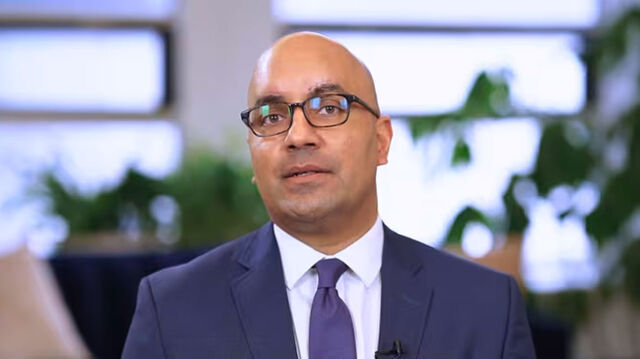
“This is a really important leadership moment for impact investing,” Amit Bouri of the Global Impact Investing Network tells ImpactAlpha, opening a conversation that can be expected to thread through this week’s Impact Week in Singapore, next week’s UN General Assembly and Climate Week in New York and next month’s GIIN Impact Forum in Berlin and SOCAP in San Francisco.
At stake: “How do we actually want to solve social and environmental problems, and how do we resource those solutions in a way that’s sustainable and scalable?”
The US retreat from aid and climate finance, alongside global volatility, artificial intelligence and other disruptions, have triggered a reckoning. There are some indications that the pause in deployments earlier in the year as investors took stock of the new political climate may be easing.
At least some impact leaders, Bouri says, are leaning into long-term opportunities amid short-term disruptions, particularly pension funds and other institutional investors with an explicit long-term focus are leaning into impact opportunities.
“While we do have tremendous volatility and uncertainty that everyone’s reckoning with, we are actually seeing quite a bit of interest and momentum from impact investors in many parts of the world,” he says.
Long-term bets
In Singapore, where I am this week, the government-owned investment vehicle Temasek, and other regional private and public investors including HSBC, poured more than a half-billion dollars into Green Investment Partnership, a blended finance vehicle to be deployed into sustainable infrastructure in Southeast and South Asia. The growing momentum from family offices and family businesses in the region will be on display at this week’s Impact Week festival.
Host Tsao Pao Chee Group, with umbrella entities including Tsao Family Office and No. 17 Foundation, are keen to showcase how intergenerational wealth can be harnessed to problem human and planetary well being. Tsao Family Office saw through perceived risks to become one of the first family offices to back TLG Capital’s second Africa Growth Impact Fund. The GIIN hosted 100 investors for its Asia Impact Summit in Singapore in July.
A new report details the impact strategies of eight wealthy Asian families, including the Tsao family, along with the families of RS Group’s Annie Chen, Gunung Capital’s Kelvin Fu and basketball star Jeremy Lin’s JLIN LLC.
Family Business Network Asia is hosting the “Impact International Forum” alongside Impact Week with speakers including Ho Kwon of Banyan Group, Tharald Nustad of Katapult Group, and Kathlyn Tan of Rumah Group.
“Many families and family businesses are thinking about their purpose and how impact investing fits how they want to contribute to the well being of future generations,” Bouri says. “Impact investing itself is a bright spot in everyone else’s minds… we may forget that impact investing is a bright spot to everybody else in the world.”
Institutional impact
In Japan, the $1.8 trillion Government Pension Investment Fund in March formalized a revision to its investment principles to incorporate impact investments. Other Asia-based investors, including the Japan International Cooperation Agency, are seizing opportunities around Africa’s green and inclusive economic future.
Dutch asset manager PGGM, which runs nearly $300 million on behalf of national healthcare pension fund PFZW, last year overhauled its responsible investment team to boost impact considerations on par with risk and return across the portfolio. PGGM dropped BlackRock, along with LGIM, from its roster of managers as part of the sustainability realignment.
In the US, investors are moving to fill gaps in climate finance. All Aboard Coalition last week launched to mobilize $300 million or more to co-invest alongside Breakthrough Energy Ventures, Khosla Ventures and a dozen other climate tech VCs, in climate tech startups building their first or second commercial plants.
California’s two major public pension plans, CalPERS and CalSTRS, with combined assets nearing $1trillion, are doubling down on overlooked emerging and diverse fund managers as a source of outperformance.
Solution sets
Bouri said the GIIN itself is working to bring together institutional investors and family offices to mobilize capital for solution sets, not just avoid bad investments, including through its climate solutions investing roundtable at Climate Week. In October, the GIIN’s Impact Forum in Berlin will help institutional investors navigate uncertainty to take action on responsible AI, creative industries and food systems.
Both events, “speak to this bigger leadership moment and how we reorient ourselves for how to invest in the future that we need,” Bouri says.
If uncertainty is the new baseline, investors familiar with social, political and environmental risks may hold an advantage.
“To be a good impact investor, you need a lot of resilience,” says Bouri, referring to investors making long-term bets on solutions for populations facing daily volatility.
While big shifts and uncertainties facing global markets cause some investors to freeze, others are leaning into learned resilience.
“Impact investors have been conditioned to operate in volatile environments – from currency fluctuations to political instability,” says Bouri. “That gives them an edge.”