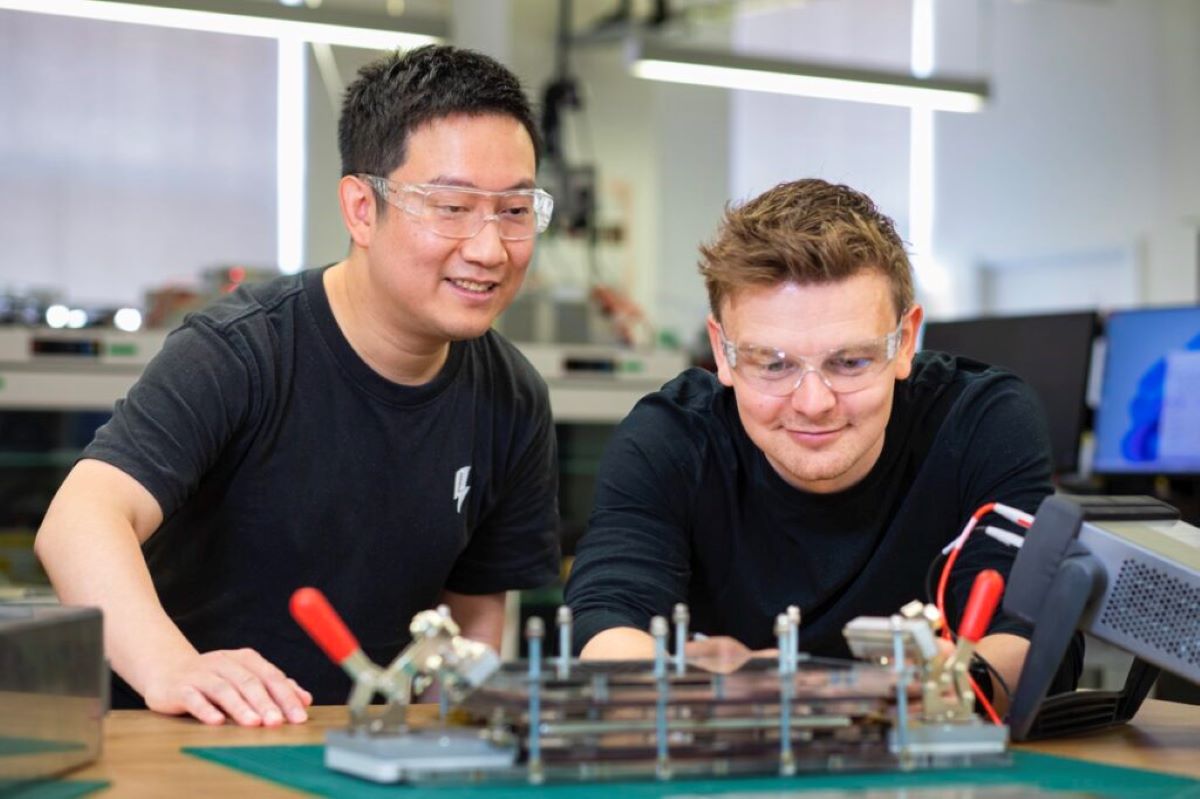

Batteries are a vital commodity powering everything from electric vehicles to drones and satellites. But as anyone with a smartphone knows, batteries have a limited life and degrade over time. London-based Gaussion spun out of the University College London in 2022 to advance its magnetic technology that makes lithium batteries charge faster while prolonging their useful life.
Gaussion raised £21 million ($28 million) in a round led by UK-based investors AlbionVC and BGF. US-based deep tech investor Future Ventures, mobility-focused Autotech Ventures, the UCL Technology Fund, and DN Capital participated. “The battery decides whether the giant computers behind AI can keep running, whether a drone can stay in the sky, and whether a satellite survives out in space,” said Gaussion’s Tom Heenan. “Every battery faces a physics ceiling, and we move that ceiling.”
Industry applications
Gaussion uses tiny electromagnets to help lithium-ion batteries charge faster while generating less heat, which is often the culprit in degradation. “With much of the global battery industry focused on advances in cell chemistry, technologies extracting more from existing cells are attracting greater attention,” the Albion VC team said.
Its applications span EVs, drones and data centers. Gaussion was part of the Faraday Institution’s fellowship program, which is supported by the UK government to support research, development and early-stage commercialization of battery storage technologies (see, “Battery makers and investors pivot from EVs to grid storage for renewable energy in Europe“).