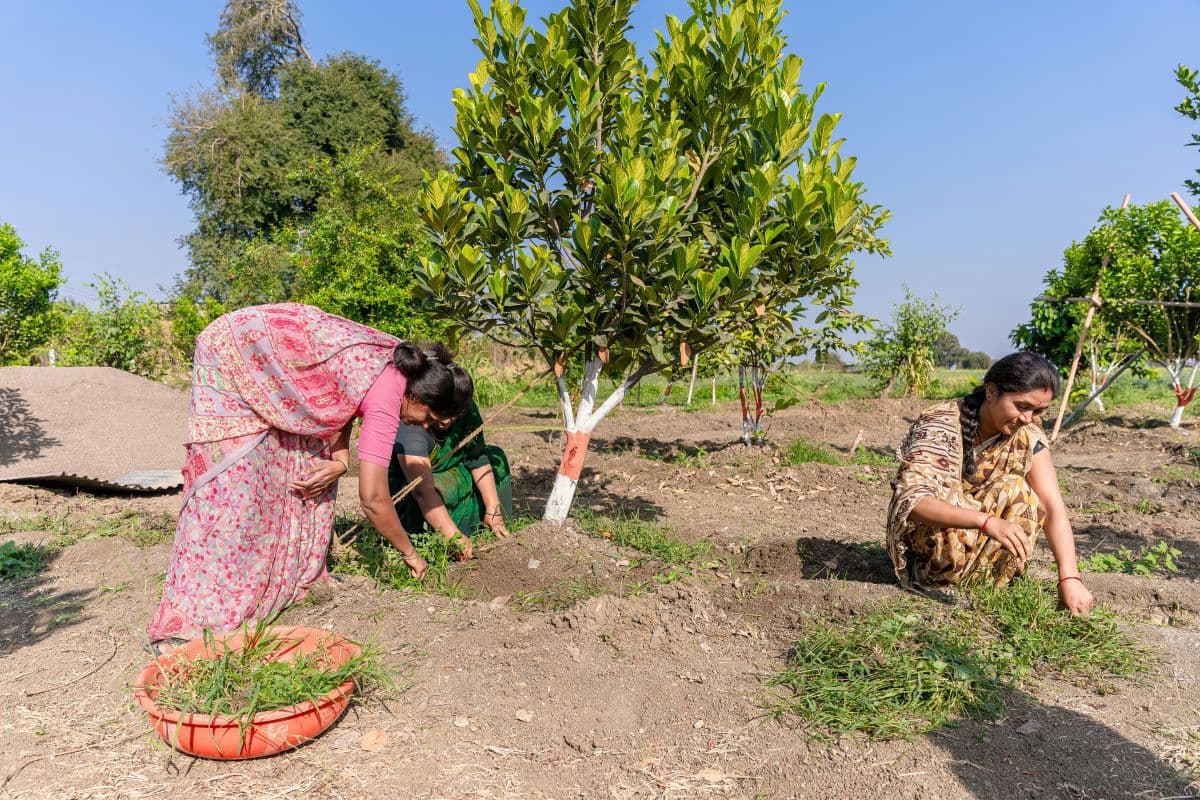
Livelihoods is an investment fund manager deploying capital into nature-based solutions across emerging markets in Africa, Latin America, and Asia. The firm's portfolio spans agroforestry, mangrove restoration, regenerative agriculture, rural energy projects, and ecosystem restoration initiatives designed to generate carbon credits while improving livelihoods for smallholder farmers and rural communities. By structuring investments to deliver both environmental impact and measurable economic returns, Livelihoods combines long-term land stewardship with verified emissions reductions and biodiversity co-benefits. The fund partners with local organizations and agricultural cooperatives to ensur...
Livelihoods Carbon Fund IV is a blended finance vehicle targeting €150 million in capital to deploy nature-based solutions across Africa, Asia, and Latin America. The fund invests in agroforestry, mangrove restoration, regenerative agriculture, rural energy projects, and ecosystem restoration with the dual objectives of carbon sequestration and rural livelihood improvement. Anchored by institutional partners including Mars, Danone, and Hermès, the fund targets impact across 500,000 beneficiaries and aims to sequester up to 10 million tons of CO2 equivalent over a 25-year investment horizon. The fund employs satellite monitoring and LiDAR technology for project oversight and emphasizes direct community engagement and local economic benefits. Since its inception in 2011, the Livelihoods platform has deployed capital across 47 projects, resulting in the planting of more than 160 million trees across emerging markets.
Livelihoods Carbon Fund #2 was created in 2017 by Crédit Agricole, Danone, Firmenich, Hermès, Michelin, SAP, Schneider Electric, and Voyageurs du Monde to enable them to accelerate their climate and community impact relative to LCF1. Eurofins joined the fund in 2019 as the ninth corporate investor, bringing total committed capital to €65M. LCF2 was designed as a direct continuation and scale-up of LCF1's model, with a larger fund size and expanded ambition: LCF2 plans to invest €100M in carbon sequestration projects, achieving 12 million tons of CO2 over 20 years — though public sources consistently confirm the fund's final closed size at €65M, suggesting a partial deployment against the original €100M ambition. As with LCF1, the fund's mechanism is results-based: project developers (NGOs, social enterprises, and cooperatives) receive upfront financing for 10–20 year project cycles, and the fund receives internationally certified carbon credits in proportion to verified GHG sequestration or avoidance. Investors use these credits to offset their own unavoidable residual emissions. LCF2 also extended and scaled up several LCF1 projects in addition to financing new ones. One flagship LCF2 project is Yagasu (Indonesia): a 20-year mangrove restoration project approved in 2018 covering 5,109 hectares of degraded mangrove ecosystems on the east coast of Aceh and North Sumatra, implementing a silvo-fishery model allowing sustainable aquaculture alongside ecosystem restoration.
The Livelihoods Carbon Fund #1 was launched in 2011 by 10 investors: Danone, Schneider Electric, Crédit Agricole S.A., Michelin, Hermès, SAP, Groupe Caisse des Dépôts, La Poste, Firmenich, and Voyageurs du Monde. LCF1 invested €45 million in mangrove restoration, agroforestry, and rural energy projects across Africa, Asia, and Latin America, structured around a long-term project pipeline (10–20 years per project). The fund's financial model is uniquely results-based: project developers receive upfront grants or concessional loans to implement large-scale restoration and sustainable agriculture interventions, and the fund receives certified carbon credits as payment when verifiable impact milestones are met — sequestered or avoided GHG emissions validated under international standards such as VCS (Verra). LCF1 has invested €40M in 9 projects across Africa, Asia, and Latin America, planted 130 million trees benefiting 1 million people, provided 120,000 households with efficient cookstoves, and sequestered 10 million tons of CO2 over 20 years. Illustrative LCF1 projects include the restoration of 10,000 hectares of mangroves in Senegal in partnership with local communities, and rural energy and agroforestry programs in India's Araku Valley. All economic benefits from projects — increased fish stocks, agricultural produce, forestry products — flow directly to local communities; the carbon credits are the fund's sole financial return, used by corporate investors to offset their own unavoidable residual emissions.
The Livelihoods Fund for Family Farming is a €120 million pooled fund established in 2015 through a partnership between Danone and Mars to advance regenerative agriculture and ecosystem restoration. The fund employs a blended finance approach to invest in natural asset recovery and sustainable sourcing networks across Africa, Latin America and the Caribbean, and Asia. Its strategy focuses on supporting family farming operations through projects in natural resource conservation, regenerative agriculture practices, and food systems improvements. By linking ecosystem restoration with farmer livelihoods and sustainable sourcing commitments, the fund addresses both climate and environmental sustainability alongside economic opportunity for smallholder producers.






 Danone
 Mars
Mars

 Groupe Crédit Agricole
 Groupe Caisse des Dépôts
 La Poste