
In Northern Ghana, the education crisis is worsening as USAID’s basic education programs close. Classrooms are overcrowded, sanitation is scarce, and teachers lack essential support. This mirrors a global challenge: in low- and middle-income countries, seven in ten children cannot read a simple sentence by age ten.
At Opportunity International, our in-depth reporting shows a gap of 33 million school seats in low- and middle-income countries. UNESCO estimates these nations must boost education spending by $97 billion a year to meet SDG 4 by 2030. Yet African governments already spend a larger budget share on education than many high-income nations, while households cover nearly 40% of costs.
There is simply no more room to stretch.
But capital is available. Opportunity International has invested $1 billion in global education through a market-based model, reaching 19 million children in 13 years. Our approach shows one of the ways that blended finance can channel private capital into sustainable education for the world’s most vulnerable children.
Like many others, we’ve faced cuts following USAID’s closure. Yet, we have found a way to maintain our presence in Northern Ghana, where our education finance model offers a blueprint for achieving equity without relying on unstable aid.
Local financing for local schools
As the head of education finance programming at Opportunity International, I have seen firsthand the power of financial inclusion for local education providers. Our organization provides technical assistance to more than 200 locally based financial institutions to help build out education loan portfolios in underserved communities.
The key is in working with financial institutions that have a personal stake in area schools. Opportunity International has focused on low-cost private schools charging $2 to $10 per month, a pillar of underserved communities serving 26% of students in low- and middle-income countries.
Last year, our network facilitated $260 million in education-related loans across Africa, Latin America, and Asia. In Northern Ghana, where large national banks often view lending as too risky, we work with local financial institutions to offer tailored loans for infrastructure, classroom expansion, sanitation, and teaching materials. We also design financing tools for parents to cover tuition, transportation, uniforms, and vocational or tertiary education.
In one district, our partnerships enabled more than GHS 500,000 (about $40,000) in financing for low-cost private school networks, funding classroom and utility construction that directly supported over 1,500 students. Eighty percent of borrowing schools used the capital to hire teachers and support staff.
An educator who proves the model
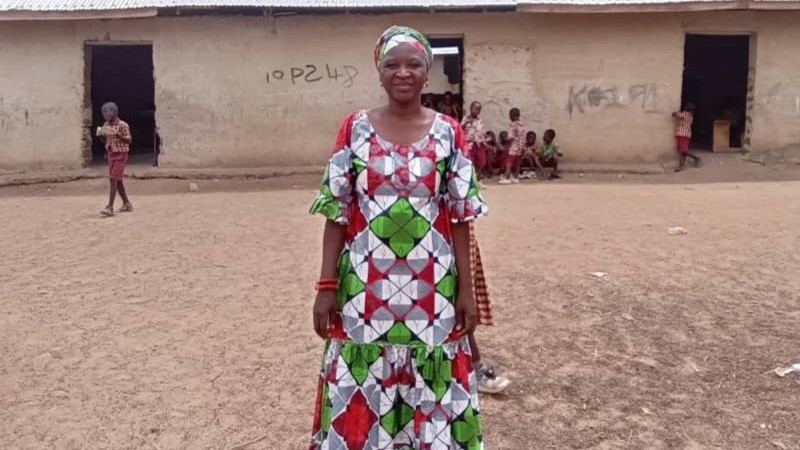
Take Daari Hawawu, who started her school under a mango tree with seven students. Through our USAID-funded work, she received business training and connections to local financial institutions — making her school more bankable.
In just four years, the school has grown to 74 learners from kindergarten to Primary 5 with a teaching staff of four. Investments, training, and relationships have multiplied Daari’s impact sustainably. USAID’s dissolution can’t hurt an entrepreneur who now has access to local financing.
Our 2025 market analysis shows that Ghana alone represents a $228 million opportunity for education finance, with similar potential across low- and middle-income countries. With targeted investment, local financial institutions could unlock access to quality education for tens of thousands more children in rural and underserved areas.
But the key factor remains the same: private capital is essential to instigate local investment.
The catalyst: Mobilizing private capital for education
Unlocking private capital requires aligning incentives, reducing risk, and building trust in a historically undervalued sector. Innovative financing models exist, but systemic enablers must scale to transform how education is funded. A two-pronged approach can stimulate investment.
Leverage blended finance: Public, philanthropic, and private capital can be combined to reduce risk and unlock larger-scale investment in education. Our collaboration with Oikocredit, for example, has helped catalyze investment from local institutions into low-cost private school education, already deploying $11.6 million to schools across Africa.
On a larger scale, the International Finance Facility for Education blends public guarantees with private and philanthropic capital, enabling multilateral banks to lend several times more for education.
By leveraging markets instead of relying solely on aid, education finance becomes a scalable, investable proposition with measurable returns, demanding stronger donor commitments and bankable models.
Strengthen financial institutions’ capacity: Local financial institutions must be better equipped to lend to the education sector. Banks, MFIs and credit unions can reach schools and families with tailored products — but many lack the tools, training or guarantees they need to scale.
Opportunity International’s EduFinance program has worked with more than 200 institutions to build credit scoring, design school loans and train officers. With further technical assistance and risk-sharing tools, this model could be expanded to meet the growing demand for education financing across low- and middle-income countries.
Localized solutions, at scale
The retreat of foreign aid has left millions of children facing a more uncertain future, but market-based solutions are already proving that we can fill the gap. Local financial institutions have the context and motivation to invest in their community’s education.
By uniting institutional investors, governments, and development banks around proven, market-based solutions, we can transform the retreat of aid into a springboard for lasting educational opportunity — ensuring that quality education drives sustainable development for generations to come.
Andrew McCusker is the head of education finance for Opportunity International.