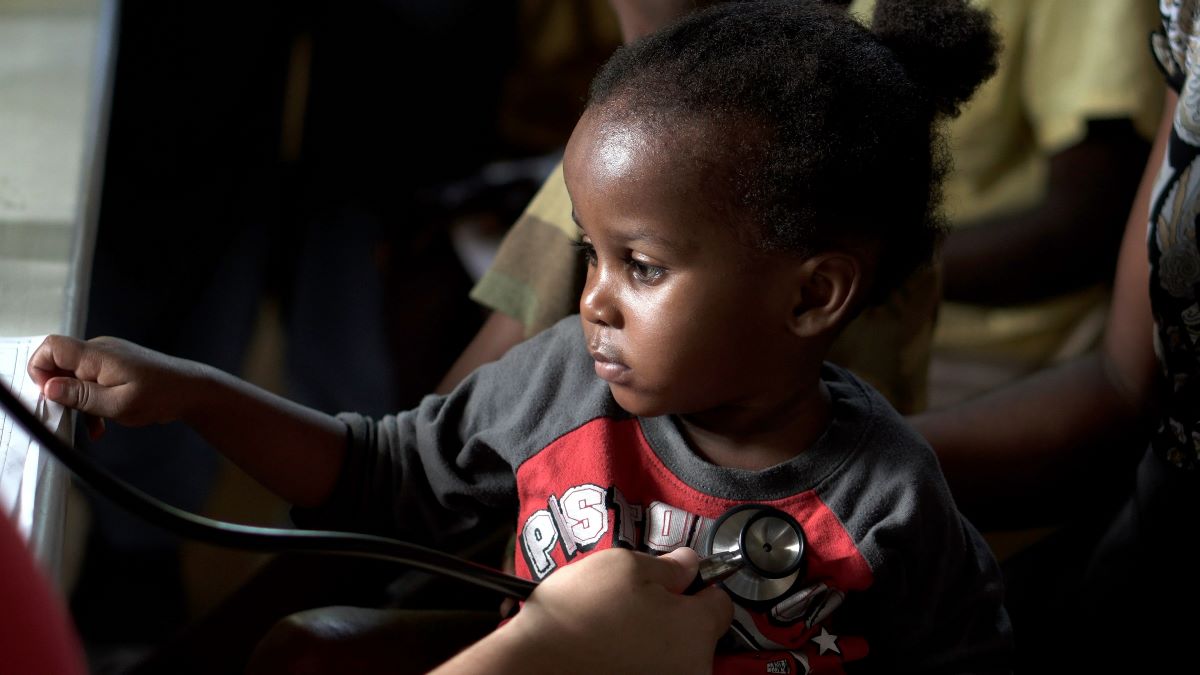

Tuberculosis incidence rates have dropped by 12% in the last decade. More than one in five people with the disease, however, are undiagnosed or unreported. South Africa-based AI Diagnostics developed Ostium, a digital stethoscope that analyses lung sounds to improve accuracy in tuberculosis detection, especially when patients lack stark symptoms like coughing.
New Hampshire-based Steele Foundation for Hope invested $3.1 million to lead an 85 million rand ($5.2 million) investment round for the company. South African financial services provider iFSP Group, the Global Innovation Fund and South African investors Africa Health Ventures and Savant participated. The company developed its lung sound training database from patients across the Global South. Its tool is especially useful for nurses and community healthcare workers in areas with limited laboratory or radiology equipment.
AI for healthcare
AI Diagnostics joined the Chat for Health and AI Accelerator earlier this year, an initiative of Turn.io, OpenAI, Johnson & Johnson Foundation and Mulago Foundation. The cohort of 10 health tech companies also included Kenya-based Cliniva, which offers specialized consultation for women via Whatsapp. Mexico-based Cuéntame provides mental healthcare for workers with limited digital access. Uganda-based OneDay Health offers diagnostic guidance in remote areas.
Separately, Google launched Health Acoustics Representation or HeAR in 2024, a tool which also uses respiratory sounds to help detect tuberculosis. The tech giant teamed up with India-based Salcit Technologies whose product Swaasa assesses lung health using sounds, to improve accuracy and scale these solutions.