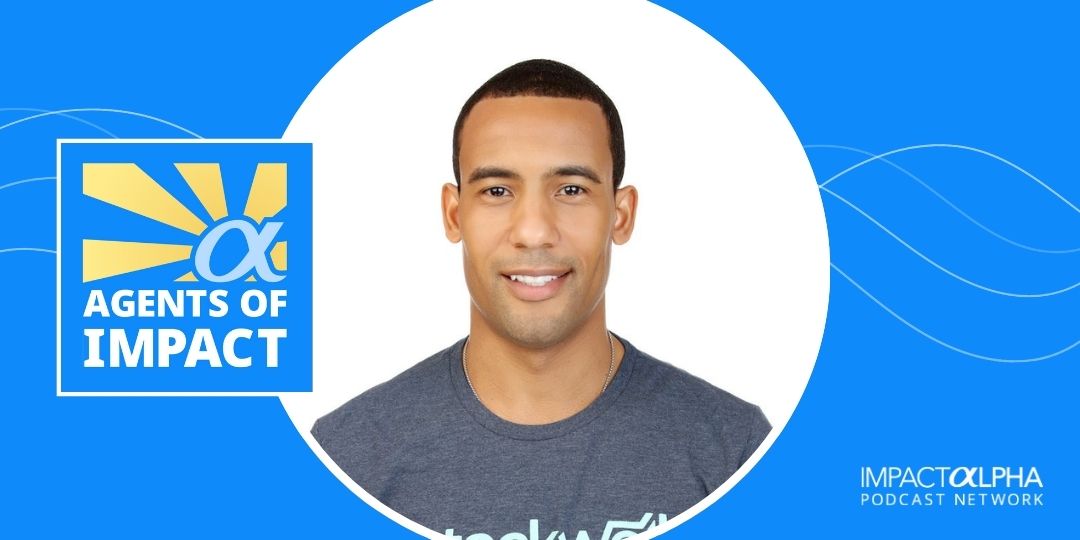

Trevor Rozier-Byrd cites two particular experiences that set him on the path to create Stackwell, a “financial wellness and wealth app” to set young, diverse investors on the path to compounding wealth in the stock market.
The first was back in 2005, when he purchased a few shares of Apple stock as a 22-year-old just out of college. The gains on that single purchase later paid for a full year of law school.
The second was as an investment banker for the initial public offering of a company led by Bob Johnson, co-founder of BET and founder of The RLJ Companies.
“That was the first time I had ever seen an all-Black management team in my career. It’s also the only time I’ve ever seen that. In that moment, I believed that I could do what they were doing,” Rozier-Byrd says on the latest episode of the Agents of Impact podcast.
“That deeply instilled in me this belief that representation matters. A large part of what we’re trying to do at Stackwell is to give space and a sense of representation for people that have historically believed that the investment process simply is not for people like them – insert whatever ‘them’ might mean.”
Wealth builders
Financial assets are often considered the third leg of the ownership stool, along with homeownership and business ownership. Of the three, publicly listed stocks require the least capital to get into the market and show the quickest return.
“We know that over the last 100-plus years, the financial markets have been the most powerful wealth building tool that we have seen in our country,” Rozier-Byrd says.
Stackwell’s offerings, a range of low-fee portfolios with different profiles of risks and returns, are not unique. “It’s about the context,” Rozier-Byrd says. That includes partnerships with historically Black colleges and universities and community organizations reaching low- to moderate-income customers.
The stories and educational material on the site depict what Rozier-Byrd calls “multicultural emerging wealth builders.” As a student, Alexis Smith became a Stackwell ambassador and later got her brother Blake to start investing when he went off to college. “I think the most profound thing that happened was that their grandmother started to invest,” Rozier-Byrd said. “So you can see the intergenerational impact of the work that we are doing, and how not only can we impact individuals, but families and communities across generations.”
The ability to make monthly recurring deposits helps create a culture of saving – and helps investors take advantage of dollar-cost averaging, a tried-and-true method of mitigating the risks of market volatility.
“This is really about creating an entry point or unlocking access to a market that is highly untapped by both emergent and incumbent financial services firms,” he says. The market for multicultural consumers of financial products is growing at 4% per year as the US becomes a majority-minority country. “White males that are in their 40s to 60s, that have six- or seven-figures of investable assets – that is a shrinking population of people.”
Rozier-Byrd tells young investors just getting into the stock market not to worry too much about the current high prices of stocks, driven by an AI investment boom that may turn out to be a bubble.
“It’s never a good idea to try to time the market,” he says. “So get in, allow the markets to do what they do, and understand that there will be moments of extreme highs and extreme lows. On balance, we have sufficient data to suggest that this is a really sustainable way, over the long term, to truly build wealth.”
Get the podcast in your feed by subscribing on Apple, Spotify, or YouTube