
Stream on Netflix (trailer)
Spoiler warning: High
Total score: 14 (Accuracy: 4.5, Entertainment: 4.5, Impact: 5)
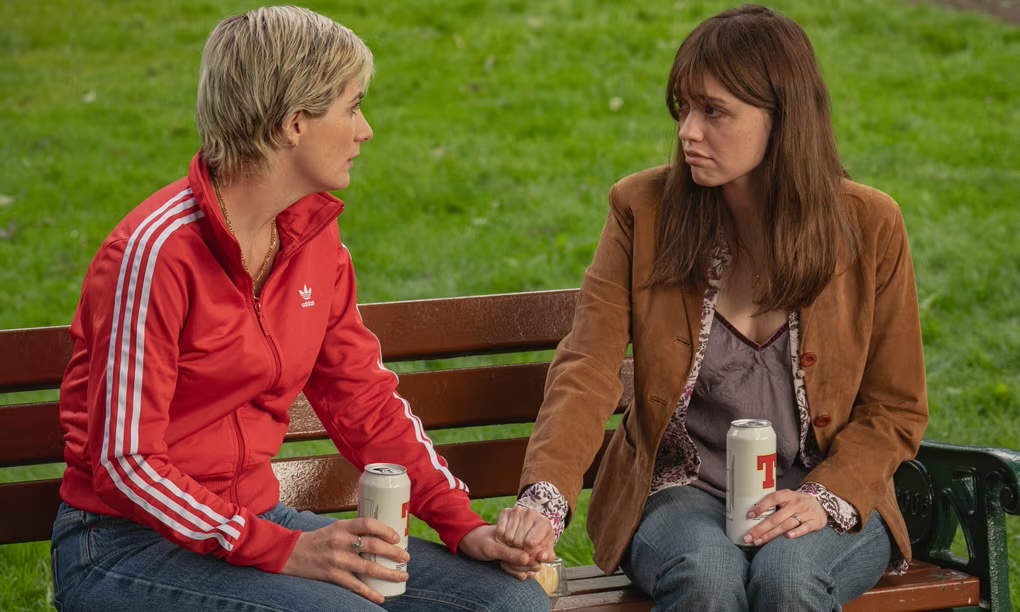
Toxic Town is based on the real story of an environmental scandal in Corby, a town of about 75,000 people in North Northamptonshire, England (about halfway between London and Manchester). The story of Corby has likely played out in countless towns and cities around the world, especially those whose economies are dependent on industrial development.
The story goes like this: A town or city enjoys an economic boom thanks to its proximity to an important natural resource or commodity. In Corby’s case, it was known for its iron ore. It became a major steel manufacturing center during WW2. The town attracted so many Scottish workers to its steelworks that it became known as “Little Scotland.”
Next, something happens to disrupt that region’s economic power or influence – sometimes a natural disaster, sometimes geopolitical events or sometimes just market forces. For Corby, the disruption came in stages, starting in 1967 when the British steel industry was nationalized and the steelworks in Corby became part of the British Steel Corporation. Due to declining profits and reduced market demand, the steelworks was shut down by 1980 and Corby fell into economic ruin with an unemployment rate of more than 30%.
Finally, the local government comes up with a plan to try to save the day. For example, the Corby Borough Council wanted to reclaim the 680 acres that housed the steelworks as part of an urban renewal program aimed at revitalizing the local economy. Their challenge was that scientists had found toxic waste all over the site, which would have to be buried or moved before any new development could begin.
You can probably guess what happens next.
In the hopes of saving the town some money – while also enriching a few friends and allies – the Council decides to cut a few corners in removing the waste. The toxic “dust” hits the fan when it’s discovered that a suspiciously high number of babies in Corby are being born with limb deformities like missing fingers and toes. The public outcry led to a lawsuit against the Council in 2005 that soon made national headlines. Thanks to the efforts of a group of determined mothers, they finally won the case in 2009, making it the first case in the world to establish a link between atmospheric toxic waste and birth defects.
The need for regulation
While Toxic Town is mainly about Corby, the four-part miniseries also shows how we all benefit from the presence of regulations grounded in science. Of course, some would argue that these rules go too far, limiting economic growth with endless red tape that does more harm than good.
For Council leader Roy Thomas, played by Brendan Coyle, the Council’s actions were justified because it is “so much more expensive to build on brown than green land” and that all the “needless red tape… ensures that towns like ours don’t survive.”
The obvious counter, delivered by the families’ lawyer Des Collins, played by Rory Kinnear, is that “a town that is made by burning up red tape and using it as fuel does so much damage.”
This same debate has played out in boardrooms and government offices for decades. On one side are those that prioritize profits and power via rapid economic development. On the other side are those that want to protect the public interest from the potential social or environmental consequences of this development.
In reality, these two sides are dangerously mismatched. Those on the side of profits have much more power and influence – and they aren’t shy about using it. Just look at the misinformation and obfuscation playbook regularly deployed by “harmful” industries, whether tobacco, chemicals or fossil fuels. They will do almost anything to avoid taking responsibility or accepting legal liability for the damages that their products cause. Even the limited successes, like the climate Superfund bills passed in New York and Vermont and under consideration in several other states, are now under attack by the fossil fuel industry and their allies.
There will always be some trade-offs between economic development and sustainability. The question is how to best evaluate those trade-offs? If you asked most CEOs or mayors whether they’re willing to tolerate the risk of congenital deformities in order to speed up development, of course they would say no – at least publicly. But in many cases the effect on human health (or animal health for that matter) may not be apparent until long after it’s too late to do something about it.
This is the point of environmental agencies like the EPA and its equivalents around the world. They are there to protect the environment and the public good from industrialists who are more motivated by quick profits than doing the right thing.
Courts sometimes hold these bad actors accountable, but I think the residents of Corby and other towns like it would rather just have healthy children and families. Wouldn’t you?
Toxic Town offers viewers a stark example of what happens when governments and corporations prioritize short-term gains over long-term consequences. If stories about deformed babies were enough to make those in power sit up in their seats and rethink their decisions, then perhaps we wouldn’t need so much “red tape” to protect the public good in the first place.