
Greetings Agents of Impact!
In today’s Brief:
- Resilience and adaptation to climate shocks
- Solar financing for Washington DC neighborhoods
- Green Climate Fund’s new portfolio
- Catalytic capital for climate resilient agriculture in Africa
Featured: Climate Resilience
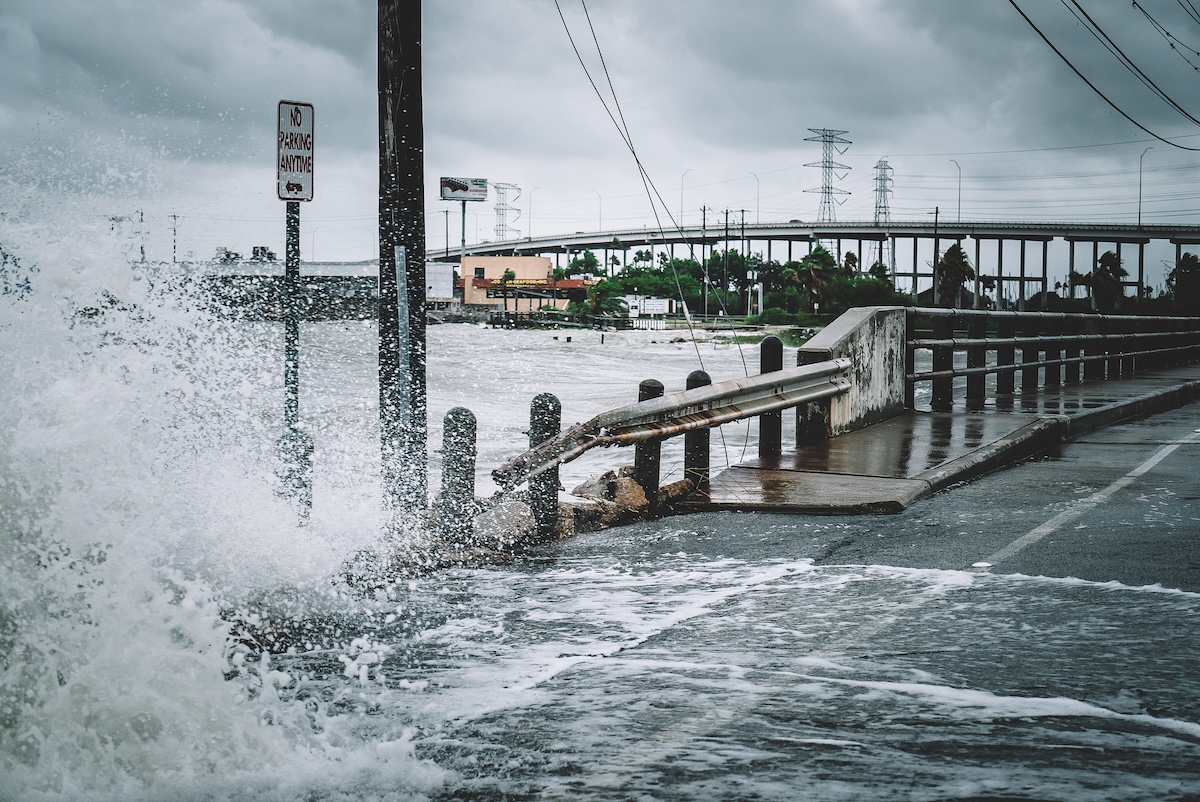
Investments in adaptation and resilience acquire new urgency as the climate future arrives. The old New Yorker cartoon would be funny if it weren’t so heartbreakingly apt. Two lounging dinosaurs revisit what must be a recurring conversation: “All I’m saying is now is the time to develop a technology for deflecting an asteroid.” Officials in Kerr County and other parts of central Texas would certainly pony up the $1 million needed for the flood disaster early-warning system if only they could rewind the clock to before last weekend’s deadly flash flooding. Texas Gov. Greg Abbott now says the state will pay for such systems if local governments can’t afford them. Even DOGE-sters and other federal budget-cutters would likely fill the vacant positions in the National Weather Service if they had another chance. What other investments in prevention and resilience should we be making now, rather than wishing we had been prepared only after the inevitable surprises catch up with us? The US spent nearly $1 trillion, or 3% of GDP, on disaster recovery and climate-related needs over the 12 months through April, according to Bloomberg Intelligence. Investing $1 in adaptation can yield close to $11 over 10 years in avoided losses and other benefits, estimates the World Resources Institute. Financing climate adaptation has become an urgent challenge as the planet’s climate blows past the 1.5 degree warming threshold beyond which life-threatening catastrophes are multiplying and natural systems that keep the Earth in balance are hitting tipping points. “All the warning signs in the planet are running red,” CarbonTracker’s Mark Campanale told ImpactAlpha. The Texas floods, said Andrew Dessler of the Texas Center for Extreme Weather at Texas A&M, are “exactly what the future is going to hold.”
- Political failure. More than 87 people died in Kerr County, 27 of them children, when heavy rain caused the Guadeloupe River to abruptly rise by as much as 30 feet in less than an hour early Friday. At least another two dozen died due to floods in nearby counties. Gov. Abbott said on Tuesday that 161 people remain missing. As the flooding worsened, President Trump signed a sprawling bill that seeks to kill off solar and wind energy projects and set back efforts to contain global warming and the extreme weather it brings. Trump has also pledged to abolish the Federal Emergency Management Agency, or FEMA, and to cut federal weather forecasting labs. On Tuesday, the Supreme Court cleared the way for Trump to slash more federal jobs. When the flooding hit Kerr County, a warning coordination meteorologist and science officer, among other roles, had been left vacant at a local National Weather Service office. Nationally, a third of National Weather Service forecasting stations lack a top meteorologist, CNN reported in May. “The latest episode of horrific flooding isn’t just about a natural disaster in one state,” former New York Mayor Michael Bloomberg wrote in an op-ed “It’s also about a political failure that’s been happening in states across the country, and most of all in Washington.”
- Bipartisan support. Support for adaptation and resilience is becoming bipartisan, especially as disasters multiply and swaths of the country become uninsurable. When Homeland Security head Kristi Noem tried to cancel $882 million in grants under the Biden-era for Building Resilient Infrastructure and Communities program, congressional Republicans objected. Adaptation funding has traditionally been considered a government responsibility. But private investors are getting on board. What was once considered uninvestable has quickly grown to what Temasek and consulting firm BCG call “one of the defining markets of the future” and “the next trillion-dollar investment opportunity for private equity.” SJF Ventures this year assembled a market map of tech solutions for climate adaptation and resilience. Lightsmith Group has invested in precision agriculture to enhance yields in the face of weather volatility, AI-enhanced vegetation management for wildfire risk, advanced insurance for supply chains, and rapid-response health diagnostics for mosquito-borne disease. The flooding in Texas “presents an unavoidable opportunity: the chance to prepare, to innovate, and to invest before the next set of inevitable challenges,” Lightsmith’s Jay Koh told ImpactAlpha. “No one is in favor of more extreme events. But there is a clear and present opportunity to invest in resilience to that inevitable risk and impact.”
- Keep reading, “Investments in adaptation and resilience acquire new urgency as the climate future arrives,” by Amy Cortese on ImpactAlpha. How to help? The Texas Tribune offers a local guide.
Dealflow: Energy Transition
City First and DC Green Bank provide $5.3 million for solar power for DC’s low-income neighborhoods. Just last year, City First Enterprises’ Oswaldo Acosta was celebrating the role of community development financial institutions, or CDFIs, in accelerating the clean energy transition. “We’re all green banks now,” he said on ImpactAlpha’s Capitol Gains podcast. The budget bill signed into law by Trump last week, which accelerates phase-outs to clean energy tax credits and “repeals” a Congressionally mandated green bank program, upends those plans. As federal funding sources dry up, community lenders, impact and other private investors have an opportunity to support the rollout of shovel ready projects (read and watch, “Call No. 71: Green lenders are all dressed up and ready to roll”). Acosta remains determined to grow City First Enterprise’s clean energy lending portfolio. The Washington, DC-based CDFI has inked a $5.3 million line of credit with the district’s green bank for the District Solar project, which will create access to clean electricity for roughly 335 households, mostly in low- and moderate-income neighborhoods. The project, backed with clean energy tax credit equity, expects to install 3.4 megawatts of residential rooftop solar this year. More than half of the households will receive free solar energy via no-money-down power purchase agreements. “The arc of the evolution of clean energy adoption in the communities we serve will continue,” Acosta tells ImpactAlpha.
- Community finance. Evergreen Companies, a DC clean energy development and finance company, is behind the project. City First and DC Green Bank, which allocated about $2.6 million each for the seven-year term loans, are expecting the project to deliver a 60% annual reduction on households’ electricity bills over 20 years. “We are proud to support our partners and drive investments in resilient infrastructure that create jobs, reduce energy costs, and put money back in the pockets of DC residents,” said Brandi Colander, who last week stepped up as interim CEO of DC Green Bank. The District Solar project is expected to create approximately 60 jobs and offset over 3,300 tons of CO2 emissions each year.
- Energy tax credits. Evergreen will own the entire portfolio of solar systems and generate tax credits for every megawatt-hour of energy produced. Acosta predicts a spurt of transactions in the coming months, as clean energy developers rush to get projects online to take advantage of the federal Investment Tax Credit before it expires. “My concern is that this will bring stress to CDFIs that don’t have the capital to support those deals,” he adds. “At the end of the day, the industry will do what it always does, find financial structures that work.” City First Enterprises and DC Green Bank have deployed over $25 million in clean energy investments in DC over the past five years. In a separate deal, DC Green Bank has partnered with Community Preservation Corp., American Housing, Amazon and JPMorgan on a $26.7 million construction financing package to retrofit 52 affordable homes with solar panels, electric vehicle charging stations and other energy-efficient upgrades in Norwest DC.
- Gift this post.
Green Climate Fund approves $1.23 billion for 17 climate projects around the world. The Green Climate Fund last week approved $1.2 billion for 17 new projects in developing countries in its largest single round of commitments. Many of the projects focus on the most climate-vulnerable regions in the world, and seek to support climate resilience through early warning systems, sustainable agriculture and ecosystem restoration. The Green Climate Fund approved $33.6 million to restore land and manage water in northern Mauritania and $16.7 million to protect Saint Lucia’s fisheries communities with coastal defenses and sustainable fishing practices. In Nepal, Green Climate Fund is backing efforts to protect lives and infrastructure from glacial lake outburst floods and climate-induced flooding in the Himalayas. The financing comes in the wake of the Trump administration’s cuts to USAID, which have contributed to a $70 billion annual shortfall in global concessional finance and an estimated 14 million preventable deaths by 2030.
- Green bonds. As the US pulls back, multilateral institutions like Green Climate Fund are stepping in to fill the growing gap. The fund made a $227 million equity investment in the Global Green Bonds Initiative to help build out green bond markets in sub-Saharan Africa and other underserved regions. The Green Bonds initiative is a partnership between Green Climate Fund and development finance institutions such as the European Investment Bank, Germany’s KfW and the European Bank for Reconstruction and Development. Another $200 million will support a green finance facility for clean energy and low-carbon infrastructure in India. In Papua New Guinea, the Fund approved $63 million to advance REDD+ and sustainable land use. The Fund’s portfolio totals 314 projects and $18 billion in approved finance, or $67 billion including co-financing.
- Gift this post.
Dealflow overflow. Investment news crossing our desks:
- Arctaris Impact Investors led a $27 million equity investment for a hotel-to-residential conversion project in an opportunity zone in downtown Silver Spring, Maryland. The former hotel will become 227 units of affordable housing. (Arctaris Impact Investors)
- Tulum Energy, a Milan-based company developing a methane pyrolysis technology for clean hydrogen production in hard-to-abate sectors, clinched $27 million from CDP Venture Capital’s Green Transition Fund, TDK Ventures and others investors. (Tulum Energy)
- Turner Impact Capital, through a joint venture with Dallas-based Kalterra Capital Partners, has acquired a 376-unit rental housing community in McKinney, Texas. Turner and Kalterra will convert over half of the units to income-restricted affordable housing. (Tuner Impact Capital)
- Dutch development Bank FMO provided a $1 million loan to Zembo Motorcycles, an electric motorbike seller with its own network of battery-swapping stations in Uganda. (APEN)
Signals: Catalytic Capital
Catalytic capital models to scale climate resilient agriculture in Africa. Micro crop-insurance provider Pula and farm input providers like Acre Africa and Apollo Agriculture are stretching limited public and concessional financing to maximize its impact. Such case studies are essential at a time when “there’s less oxygen in the room” for social infrastructure investments in low and lower-middle-income countries, Dalberg’s Kusi Hornberger said in a recent roundtable. Kenya-based Pula, one of the earliest providers of crop insurance for East Africa’s smallscale farmers, built its micro-insurance platform using public subsidies. As adoption grows in new markets, Pula has phased out the subsidies. The company’s footprint extends across Africa, Asia and Latin America; it is expanding into livestock insurance and other new product lines.
- Local mobilization. There’s a growing realization among catalytic capital providers that engaging local investors and ecosystem organizers is the key to long-term sustainable development. “We’re increasingly focused on mobilizing local capital and working through domestic institutions,” said Conor Brosnan, CEO of Ireland-based Small Foundation. “The goal is to understand what localized financing really looks like in practice and how to make it work across diverse national systems.” Small is a member of the Growth Firms Alliance, a coalition of philanthropic funders that also includes Argidius, Visa Foundation, and others working to unlock the potential of growth-oriented small and medium-sized enterprises in emerging markets. “Family foundations and corporate philanthropies are among the most flexible actors in this ecosystem,” said Brosnan. “We see that as a superpower, and we’re trying to use it to mobilize more local capital and support early-stage enterprise development.”
- Keep reading, “Catalytic capital ‘models for the moment’ to scale climate resilient agriculture in Africa,” by Emelia Essumanba-Josiah on ImpactAlpha. The Catalytic Capital Consortium is a sponsor of ImpactAlpha’s ongoing coverage of catalytic capital strategies.
Agents of Impact: Follow the Talent
Jones Thomas, ex- of Capricorn Investment Group, stands up GreenScale Capital to partner with climate companies to design bankable projects. “While others retreat from cleantech investing, I believe the most significant opportunities emerge when capital becomes selective,” Thomas wrote on LinkedIn.
Sharyanne McSwain becomes president of Echoing Green to co-lead the organization alongside CEO Cheryl Dorsey… British International Investment adds Harsha Sanyukta of Sattva Consulting as a development impact intern… Community Vision appoints Matias Bernal as vice president of development and Leslie Payne as vice president of program strategy… Mihir Mehan was promoted to investments associate director at Veris Wealth Partners.
Charlotte Badenoch, previously with KOIS, joins GSG Impact as senior manager of investible vehicles… Sean Chiasson was promoted to director of finance and operations at Toniic… Marlise Hunter, previously with the Simpson Centre, joins Federal Crown Corp. as ecosystem partnerships director… Zenith Wealth Partners adds Jesse Wideman Jr., previously with Facet, as a financial planner.
The Sobrato Organization welcomes Adam Briones, former CEO of California Community Builders, as director of housing security… MCE Social Capital welcomes Brown Advisory’s Eliza Erikson, Juan Guardado of Natural Extracts Industries, Jason Kyrwood of Davis Polk & Wardell and Stealth Mode Startup’s Chid Liberty as board directors… The Saint Paul & Minnesota Foundation is hiring an impact investing analyst… FMO has an opening for a climate-focused sustainable finance officer.
👉 View (or post) impact investing jobs on ImpactAlpha’s Career Hub.
Thank you for your impact!
– July 9, 2025