
Greetings Agents of Impact!

- Watch the trailer and read the backgrounder, “A playbook for the Reconstruction of Black wealth.”
In today’s Brief:
- Policy-enhanced impact investing
- AI hyperscalers and clean power providers
- Elemental Impact’s climate tech spree
Featured: Policy Corner
These investors are raising their lobbying game to enhance their social impact. Through their family office, Blue Haven Initiative, Liesel Pritzker Simmons and her husband Ian Simmons have invested hundreds of millions of dollars in climate and clean energy, education technology, financial services and healthcare. The couple also advocates against corporate money in politics, for greater voter engagement and – notably for a wealthy family – for higher taxes on the rich. But they have generally kept their investing activity and their policy advocacy in separate silos. No more. Pritzker Simmons and other investors this week launched Policy-Enhanced Impact Investing, a community of family offices and other impact investors that are leaning into advocacy, lobbying and, yes, politics, to create favorable conditions for achieving beneficial outcomes (watch their launch video). “I’m not interested in enhancing the balance sheet of the things we are investing in,” Pritzker Simmons tells ImpactAlpha. “I’m interested in enhancing the impact of the things we’re investing in.”
- Truth in lending. Small business advocates in Illinois this year succeeded in getting the state Senate to approve a “small business bill of rights” to ensure business owners know the true interest rates on their loans – only to see the legislation die in the state’s General Assembly. Through one of Blue Haven’s investees, Community Investment Management, Pritzker Simmons was introduced to the Responsible Business Lending Coalition, which estimates that such transparency could save small business owners up to $835 million a year in unnecessary fees and interest in Illinois alone (read a detailed case study). Community Investment Management’s Jacob Haar said that without such disclosure, some borrowers had a hard time distinguishing responsible lenders from predatory scams, harming both CIM’s business and its social impact. “We know people that could help if that’s something you’re interested in,” Pritzker told proponents. Blue Haven put the coalition in touch with its political advisors, including Chicago-based Lava Strategies. “They pretty quickly were able to say, ‘You’re talking to the wrong lobbyist. You need to be talking to this person.’”
- Policy-enhanced. The supercharged political environment makes it perhaps unsurprising that investors are becoming more politically active. None other than the president-elect’s son, Donald Trump Jr., has joined a venture capital firm with the explicit intention to back conservative founders targeting conservative-leaning consumers (see, “Donald Jr. turns impact investor to bet on an overlooked market: Trump voters”). Many impact investors have long pursued policy objectives on an ad hoc basis. The Sorenson Group’s Jim Sorenson was an early advocate for Opportunity Zones, and more recently has pushed for bipartisan legislation to expand financing for business conversions to employee ownership (disclosure: Sorenson Impact Foundation is an investor in ImpactAlpha). Other impact investors active in policy work include Candide Group, Builders Vision, Lafayette Square and Sea Change Foundation.
- Levers of power. Pritzker Simmons said family offices are particularly well suited to policy-enhancement given the sources of their capital and their ability to engage in a wider range of activities than traditional foundations and funds. Some of Blue Haven’s own managers said they didn’t have time or capacity to engage in policy, even when it affected their investment or impact strategies. She offers, “Well, what if you have LPs that could do some of that?” Pritzker Simmons says she and her husband are not shy about being a politically engaged family, giving both directly to political campaigns and through a 501(c)(4) nonprofit. And she is well-connected as well through her extended family, heirs to the Hyatt Hotels fortune. One of her cousins is Illinois Gov. JB Pritzker. “What I will be very, very clear about is I am not calling JB and telling him to pass legislation that I want him to pass,” she says. “That has not happened. He is a very busy man. That’s just not going to happen.”
- Keep reading, “These investors are raising their lobbying game to enhance their social impact,” by David Bank on ImpactAlpha.
Dealflow: Energy Transition
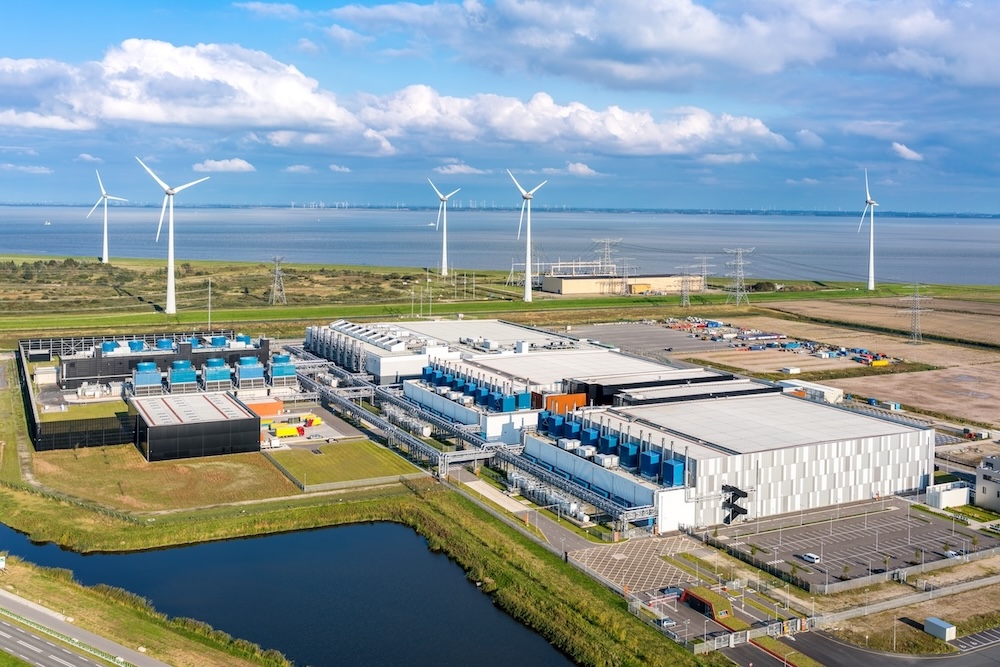
TPG Rise and Google plug $800 million into Intersect Power for green data centers. The new round of funding, led by TPG Rise Climate, is part of a broader partnership to build clean power capacity alongside new data centers to meet the surging energy demands of artificial intelligence. San Francisco-based Intersect Power develops, owns and operates industrial-scale clean power projects. With financial backing from TPG and Google, Intersect will develop renewable energy and storage industrial parks co-located with Google’s data centers in the US. The first such project is expected to break ground in 2026 and be completed the following year. “This partnership is an evolution of the way hyperscalers and power providers have previously worked together,” said Intersect’s Sheldon Kimber. “Deep collaborative partnerships combined with creative problem-solving are the only way we can meet the explosion of AI growth, as well as society’s accelerating electricity demand.”
- Greening data centers. Energy-gobbling data centers to power AI and cloud computing are dramatically increasing demand for electricity. Google, Microsoft and other “hyperscalers” – as well as private equity investors – are investing heavily in green power, even as their carbon footprints rise (see, “AI data centers tackle the sustainable energy challenge”). “Google is focused on evolving digital infrastructure development by co-locating grid-connected, carbon-free energy and data center investments into closely linked infrastructure projects,” writes Ruth Porat, president and chief investment officer of Google and its parent, Alphabet.
- Low-carbon infrastructure. Other investors in Intersect’s latest round include private equity backers Greenbelt Capital Partners and Climate Adaptive Infrastructure, which first invested in the firm in 2020. Intersect has “executed on their blueprint, project by project and partnership by partnership,” said Bill Green of CAI, which re-upped its investment via its Climate Adaptive Infrastructure Fund. Intersect’s partnership with TPG and Google, he says “will accelerate their measurable impact and provide pathbreaking new approaches to the challenge of deep decarbonization of digital infrastructure.” Intersect has a combined 2.2 gigawatts of solar and 2.4 gigawatt hours of battery storage capacity under operation or construction. It plans to break ground on an additional four gigawatts of solar and 10 gigawatt-hours of battery storage capacity next year.
- Share this post.
Elemental Impact backs 16 climate tech startups as it steps up investments. Textile recycling. Clean energy permitting. Bio-manufacturing. Elemental Impact this week unveiled $18.6 million in investments across 16 climate tech companies. The startups are based in the US, Canada and New Zealand and were selected from more than 700 that responded to Elemental’s call for applications in the spring. With the equity investments, Elemental aims to build a pipeline of climate solutions and projects. “The majority of our investments are focused on deploying projects with deep climate and community impact,” Elemental’s Dawn Lippert told ImpactAlpha.
- Climate cohort. SuperCircle in New York is a turnkey textile recycling program for fashion brands. Foray Bioscience, in Cambridge, Mass., cultivates plant cells that can be used to produce a variety of goods and preserve natural plant stocks. New Zealand-based Aspiring Materials converts olivine rocks into minerals and carbon-capturing materials. Symbium in San Francisco speeds up permitting for solar developers, while MetOx in Houston makes high temperature superconducting wire that can boost grid transmission.
- Project funding. The Honolulu-based nonprofit investor also provides follow-on equity and debt investments to help companies scale, as well as project funding for federal Greenhouse Gas Reduction Fund projects. In September, Elemental received $100 million from the Coalition for Green Capital, the network of green banks that was awarded $5 billion from the Greenhouse Gas Reduction Fund, for place-based projects (see “With a fresh $100 million and rebrand, Elemental Impact aims to accelerate climate tech deployments”). “We anticipate the volume of investments rising significantly in 2025 as we expand our investment platform,” Lippert said.
- More.
Dealflow overflow. Investment news crossing our desks:
- Goldman Sachs provided a $30 million construction loan to Massachusetts-based Sunwealth to support solar-plus-storage developments in underserved communities in the US. (Sunwealth)
- Next Sense in Amsterdam raised €11.5 million ($12 million) to help building owners monitor and manage their energy consumption. (EU-Startups)
- New York-based Greater Share closed its education fund at $52 million. The vehicle will invest in private equity funds that meet specified ESG criteria and pledge to donate 50% of the the associated returns to education-focused NGOs. (Greater Share)
- EQT launched a new private equity fund focused on businesses supporting green infrastructure and the energy transition in North America, Europe and Asia. (EQT)
- San Francisco-based WeaveGrid raised $28 million in a financing round led by Toyota’s Woven Ventures for its software that helps balance electricity grids with EV charging demands. (WeaveGrid)
Agents of Impact: Follow the Talent
“Impact Notes” from Local Initiatives Support Corp. that finance community and economic development across the US won the 2024 impact award from Community Capital Management. Other finalists included a municipal bond for downpayment assistance from the Colorado Housing and Finance Authority; a muni bond for school improvements from Los Angeles Unified School District; and commercial mortgage-backed securities to finance affordable housing at Toulon Place in Raleigh, NC, and affordable housing for seniors at Yorkville Gardens in New York.
JFF Ventures adds six new members to its Corporate Innovation Council, including Pilot Company’s Jocelyn Caldwell, Mari Sifo of Host Hotels and Resorts, Kathy Tague of Northwestern Mutual, and Amazon’s Tammy Thieman… Impactable Investment Group is looking for an intern in the UK… US Bank has an opening for an assistant director of asset management focusing on impact finance and affordable housing… CarbonBetter seeks a climate and carbon markets analyst in Austin.
Enterprise Community Partners is on the hunt for a portfolio performance senior manager… Cushman & Wakefield is hiring a net-zero senior manager and a sustainable analyst in New York… Also in New York, Moody’s is recruiting an assistant vice president of community impact… RMI is looking for a senior associate focused on carbon-free buildings… Partners for the Common Good seeks a chief investment and impact officer in Washington, DC… British International Investment has an opening for a private equity fund and co-investment manager.
👉 View (or post) impact investing jobs on ImpactAlpha’s Career Hub.
Thank you for your impact!
– Dec. 12, 2024