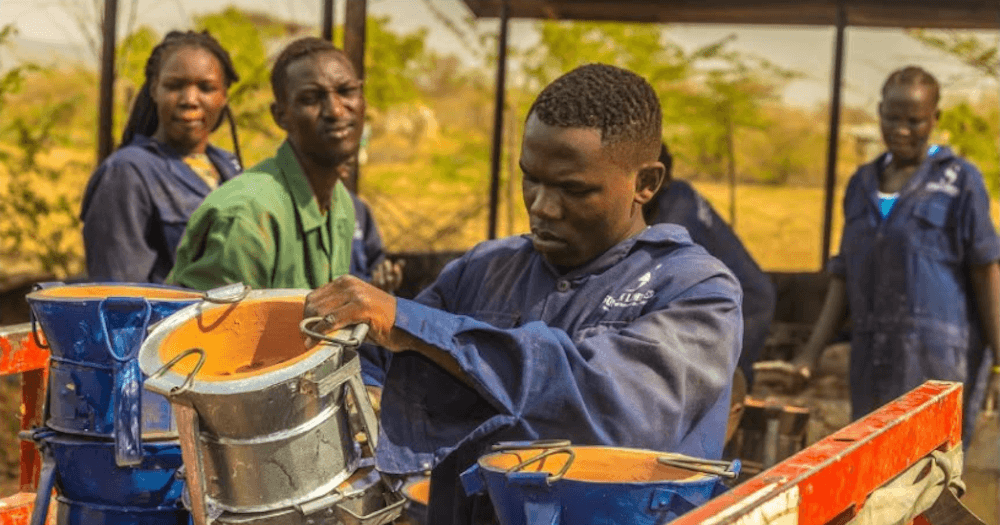

TGIF, Agents of Impact!
- Roundup: Alternative visions
- The Call: Impact-first fund managers get practical
- Podcasts: MSquared’s Alicia Glen and This Week in Impact
- Spotlight: International Rescue Committee’s impact investments
The Week in Impact Investing: Perception and reality
🗣 Alternative visions. There comes a moment when pretending becomes impossible. When the stories we tell collide with the world as it actually is. In Davos this week, Prime Minister Mark Carney of Canada called that moment: “We actively take on the world as it is, not wait around for a world we wish to be,” he told delegates (see ImpactAlpha’s Davos takeaways). As the head of the central banks of both Canada and the UK, Carney warned financial markets of the real risks from climate and inequality, and pushed to force companies, banks, insurers, and asset owners and managers to internalize such externalities. For decades, we’ve watched legacy finance treat climate risk as external, dismiss inequality as social noise, and let bias in markets and models go unchecked – and began to build alternatives. The old order is cracking; As Carney said, “From the fracture, we can build something bigger, better, stronger, more just.”
Call out reality. Build what comes next. It’s a sensibility familiar to Agents of Impact. On this week’s Agents of Impact Call, leading fund managers who have honed the practice of impact-first investing over decades, provided sophisticated alternatives to narrow strategies driven only by financial returns. “The paradigm we thought we existed in, one, two, five years ago no longer holds,” observed Caroline Bressan of Open Road Impact (see the full Call writeup and replay, below). “So how are we responding? We’re building a community of people that have a different vision for the world, that is maximizing for impact with every dollar disbursed.” When managers start with a problem to be solved and structure financing around the needs of the solution, they may find that some investments need to be subsidized, as we previewed ahead of the Call. Other investments may go to the moon. For Jeannie Tarkenton, the breakthrough came “when I stopped trying to fit what I thought investors wanted and started getting really honest with myself about what I was actually building,” she shared in a guest post. Tarkenton has raised more than $20 million in equity and $35 million in concessionary-rate debt for her fintech social enterprise Funding U.
To keep housing permanently affordable, fund managers like Avanath Capital Management and Vistria Group are raising permanent capital, enabling managers to operate – and upgrade – the properties for the long-term, as Roodgally Senatus and David Bank reported. An impact-lens in emerging markets in Africa and Asia has helped Lendable buck fundraising trends; the fintech lender raised $300 million across two funds, including one to finance commercial solar, electric vehicles and electric cooking, as Jessica Pothering reported. To help the market understand an overlooked opportunity to build solutions for Long COVID, while “preparing our systems for the pandemics of tomorrow,” patient-turned-founder-turned-investor Ibrahim Rashid defines a “Long-COVID lens.” From housing to health to climate, Agents of Impact are building blueprints for what comes next. True catalytic capital isn’t just about returns, argues Enduring Planet’s Dimitry Gershenson. “It’s about behavior. It’s about how you show up, how you operate and how you treat the people actually doing the work.” – Dennis Price
Other must-reads on ImpactAlpha:
- “With EU Inc., Europe looks to scale startups across borders,” by Danielle Rossingh.
- “The Vistria Group: Driving impact performance and business results with a focus on quality,” by Kelly McCarthy and Mackenzie Turner.
- “Horseshoe crabs survived five mass extinctions. Can they survive the pharmaceutical industry?” by As You Sow’s Kendyl Van Dyck.
The Week’s Podcasts
🎧 This Week in Impact. Host Brian Walsh takes up ImpactAlpha’s top stories with editor David Bank. Up this week: Soundbites from this week’s star-studded call on the real returns of impact-first managers; how permanent capital can keep affordable housing affordable, permanently; and Lendable’s model for asset-backed lending in emerging markets.
- Listen to the new episode of This Week in Impact. Get the podcast in your feed by subscribing on Apple, Spotify, or YouTube.
Agents of Impact: Building affordable cities with MSquared’s Alicia Glen. Former New York City Deputy Mayor Alicia Glen is financing mixed-income housing developments as a way to tackle economic segregation. Her firm, MSquared, has raised $139 million, towards its target of $250 million, to finance more than $1 billion in mixed-income housing developments using sustainable designs and energy-efficient systems. On the podcast, she explains how mixed-income developments can drive upward mobility for low-income families – and attractive risk-adjusted returns for institutional investors.
The Week’s Call
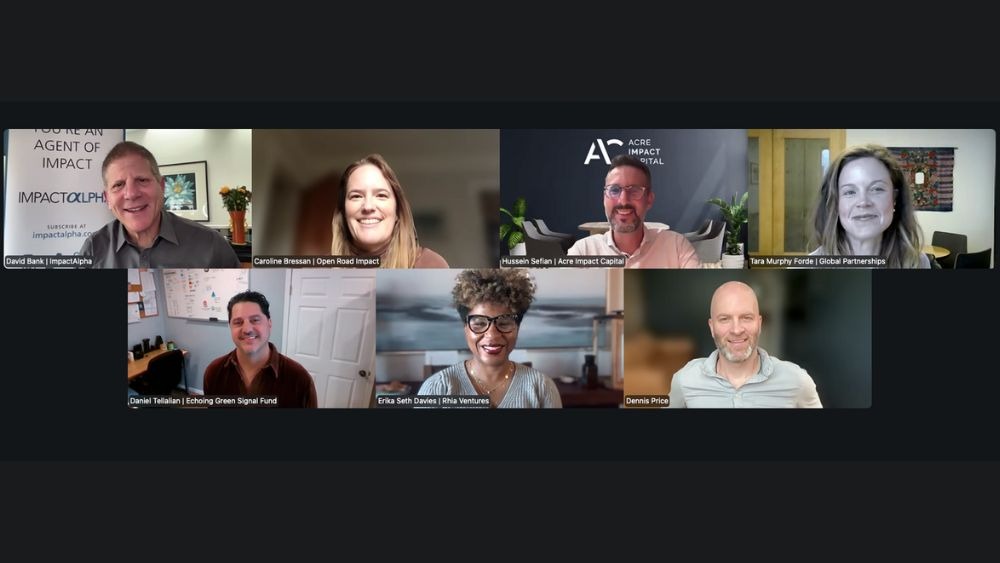
Starting with the problem, impact-first managers are returning impact investing to its roots. After two decades spent coaxing cautious capital off the sidelines with the promise of “market rate” returns, some impact fund managers are going back to basics: impact first. This week’s Agents of Impact Call transcended the time-worn debate over “concessionary” capital by focusing first on the impact side of the ledger. “I would posit that impact-first investing is really just impact investing,” said Caroline Bressan of Open Road Impact. “Perhaps it’s time for us to reclaim that term.” Seattle-based Global Partnerships seeks scale but not necessarily commercial rates of return. That allows the firm’s portfolio companies to serve “the hardest segments, rather than drifting upmarket where we continue to see the same business-as-usual gap in terms of what the market can accomplish,” explained Tara Murphy Ford. “I went into this conversation thinking impact-first was a philosophy,” wrote audience member Romi Navarrete in a reflection after the Call. “I came out realizing it’s actually a discipline of sequencing.”
- Keep reading, “Starting with the problem, impact-first managers are returning impact investing to its roots,” by Isaac Silk and David Bank. Watch the full replay on YouTube.
- Reserve your spot for “The true cost of impact-first investing,” hosted by the Miller Center for Global Impact, on Tuesday, March 10 at 1pm ET. RSVP today.
The Week’s Spotlight
With Airbel Ventures, International Rescue Committee adds impact investing to its humanitarian toolkit. The global humanitarian NGO has spent five years looking for long-term funding for people displaced and affected by conflict and natural disasters. With global aid in steep decline, and climate and geopolitical crises on the rise, “We are looking at financing new models that have more sustainability potential and are less grant dependent,” the IRC’s Anne Partridge told ImpactAlpha. The newest tool in its toolkit is Airbel Ventures, an Africa-focused impact fund for startups serving the humanitarian sector (for background see, “New tools for humanitarian relief in crisis zones: blended finance, offtake contracts and debt swaps”). The venture fund, launched at the World Economic Forum in Davos, Switzerland, is the latest impact fund from a humanitarian organization seeking ways to support crisis-affected communities for the long-term. UNICEF, Save the Children and Mercy Corps also have venture funds. “We’re looking at where we can leverage new models, technology and innovation to replace outdated technologies and infrastructure,” Partridge said.
- Pilot project. Airbel Ventures will invest in a dozen companies in climate, health, economic resilience and education through a pilot fund before raising a larger fund. Its first investment is Nigeria-based Signalytic, which provides solar-powered computing devices to ensure reliable connectivity for remote health clinics. Airbel is also considering startups using predictive analytics to anticipate food insecurity, and locally-adapted voice AI to reduce the cost of on-the-ground data collection. “We want to prioritize businesses that have a very low modification bar to enter the humanitarian sector, so that limited adaptation is needed on the model,” said Partridge.
- Keep reading, and catch up on all of this week’s dealflow reporting.
The Week’s Talent and Jobs
💼 See and share more than a dozen new impact jobs posted this week on ImpactAlpha’s Career Hub and view hundreds of more jobs in impact investing and sustainable finance. Have a job listing to post? Submit it here.
Long associated with San Francisco, SOCAP, the annual fall gathering of impact investors and entrepreneurs, will relocate to Chicago for at least two years. “Chicago is a world-class destination, and the Midwest is where some of the most important work in our field is happening anywhere in the world,” said SOCAP’s Robert Munson. This year’s gathering is set for Oct. 12-14 at the Convene Willis Tower downtown (early bird tickets are available now).
Theresa Taylor and David Miller were re-elected as board president and vice president respectively at California pension CalPERS… Andrew Garrett of Impact Capital Managers was promoted director of member experience…CEO of Norfund Tellef Thorleifsson stepped down after more than seven years at the helm… Milton Speid resigned from his role as executive director at VC Include.
That’s a wrap. Have a wonderful weekend.
– Jan. 23, 2026