
Greetings Agents of Impact!
☎️ Today’s Call: The surprising resurgence of impact-first investing. Join Spring Point Partners’ Margot Kane, Ceniarth’s Greg Neichin, A to Z Impact’s Alex Evangelides, and Trimtab Impact’s Caleb Ballou, in conversation with Impactalpha’s David Bank about their strategies for outperformance – on impact, today at 10am PT / 1pm ET / 6pm London. Register for login details.
💃 Step up, step out. Will you be in San Francisco for SOCAP25? Join ImpactAlpha, Candide Group and Partners in Equity for a night of music and momentum on Monday, Oct. 27 at 7pm local time. Don’t miss a special musical performance by Candide’s Morgan Simon and the Iya Lingua Quartet. RSVP today!
In today’s Brief:
- Corporate stewardship in the age of imperious CEOs
- Sharing wealth with workers in Japan
- Building an ownership suite of investment products
Featured: Shareholder Engagement
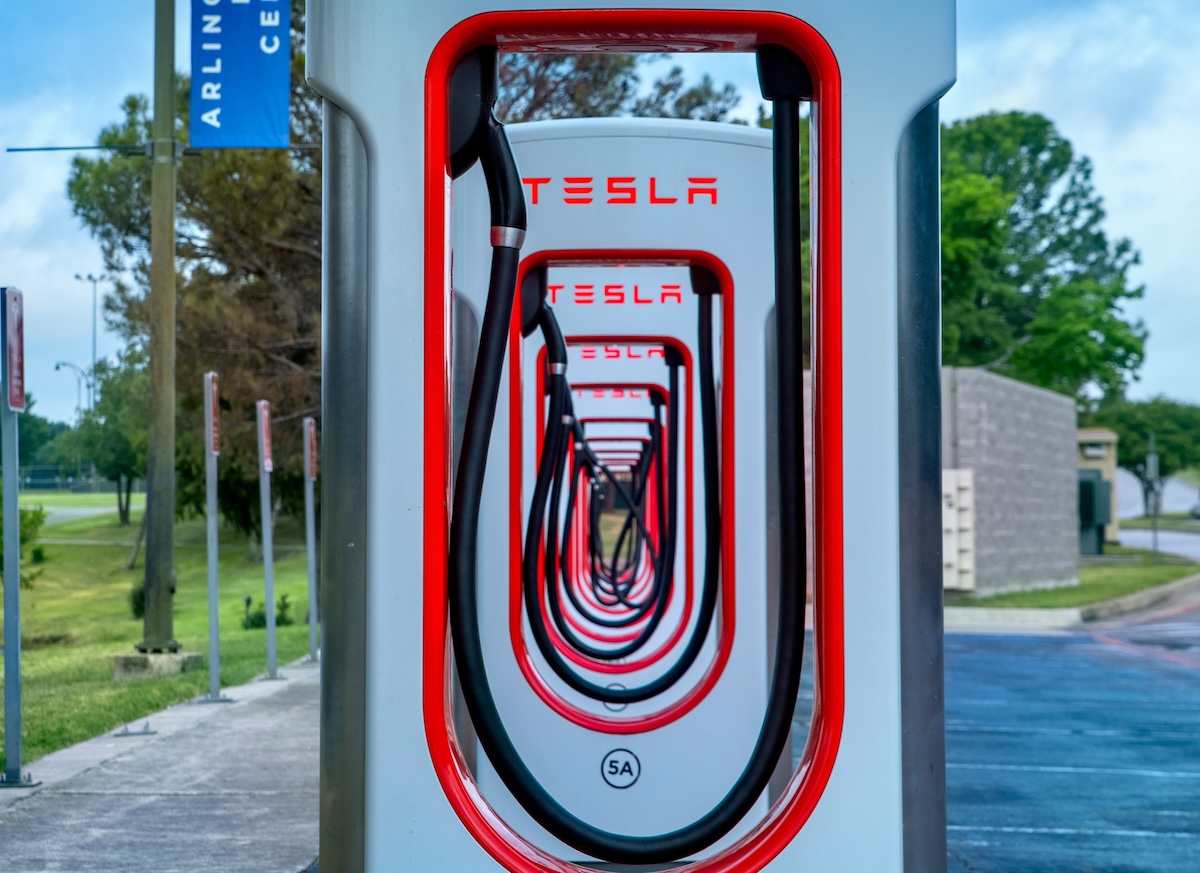
At Tesla’s shareholder meeting, the spotlight will be on governance. Is a CEO worth $1 trillion? That’s the question Tesla shareholders will decide at what could be a contentious annual meeting on Nov. 6. The staggering sum, conditioned upon Tesla chief Elon Musk meeting ambitious milestones such as an $8.5 trillion market cap, is unprecedented in corporate pay packages – much less for a part-time job. It makes Musk’s contested $56 billion pay package from 2018 look downright quaint (see, “Elon Musk’s pay grab is a skirmish in the broader battle of the billionaires”). The mercurial CEO and world’s richest man used Tesla’s earnings call Wednesday evening to urge investors to support the pay package, even as earnings sagged. “I just think there needs to be enough voting control to give a strong influence,” said Musk. Investors say the package reflects the automaker’s troubling lack of governance and board oversight. SOC Investment Group, which urges shareholders to vote against the pay package and directors up for reelection, cites board capture and a “failure to provide meaningful real-time oversight of management.” Climate Finance Action’s Mary Cerulli calls it “a board that won’t say no.”
- Erosion of shareholder rights. The 2025 compensation proposal would award Tesla shares to Musk in tranches, with Musk receiving an additional 1% of Tesla’s shares for every $500 billion in market cap over an initial $2 trillion milestone. A full award could increase Musk’s control of the company to 25%, from 13% today. Shareholder proposals on the ballot seek to boost governance at the automaker by requiring board members to stand for reelection every year, eliminating the need for a supermajority vote, and making it easier for small shareholders to take action.
- Proxy primer. In a guest post on ImpactAlpha, Cerulli shares a primer for proxy voters wrapping their heads around the complicated proposals. “Opposition to Musk’s pay package is testing the board’s oversight and setting a key precedent for executive accountability,” she writes. With Musk’s other ventures xAI and SpaceX drawing scrutiny for potential conflicts, investors face a defining test of what responsible stewardship looks like in the age of celebrity CEOs. “The time for passive ownership is over,” Cerulli argues. “Shareholders must exercise their fiduciary duty to demand accountability.” Read her whole post.
Philanthropy on the sidelines. Foundations don’t typically file shareholder resolutions. And few have policies for how they, or their advisors, vote their proxies. “Philanthropy works at cross purposes when it makes grants to frontline communities while leaving its power on the table with some of the world’s largest companies,” writes Untapped Capital’s Eric Horvath in a guest post. Horvath shares some of the findings of a group of foundations, including Nathan Cummings Foundation, Educational Foundation of America, Jesse Smith Noyes Foundation and Woodcock Foundation, about how to “leverage all of their assets for impact.”
- Read Horvath’s full post. For more, join The Shareholder Engagement Project and the Interfaith Center for Corporate Responsibility for “Foundations, shareholder engagement and the impact of corporations on communities,” Monday, Nov. 3.
Dealflow: Ownership Economy
Ownership Works heads to Japan to share (some) wealth with workers. Stagnant wages, long working hours and a wave of retiring business owners has fueled widespread worker disengagement in Japan. Nearly a dozen private equity firms are betting that an employee ownership strategy they’ve tested in the US can reinvigorate their Japanese portfolio companies. Ownership Works, the nonprofit coalition of private equity firms led by KKR’s Pete Stavros, has set up its first of four planned international hubs in Tokyo to help firms replicate ownership programs as part of its goal of sharing $20 billion of wealth with workers by 2030. “This marks the beginning of our effort to make employee ownership a globally coordinated movement, and we have plans to do much more,” Stavros wrote (see, “Employee ownership is a competitive advantage in private equity”). Firms joining Ownership Works Japan include Apollo Global Management, L Catterton, Warburg Pincus, Ant Capital Partners, GLIN Impact Capital, Japan Growth Investments Alliance, Japan Industrial Partners, Nippon Investment Company and Polaris Capital Group.
- Employee engagement. Japan’s business culture drives high-levels of employee retention but low levels of engagement. That costs the Japanese economy an estimated 90 trillion yen ($600 billion) annually. An aging population is fueling business acquisitions, including deals with foreign companies. “Ownership cultures have the potential to be transformative for Japan,” said Hiro Hirano, who leads KKR Japan and will chair the board of Ownership Works Japan. “By giving all workers a direct stake in the value they help create, we can strengthen engagement, foster innovation and contribute to sustainable economic growth.”
- Japan rollout. KKR set up its first employee profit-sharing program in Japan last year with Bushu Pharma, a Tokyo-area manufacturer of pharmaceutical products. It followed with an ownership program for workers at software developer Yayoi. “The concept of shared prosperity has been incredibly resonant in this nation,” Ownership Works’ Anna-Lisa Miller told ImpactAlpha. “Our goal is for this to become the new norm in business, and our thesis is the more business leaders embrace this model, the more low- and moderate-income workers we will reach over time.”
- Go deeper.
Dealflow overflow. Investment news crossing our desks:
- Apis & Heritage Capital Partners secured $181 million for its second Legacy Fund (see, “Apis & Heritage aims to help business owners ‘exit responsibly’ – to their employees”). The firm seeks to raise $250 million to create 3,000 worker-owners through its investments. (Apis & Heritage)
- Singapore-based Verta Bioenergy raised S$1.1 million ($854,000) in seed funding from ENGIE Factory, Wright Partners, AlphaGen VC and Auravia Capital to convert agricultural waste into biomass pellets that can be used as an industrial fuel replacement to coal. (Singapore Business Review)
- Tokyo-based Secai Marche secured $6 million in Series A equity for its planning and logistics service for fresh food supply chains in Japan, Malaysia, Vietnam and Thailand. (e27)
- Toronto-based PaceZero Capital Partners provided a $5 million line of credit to Assembly Corp. for its sustainable, prefabricated residential buildings that are being built in the Toronto area. (PaceZero)
- Washington, DC’s Green Bank loaned $1 million to FinEV to help florists, dry cleaners, plumbers and other small businesses in the District acquire EVs. (DC Green Bank)
Overheard at Aspen Ideas Economy
Building a nation of owners with new financial products and fresh ideas. By now there’s a rough methodology to calculate the carbon footprint of an investment or a portfolio. What about a portfolio’s “wealth footprint”? “Everything you do on your balance sheet has an impact on extracting or putting wealth back in the community,” Gary Community Ventures’ Santhosh Ramdoss said at this week’s Aspen Ideas Economy gathering in Newark, NJ. The Denver-based foundation has deployed about $50 million in an ownership portfolio that includes home-ownership investor Dearfield Fund and employee ownership-focused Apis & Heritage. “Anytime we make an ownership investment, the question we’re asking is, ‘Is there a meaningful improvement in household wealth generation?’” Ramdoss said. In its first three years, Dearfield Fund has created about $25,000 in equity for households; similar amounts are accruing in employees’ accounts at companies that have converted to employee ownership with financing from Apis & Heritage.
- Inclusionary investment. Ownership was high on the agenda at the offshoot of Aspen’s Ideas Festival in Colorado. Next year’s Economy festival will be held in Tulsa, Okla. Chicago TREND’s Lyneir Richardson shared a simple idea he has already implemented through commercial properties in underinvested neighborhoods. “We do the financial analysis, we decide if it’s a return we can accept, and we slow down for 60 or 90 days and allow local people to invest on the same terms.” One recent exit netted local investors a 5x return, Richardson said. Through their relationships, even more people gain exposure to opportunities that can build financial security and generational wealth. “They now know someone that says, ‘I have a little ownership stake there’ – my grandmother, my auntie, my church member, my fraternity brother. They know somebody with a connection to ownership.”
- Ownership suite. To drive equitable wealth creation, capital markets must be harnessed for strategies like Chicago TREND, Apis & Heritage and ROC-USA, which helps mobile home park residents form cooperatives to buy the land underneath their homes, said Calvert Impact’s Catherine Godschalk (see, “Financing resident-owned mobile home communities to preserve affordability”). “Why can’t we take the plain-vanilla market tools and apply it to employee-owned companies and then really scale it?” Such vehicles could be part of an “ownership suite” of investment products, from fixed-income to private equity, that could tap the $100 trillion-plus capital markets for broad-based wealth building. Wealth inequality “is one of the greatest risks that we hold in our society, to our economy, to our culture,” Godschalk said. “We’re in a moment where we can think about how to create deeper, more effective pathways to capital markets for these solutions.”
- Keep reading, “Building a nation of owners with new financial products and fresh ideas,” by David Bank.
Agents of Impact: Follow the Talent
Thrive Impact Fund welcomes Nicole Bradbury as senior advisor… The Neighborhood Impact Investing Fund adds Eric Stephenson, formerly with Southway Builders, as a construction lending specialist… Macro hires Jeremy Stein as executive vice president of development and production… Kapor Foundation seeks a chief people officer in Oakland, Calif.
The NYC Commission on Racial Equity is looking for two research and policy interns in New York… Closed Loop Partners has an opening for a program manager… NYSERDA is on the hunt for an associate director or director for demonstration projects in Albany, NY… CEA Consulting is recruiting a climate solutions senior associate in San Francisco… Also in San Francisco, ClimateWorks Foundation is searching for an operations and planning senior associate.
World Fund Management seeks a climate investment fellow and intern in Munich… Catalyst Fund is looking to fill two fractional roles in Nairobi: a CFO and an ESG and impact manager… The deadline to apply to ImpactAssets’ IA50 2026 Impact Fund Manager Showcase is this Friday, Oct. 24… The Center for Community Wealth will host a webinar on new tools for community ownership of real estate, Friday, Nov. 7.
👉 View (or post) impact investing jobs on ImpactAlpha’s Career Hub.
Thank you for your impact!
– Oct. 23, 2025