
Greetings Agents of Impact!
In today’s Brief:
- Hopelab’s portfolio of investments in youth mental health
- Impact-linked financing for small businesses in Tanzania
- Impact investing policy roundup
Featured: Healthy Youth
Startups seek social connections – human and artificial – to bring services to youths in need. The surge in mental health issues among teenagers and young adults reflects long-term, structural changes in families, the economy and the tech-centric pop culture in which young people grow up. In many cases, the individuals most in need of support are the least able, or willing, to get it. That means startups rushing to serve the burgeoning market are looking beyond clinical interventions to find effective, and cost-effective, ways to rebuild the social connections that undergird emotional resilience and positive attitudes – and even enable people to seek help. Yes, AI has a role to play, but so do humans. “We need to get young people what they’re asking for,” says Chris Appleton, who launched Art Pharmacy three years ago to “prescribe” non-clinical interventions, like going to a dance class or taking a walk with a friend, that can significantly improve the mental health of patients who struggle with clinical care (for background see, “Youth ‘co-creators’ are busting (adult) myths about AI and mental health”). “If young people are asking for social connection, art, culture and creativity, let’s get those support to young people earlier before they are in crisis.” As many as one in three youths aged 12 to 17 had a mental, emotional, developmental or behavioral problem in 2022–2023; two in every five high schoolers report persistent feelings of sadness or hopelessness.
- Co-investment network. Atlanta-based Art Pharmacy is among the most recent additions to the investment portfolio of Hopelab, a nonprofit research organization that has invested in more than two dozen youth mental health tech startups with funding from Omidyar Group. In additional to clinical interventions, Hopelab targets “upstream” social interventions “that help young people find purpose, that help young people feel like they’re contributing, that help them build connections and support and relationships,” Hopelab’s Margaret Laws said on ImpactAlpha’s Agents of Impact podcast this year. Hopelab, along with GreyMatter Capital, Gratitude Railroad and others, this year co-invested in Flourish Health, based in Durham, NC, which combines in-person support with virtual psychiatric care for serious conditions such as bipolar and major depressive disorders. “They have a great program with amazing outcomes for treating youth patients with those conditions,” GreyMatter’s Anna Wang told ImpactAlpha. Park City, Utah-based Gratitude Railroad was an investor in Little Otter, which partners with Kaiser Permanente in California to provide mental health care to young children. Hazel Health, a Hopelab portfolio company that provides mental and physical health care services through K-12 schools, acquired Little Otter in October.
- Reaching users. The insurance giant United Healthcare, which has built out a network of mental health providers is also an investor in Hazel Health, underscoring the role of strategic investors. Cigna Foundation committed $9 million in October toward investments in youth mental health over three years. “The health plans are like, ‘Man, we’re doling out all of this money to pay for inpatient hospitalizations and ER visits, mostly around physical health costs,’” says Justin Ley, founder of Reema Health, another recent addition to Hopelab’s portfolio. The Minneapolis-based company deploys “care guides” who live in the same communities as its target members “to find, engage and build trust with people who have been written off the healthcare system,” Ley said. That means people who are housing insecure and living with often undiagnosed behavioral health conditions that are exacerbating their overall health and wellbeing. “Our job is to build trust with members and get them engaged, treat those behavioral health conditions, help them navigate their physical health conditions and set them up with ongoing support so that they don’t continue to use the ER as primary care.”
- Keep reading, “Startups seek social connections – human and artificial – to bring services to youths in need,” by Roodgally Senatus and David Bank on ImpactAlpha. Hopelab supports ImpactAlpha’s coverage of Healthy Youth.
Dealflow: Inclusive Finance
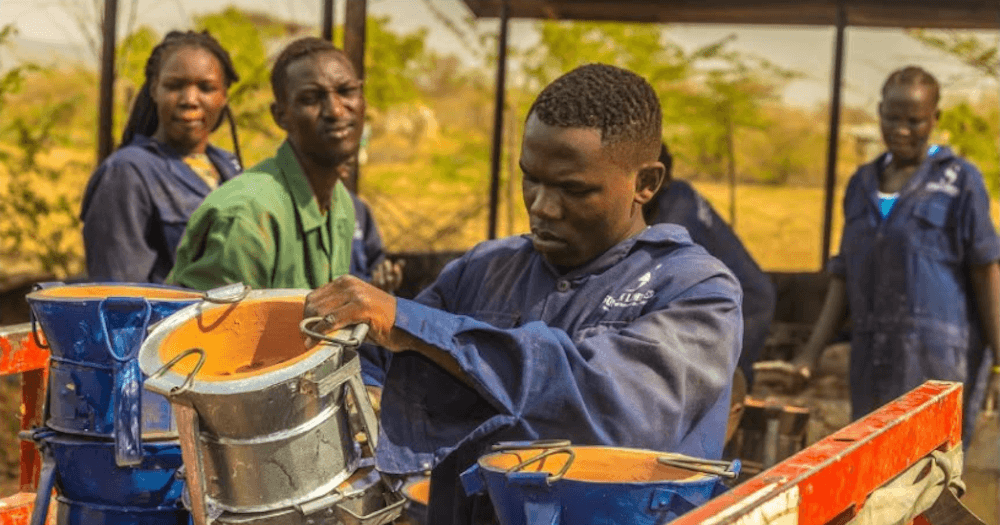
Daraja Impact Fund expands impact-linked financing for small businesses in Tanzania. The Swiss Agency for Development and Cooperation launched the Daraja Impact Fund in 2023 with 10 million Swiss Franc ($12.5 million) to provide flexible, impact-linked financing to Tanzania’s small and growing businesses. The fund, with a focus on youth and women-led businesses, has invested in two companies based in Dar es Salaam. Samora Ventures aggregates farm produce to supply to restaurants. Goldenpot manufactures fortified maize products like instant porridge, maize corn puffs, and breakfast cereals, sourcing from a network of over 1,000 female farmers. For Samora, the funding means an expansion of its farmer sourcing network. Goldenpot will use the funding to meet its working capital needs, onboard more distributors and tap into additional markets.
- Impact-linked. Daraja is managed by Swiss impact investment manager AlphaMundi alongside the US-based impact private equity manager Small Enterprise Assistance Funds. SEAF teamed up with Dutch development financier FMO last year to help entrepreneurs get ready for investment and measure their impact. The fund has invested over a million in 10 companies, of which more than one-third are led by women. It claims to have mobilized nearly $10 million from other investors. Other investments by Daraja this year include The Recycler, a waste management company running women-led waste-to-cash centers; Plant Biodefenders, a producer of organic biopesticides; Kazi Yetu, which makes artisanal teas and spices; and Flamingoo Foods, which aggregates farm products and animal feed for export in East Africa.
Impact Voices: Policy Corner
Eight US policy battles that will shape impact investing in 2026. The Trump administration returned to power in 2025 and set about restricting the right to invest, while repealing or seeking to repeal public policies that had laid groundwork for greater economic opportunities in communities and for a more transparent and accountable financial system overall. There were some bright spots, notes Fran Seegull of the U.S. Impact Investing Alliance in a roundup and lookahead of policy priorities for the impact investing community. Impact investing advocates secured important wins for community investing in the tax reform discussion and helped fend off existential threats to foundational agencies like the CDFI Fund. As 2026 approaches, “We can expect a similarly tumultuous year for the public policy priorities of the impact investing community,” Seegull writes.
- Bright spots. Bipartisan support in Congress for community development financial institutions helped fend off multiple attempts to dismantle the Treasury Department’s CDFI Fund. The 2025 reconciliation bill made Opportunity Zones a permanent feature of the US tax code and implemented improvements, including transparency and reporting requirements, tightened eligibility for designating zones and an increased focus on rural OZs.
- Backsliding. The Trump Administration remains locked in legal battles as it seeks to cancel the Greenhouse Gas Reduction Fund program, focused on providing clean energy solutions to low-income communities (see, “After a bruising year, climate investors look for signals of sustainable momentum”). Republicans in Congress repealed many of the clean energy tax incentives within the Inflation Reduction Act. A predicted $6.6 trillion of stablecoin deposits, coming in the wake of the implementation of the GENIUS Act, could lead to a reduction in hard currency deposits and investments in community banks, as new customers may bypass the traditional finance sector. Nonbank stablecoin issuers do not have community reinvestment obligations.
- Looking ahead. The Alliance is keeping a close eye on three moments in 2026: another possible government shutdown in January, a change in leadership this spring as Federal Reserve chair Jerome Powell’s term expires, and the midterm elections in the fall. The decreased likelihood of bipartisan progress in Congress puts more pressure on the actions of regulators and states.
- Keep reading, “Eight US policy battles that will shape impact investing in 2026,” by Fran Seegull. Follow all of ImpactAlpha’s Policy Corner coverage, which is supported by the U.S. Impact Investing Alliance.
Agents of Impact: Follow the Talent
The Clean Fight adds Sadie McKeown, president of the Community Preservation Corporation, to its board of directors… The Clean Energy Fund of the Carolinas welcomes Geneviève Piché, former head of sustainable finance and advisory as a board member… Saadia Madsbjerg, a former managing director at the Rockefeller Foundation, joins the board of the Bestseller Foundation.
Big Path Capital appoints Erin Breslawsk, previously with Mt. Vernon Capital, as managing director of fund placement services. She takes over from JD Dell, who will be moving to a senior advisor role in the new year… National Cooperative Bank welcomes Kudirat Shoda as a senior tax accountant… Growald Climate Fund is looking for a senior portfolio manager in Boston.
NatureVest is hiring a nature finance managing director in New York… Also in New York, Impact Capital Managers has an opening for a programs and operations analyst… Capital Dynamics seeks a senior asset manager of clean energy investments… Climate Group is recruiting a senior communications officer.
👉 View (or post) impact investing jobs on ImpactAlpha’s Career Hub.
Thank you for your impact!
– Dec. 23, 2025