
Greetings Agents of Impact!
In today’s Brief:
- Global climate talks end with a whimper and an outcry
- Illumen Capital raises Catalyst Fund to back first-time managers and entrepreneurs
- Financing for generators to condense water from the air
- With credit-risk guarantee, Builders Vision backstops the Bahamas’ debt-for-nature swap
Featured: COP Watch
Past deadline, COP29 salvages a meager agreement on climate financing. In the end, the global climate summit known as COP29 lived up to its low expectations. “Abysmally poor.” “A betrayal.” “A complete failure in terms of delivering the ambition required.” The “finance COP” had been charged with rallying vastly greater financing for climate mitigation and adaptation in less developed countries by the more-developed nations responsible for the bulk of greenhouse gas emissions. An agreement reached by negotiators in the wee hours Sunday to triple such climate financing, from $100 billion to $300 billion per year, was a bitter compromise; small island states and lower-income countries, primarily in the Global South, had sought more than $1 trillion a year in funding. The UN estimates that emerging economies need $3.2 trillion per year by 2035, with $1.3 trillion of that coming from rich countries in the form of grants, loans and private investment (for context, some $3 trillion is expected to be invested globally in energy infrastructure this year). “This COP has taken us dangerously backwards on collective climate action, as extreme weather events take their toll,” says Richard Folland of CarbonTracker. Global carbon emissions must be slashed by more than 40% by 2030 to keep global warming in check; the world is on track for a mere 2.6% reduction.
- Walkout in protest. The new collective quantified goal, or NCQG, as the climate finance target is known, calls for funding from “a variety of sources” and makes no commitment to grants, as already indebted countries had urged. Still, that an agreement on a new climate finance target was reached at all was something of an achievement, after talks teetered on the verge of collapse on Saturday. Dozens of emerging economies, led by small island states, temporarily walked out of the session in protest. “The adoption of the NCQG marks a critical yet imperfect step forward,” says Laura Sabogal of policy firm E3G. The goal of getting to $1.3 trillion in climate finance by sometime next decade will fall to negotiators at COP30 next year in the Brazilian city of Belém.
- Petrostate politics. The negotiations, which took place over two weeks in oil-rich Azerbaijan, were marred by a chaotic and opaque process, exemplified by the obstructive behavior of Saudi Arabia. The oil kingdom attempted to eliminate hard-won language included in last year’s COP agreement calling for the “transition away from fossil fuels.” Also hanging over the proceedings was the specter of US President-elect Donald Trump, who has threatened to pull out of the global “conference of the parties,” as the global climate process is known. That would leave other wealthy nations, and the private sector, to shoulder most of the financial burden.
- Capital mobilization. Impact investors are developing a range of strategies to blend public and private capital and mitigate risk for climate investments in lower-income markets (for background, see, “When it comes to moving capital to climate-vulnerable nations, impact investors have the models”). Countries such as China, which was considered a “developing nation” when the Paris Agreement was forged, are expected to contribute more on a voluntary basis.
- Carbon markets. Still, there were bright spots. Progress was made on operationalizing a loss and damages fund to help vulnerable countries recover from extreme weather events; funds could start flowing in 2025. And a breakthrough in talks to set up a UN-backed carbon trading system came on the summit’s first day. The UN imprimatur is expected to have ripple effects that could bolster the struggling voluntary carbon markets, where corporations pay for greenhouse gas reduction projects as a way to offset their own carbon footprints, writes Kenneth Möllersten, a carbon market advisor and researcher at KTH Royal Institute of Technology in Stockholm.
- Keep reading, “Past deadline, COP29 talks salvage a meager agreement on climate financing,” by Amy Cortese on ImpactAlpha.
Dealflow: Emerging Fund Managers
Illumen Capital on the lookout for first-time fund managers and entrepreneurs with $32.8 million Catalyst Fund. Oakland-based Illumen is expanding its investment strategies to include direct co-investments and first-time managers, particularly those from diverse and underrepresented backgrounds. Its Catalyst Fund “aims to directly confront the barriers these fund managers face,” said Illumen’s Daryn Dodson, including lack of a track record, small size and the “familiarity bias” that deters many institutional investors (related: “Mission Driven Finance seeks to help new impact managers get going”). Ford Foundation and Kansas City-based Health Forward Foundation anchored the fund. The California Wellness and Winthrop Rockefeller foundations participated. The commitments bring Illumen’s assets under management to more than $285 million. About a third of the fund can be co-invested directly into companies sourced by managers in Illumen’s portfolios, the first time Illumen has pursued such investments into individual ventures.
- Bias reduction. The fund marks a change in strategy for Illumen, which has focused on helping more experienced managers flush out bias in their and their portfolio companies’ investment and human resource processes. The thesis: such bias reduction uncovers and delivers untapped financial and economic value. The bias-reduction programming won’t be required for Catalyst Fund managers. Dodson said addressing racial inequities in asset management has stalled since the racial reckoning of 2020. “Directly addressing these inequalities is especially urgent now, as biases tend to rise during periods of high inflation, market volatility and political divisiveness.”
- Share this post.
Aquaria secures $112 million for generators that produce clean water from the air. Brothers Eric and Brian Sheng launched Aquaria in 2021 to develop an atmospheric water generator that uses heat exchangers to condense humidity in the air. The modular units run on renewable energy and filter and purify the water after it is extracted. “We envision a world where Aquaria supplies entire cities with water from the sky,” said Brian Sheng. The units range in price from $3,500 to $30,000 and can produce as much as 264 gallons of water per day – almost as much water as the daily use of an average American household. The new financing will help the San Francisco-based B Corp. build a solar-powered “hydrogrid” to supply 1,000 homes in Hawaii.
- Water infrastructure. The investment round was led by a $100 million offtake agreement with Upwell Water, a San Francisco-based sustainable water resource and infrastructure company. Climate Adaptive Infrastructure backed the offtake deal. Aquaria will use the capital to cover the upfront costs for qualifying projects through pay-over-time agreements. Other investors in Aquaria’s round include Ciri Ventures, Soma Capital, Bow Capital, Umami Capital and former US Rep. Dick Gephardt.
- Share.
Bain Capital Double Impact bets on sustainable agriculture. The impact investing team at Bain Capital made its first foray into sustainable agriculture with a buyout/merger deal that combines three companies. The rollup brings together BW Fusion, a maker of bio-based crop nutrition products, Biodyne, which harnesses microbiology for soil health, and Agronomy 365, a maker of data management tools for crop analytics and management. The combined entity, called BW Fusion, will serve US farms. The merger will “create a complete solution that fuses leading agronomy, environmental microbiology, and grower-support to accelerate BW Fusion’s impact,” said Bain Capital’s Jacob Donnelly.
- More.
Apollo impact and climate funds make industrial contractor play. Private markets giant Apollo Global Management has acquired a majority stake in industrial construction company The State Group. Private equity firm Blue Wolf Capital has retained a minority stake. The State Group provides construction, electrical and other services to industrial customers and helps them optimize and decarbonize their energy use. The company has “a key role to play in driving energy efficiency and the energy transition,” said Apollo’s Christine Hommes. Apollo’s impact and climate strategies include the $1 billion Impact Mission Fund, buyout strategy launched in 2022, and a private equity Clean Transition fund, which is part of the firm’s plan to invest $50 billion in sustainable and low-carbon transition opportunities by 2027.
Dealflow overflow. Investment news crossing our desks:
- Denver-based Pivot Energy secured $450 million in debt and an undisclosed amount of structured equity to develop 300 megawatts of community solar and other green distributed energy projects in the US. (Pivot Energy)
- Dutch development bank FMO and the Eastern and Southern African Trade and Development Bank facilitated a $394 million sustainability-linked loan to Kenyan agri-logistics company ETG to improve sustainable practices among farmers in its supply chain. (FMO)
- Mexico’s Minu raised $30 million from Next Billion Capital Partners, Flourish Ventures, Promotora Impact Ventures, Nazca and other investors for its employee benefits service for companies. (Minu)
Signals: Catalytic Capital
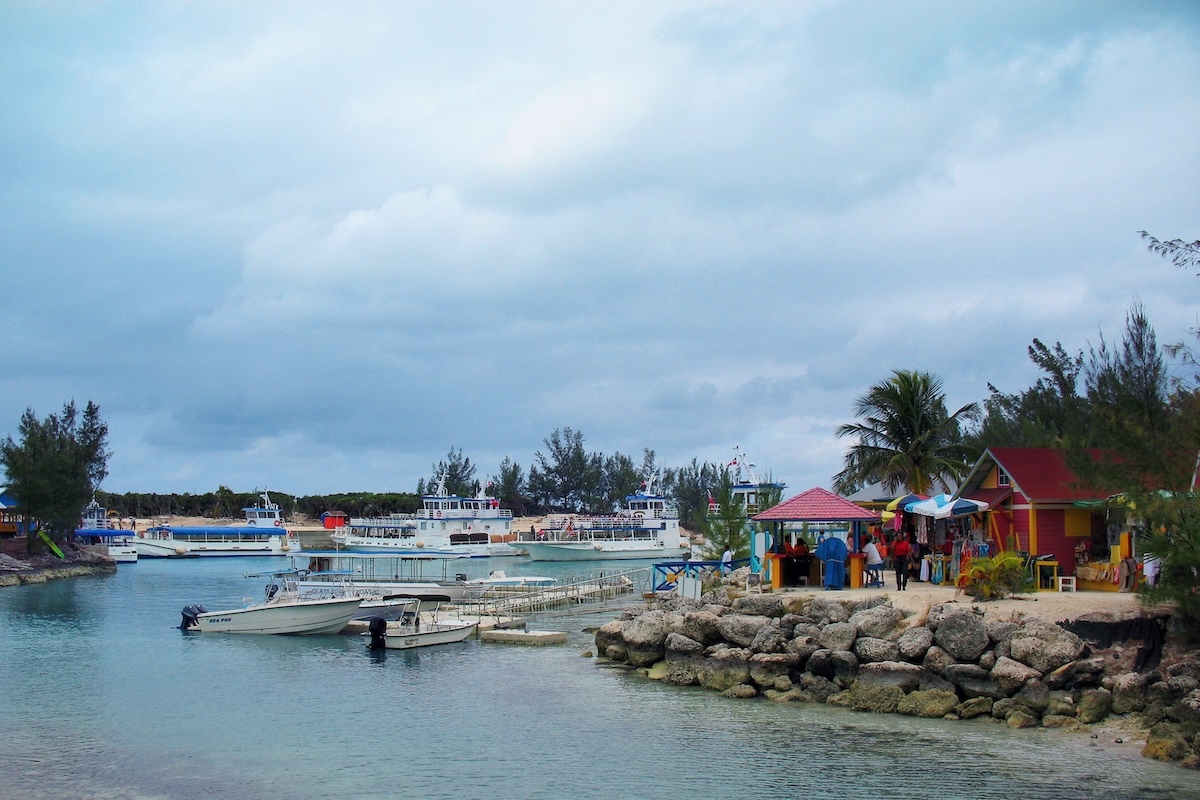
Builders Vision expands credit guarantees for debt-for-nature swaps. The 700 islands that make up the Caribbean country of the Bahamas depend on the health of their marine ecosystems. The government has inked a deal to exchange $300 million of its sovereign debt for a lower-cost debt package from Standard Chartered. The interest it saves – an estimated $124 million over 15 years – will be committed to conservation activities in designated marine protected areas. The debt swap is the fifth in a Nature Bond series facilitated by The Nature Conservancy. The Seychelles struck the first such debt-for-nature swap in 2016.
- Family office. The Bahamas deal includes a $200 million credit-risk guarantee from the Inter-American Development Bank. Lukas Walton’s family office Builders Vision followed with a $70 million credit-risk guarantee. It’s the first time a family office is participating in a debt-for-nature swap, Builders Visions’ Rebecca Carland told ImpactAlpha. “What we’re hoping to prove is that family offices and other pools of capital can play a unique role to support and catalyze investments for projects like this,” she said. “There are opportunities to do this in non-concessionary ways.” AXA XL joined the deal with $30 million in credit-risk insurance.
- Keep reading.
Agents of Impact: Follow the Talent
Charlotte Kirk joins Clean Energy Ventures as investment principal in the firm’s London office… H/L Ventures promotes Galina Ozgur to general partner… Microsoft is hiring a senior sustainability finance manager… World Economic Forum seeks a wildfire-focused community lead… California Public Employees’ Retirement System, or CalPERS, is recruiting a sustainable investments and ESG analytics specialist… Global Partnerships has an opening for a global portfolio impact analyst.
Social Finance is on the hunt for a data analytics associate… The NYU Stern Center for Sustainable Business is hosting its second annual Private Equity Sustainability Practicum, Thursday, Dec. 10 in New York… Housing Partnership Network is looking for a consultant to help launch its Affordable Housing Innovation Venture Fund by Thursday, Dec. 10… The Real Mental Health Foundation will host Davos Mental Health Day on Wednesday, Jan. 22, during the World Economic Forum.
👉 View (or post) impact investing jobs on ImpactAlpha’s Career Hub.
Thank you for your impact!
– Nov. 25, 2024