Greetings Agents of Impact!
In today’s Brief:
- Overheard at Mission Investors Exchange
- The role of CDFIs in place-based investing
- Goldman Sachs backs financial wellness startup Kashable
- Developing a secondary market in Africa
Featured: Overheard at MIE
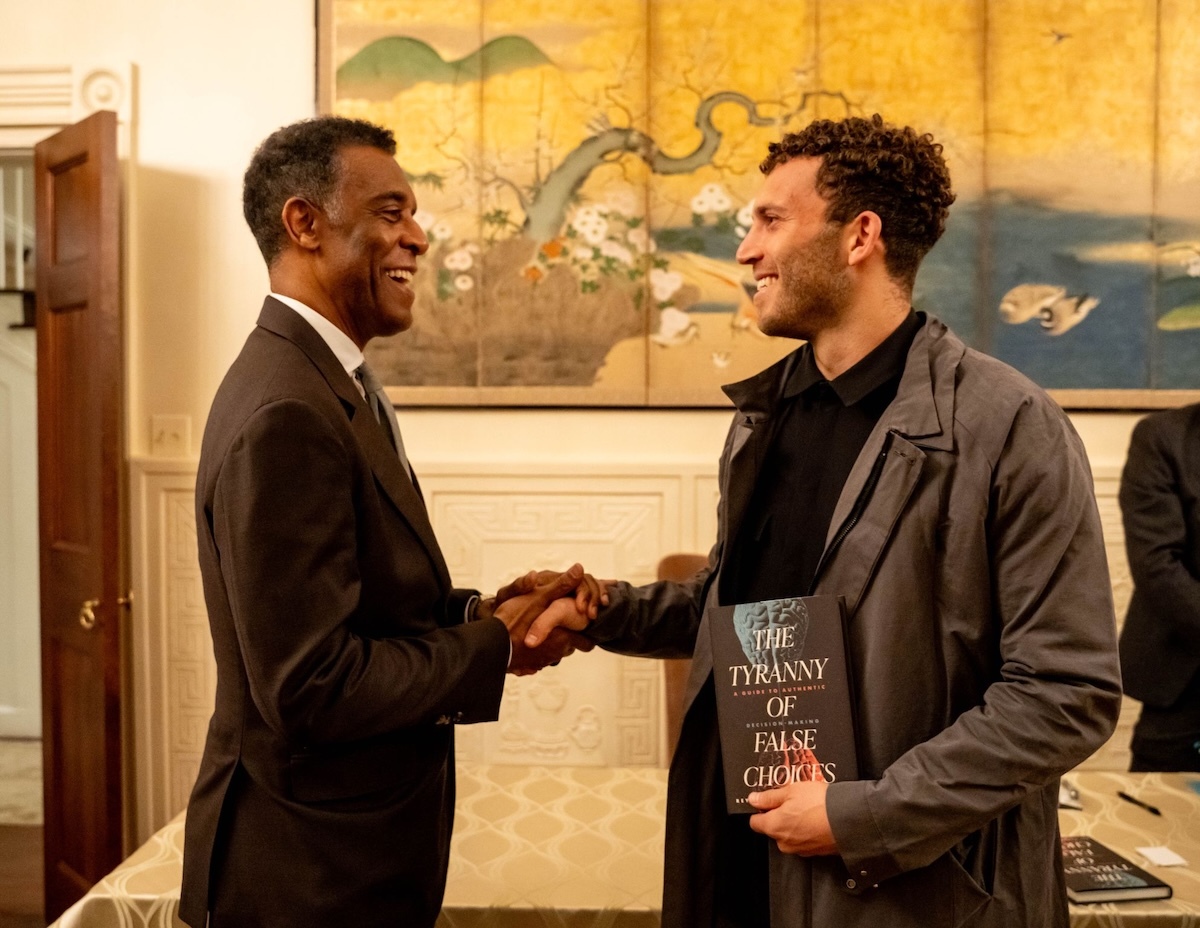
Agents of Impact share new narratives and continued resolve at Mission Investors Exchange. “We’ve come too far to turn around now.” Bryan Stevenson of the Equal Justice Initiative says he felt the need to put that simple declaration on the wall of a new square in Montgomery, Ala., dedicated to the city’s role in the civil rights movement. That resolve resonated as well in Atlanta, another cradle of the movement, where Stevenson delivered the closing keynote of this week’s national conference of Mission Investors Exchange. More than 800 leaders of foundations, family offices and fieldbuilding organizations gathered at the bi-annual gathering to share strategies and steadfastness in a difficult environment. “What I learned in Minnesota is that democracy is fought on doorsteps, neighborhood streets, commercial districts,” the McKnight Foundation’s Tonya Allen said in a lunchtime plenary, describing the popular response to this winter’s immigration raids in Minneapolis, where the foundation is based. “When you’re in unpredictable times, this is not the time to shrink, but the time to get bolder.”
- Ownership economy. Mission Investors Exchange celebrated its 20th anniversary as the convenor of foundations and other asset owners that are expanding their toolkits to include investments, including equity, debt, guarantees and other financial tools that can expand access and opportunity. “We cannot be passive consumers and expect the world to change. We have to be active participants. We have to build the world we want to see,” said Javier Hernandez of the California Wellness Foundation, which seeded the Los Angeles Wildfires Recovery and Rebuilding Collaborative Fund with $2 million. Expanding access to wealth-building opportunities through broad-based asset ownership emerged as a major theme of the conference (see, “These investors are sharing the wealth with workers, families and communities”). “We already live in an ownership economy. It’s just not distributed and structured in the ways we want to see to build equitable outcomes,” said Margot Kane of Spring Point Partners, a family office based in Philadelphia.
- Place-based investing. The future of place-based investing is intrinsically tied to the future of community development financial institutions, or CDFIs. These local intermediaries can source deals, structure capital, absorb risk and support borrowers over time, writes Aaron Seybert of the Kresge Foundation in a guest post. As CDFIs take on new roles – stabilizing local markets, supporting and bridging government action, funding emerging asset classes, and providing ever-increasing technical assistance – they need more support. “We’ve come to think of them as an enabling condition to many of the outcomes we seek,” says Seybert, who calls on his fellow philanthropic funders to invest in these key intermediaries. Read Seybert’s full post.
- Ethical AI stack. We’ve been warned, as Axios aptly summarized the accelerating AI disruption. How will mission investors respond? With a standing room-only crowd, panelists made the case that foundations and mission investors can no longer sit out the AI revolution (see, “Impact investors seek to assert human agency over the future of AI”). “Use your full toolkit right now,” including endowments, voice and grant dollars, urged Mike Kubzansky, who is leaving Omidyar Network to stand up Andaris.ai, a platform for allocators who seek a more ethical AI. Omidyar Network, along with the Nathan Cummings and Ford foundations, took a small stake in Anthropic two years ago. Ford’s Roy Swan said the foundation is on the hunt for “opportunities or companies that, from the very beginning, have embedded in them the architecture that contains the guardrails that will keep humanity safe.”
- Keep reading, “Agents of Impact share new narratives and continued resolve at Mission Investors Exchange,” by David Bank and Dennis Price. Catch up on guest posts from MIE speakers Kimberlee Cornett of the Robert Wood Johnson Foundation and Frank Fernandez of the Community Foundation for Greater Atlanta.
Sponsored by Glenmede
Sustainable investing: Portfolios built with purpose. Portfolios designed to make a difference begin with disciplined research. Glenmede partners with individuals, families and institutions to translate their mission and values into thoughtfully constructed investment solutions. Our dedicated Sustainable Investing team applies clear and consistent classifications across our investment platform, enhancing transparency in portfolio construction. We assess material sustainability-related factors alongside traditional financial analysis, seeking competitive, risk-adjusted returns aligned with client objectives. From navigating climate transition risks and opportunities to advancing social equity priorities, we believe intentional capital allocation can drive measurable outcomes without compromising performance. For over 70 years, Glenmede has helped clients invest with intention, incorporating sustainability considerations into disciplined, long-term investment strategies.
Dealflow: Inclusive Fintech
Goldman Sachs’ Horizon fund backs Kashable’s emergency loans as an employee benefit. Goldman Sachs Alternatives, through its Horizon Inclusive Growth, invests growth equity in healthcare, education, workforce development and financial inclusion companies. The fund is leading a Series C round for Kashable, a New York-based fintech company that has since 2013 deployed some $2 billion in low-cost loans to workers via employer partnerships. The loans, which range from $250 to $30,000, are used to cover emergency expenses and are repaid through wage allotments. Kashable also offers credit monitoring and other financial wellness tools as an employee benefit. “Access to responsible financial tools is a critical driver of economic mobility,” said Goldman Sachs’ Greg Shell. “Kashable has built a proven, scalable platform that empowers employers to play a meaningful role in their employees’ financial wellbeing.” Existing investors Revolution and EJF Ventures also participated in the round.
- Employee wellbeing. Financial stress fuels worker absenteeism, erodes productivity and pushes employees out the door. Kashable aims to keep workers out of the hands of predatory lenders and use employer payroll systems to reduce credit risk and lower its interest rates. “Employer-sponsored financial wellness, anchored by fair, transparent access to low-cost credit, is rapidly becoming a core pillar of the next generation of consumer finance,” said Kashable’s Rishi Kumar. Kashable’s loans are sponsored by hundreds of employers, including Cigna, Amazon, IKEA, UPS, the state government of Illinois and Temple University.
- Share this post.
Dealflow overflow. Investment news crossing our desks:
- BTG Pactual Timberland Investment Group raised $1.2 billion for its Latin American
Restoration strategy from investors including multifamily office Azarine, GenZero, Green Spark Ventures, New Zealand and Australia-based pension funds and development finance institutions. (BTG Pactual) - Nickel miner and processor PT Vale Indonesia secured a $750 million sustainability-linked loan from over a dozen international banks, with repayment terms tied to emission reductions and renewable energy expansion. (PT Vale Indonesia)
- Washington, DC-based Zeal Capital Partners and Rethink Education co-led Understood Care’s $5 million seed round to guide Medicare patients through the healthcare system. (Zeal Capital Partners)
- Blackstone Infrastructure will invest €2 billion ($2.3 billion) in European wind and renewables developer Eurowind Energy. (Bloomberg)
Impact Voices: Pathways to Growth
To unclog private equity funding, Africa needs to develop a market for secondaries. For years, Africa’s business forums have echoed with the same refrain – the call for “global capital.” Another key to scaling investment opportunities on the continent is to recycle the capital that’s already been committed through secondary sales, Richard Okello of Sango Capital argues in a guest post. That would provide liquidity to sellers and free up capital for new investments. Secondary funds that buy existing stakes in private companies are common in more mature private equity markets. In Africa, they “could finally open the channel for billions of dollars in institutional capital from the US, Europe and Asia to flow into African companies,” says Okello. “A mature secondaries market would not only recycle capital more efficiently but also strengthen Africa’s private equity ecosystem – something both local fund managers and global allocators have a stake in building.” Johannesburg-based Sango Capital is one of a small number of firms with a secondaries track record in Africa, he says. “I have witnessed the rise in these transactions and participated in them as both buyer and seller. Their potential for unlocking capital is significant.”
- Market making. Private equity firms have raised about $30 billion to invest in Africa over the past decade. “Much of this capital remains tied up in aging portfolios as managers contend with slower exits and currency volatility,” says Okello. Secondary deals would juice liquidity, and returns for investors. But many fund managers’ LPs, especially development finance institutions, restrict secondary deals. British International Investment has been working to free up emerging market private capital through secondary sales. Sango Capital has executed secondary fund transactions with two West African private equity funds managed by Synergy Capital Managers.
- Call to action. Such deals are becoming more common in Africa’s larger private capital markets, like South Africa, Nigeria, Kenya and Morocco. Okello calls on established global secondary managers to take a closer look at opportunities on the continent. “This is an opening to extend proven models – from continuation funds to portfolio acquisitions – into African markets that are rich in quality but constrained by low liquidity,” he says.
- Keep reading, “To unclog private equity funding, Africa needs to develop a market for secondaries,” by Sango Capital’s Richard Okello.
Agents of Impact: Follow the Talent
The New York State Energy Research and Development Authority appoints Emily Jamieson as chief financial officer and internal control officer, and Kathleen O’Brien-NeJame as general counsel and secretary to the Authority… Rick Alexander will step down as CEO of The Shareholder Commons on June 30. Dan Osusky, chief research officer, will take his place… Impact Community Capital promotes Andrew Zimmerman to chief investment officer.
Supply Change Capital promotes Rachel Stinebaugh to principal… Overture Ventures promotes Leila Pirbay to partner… Laura Walk, formerly with SignalFire, joins Town Hall Ventures as a vice president… Trust Neighborhoods is looking for an asset manager for its Mixed-Income Neighborhood Trust in Fresno, Calif… Torch Clean Energy seeks a financial analyst in Boulder, Colo… Also in Boulder, Scout Clean Energy is hiring a capital markets associate and a capital markets senior manager.
The Georgia Resilience and Opportunity Fund has an opening for a senior director of finance and operations in Atlanta… ResponsAbility is recruiting a climate advisory specialist in South Africa… Triple Jump is on the hunt for an investment analyst in Kenya… Upwell, a three-month venture program for ocean-focused startups in Latin America and the Caribbean, is accepting applications until Friday, May 15.
👉 View (or post) impact investing jobs on ImpactAlpha’s Career Hub.
Thank you for your impact!
– April 30, 2026