
Greetings Agents of Impact!
📞 Get PluggedIn: How mobility tech is reshaping cities from the ground up. “Smart city” projects in Detroit, Miami, San Francisco and other cities are pointing to a future that’s cleaner, faster and better connected. On the next PluggedIn, mobility investor Raggeria Goddard, formerly with GM Ventures, joins ImpactAlpha’s Sherrell Dorsey to map the mobility landscape, from EV charging and “digital twins,” to advanced sensors and smart corridors. Goddard, founder of Detroit-based Crowned Venture Capital, “envisions a world where car ownership is no longer necessary for everyone,” she told Dorsey. “I see an opportunity to rethink how we use transportation, from peer-to-peer models to shared mobility services that are more efficient and accessible to everyone, not just the wealthy.” Plug in, Tuesday, June 3 at 10am PT / 1pm ET. RSVP today.
In today’s Brief:
- From coal to solar in Navajo Nation
- First-of-a-kind philanthropic funding
- Mobilizing private capital for climate solutions from the Global South
Featured: Agents of Impact Podcast
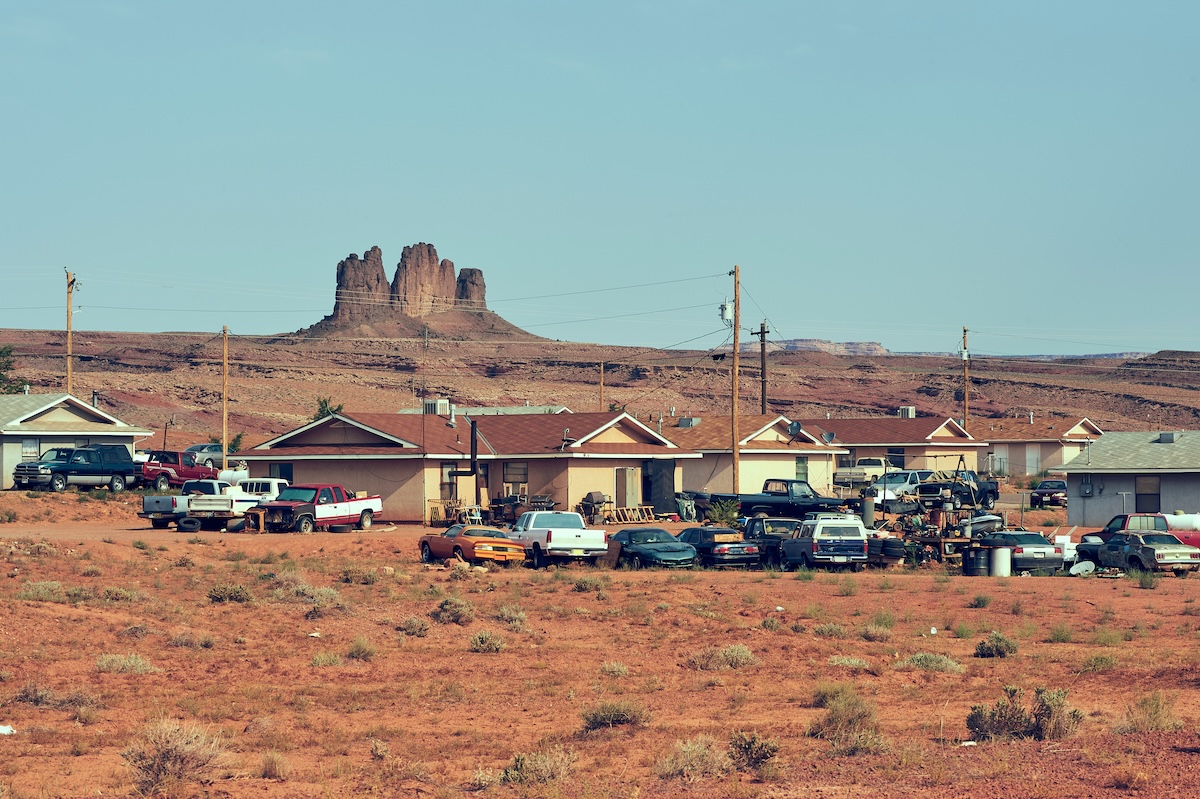
Navajo Power is building a pipeline of utility-scale solar projects to model a just climate transition (podcast). A 750-megawatt solar project near the Painted Desert on Navajo Nation in Arizona is a model for a just climate transition. The project, led by Indigenous-owned and -led renewable energy Navajo Power, is based near the site of the Navajo Generating Station coal-fired power plant, which for 45 years generated power for Phoenix, Los Angeles and other cities. “The Navajo Nation was the battery for the Southwest,” Navajo Power’s founder and CEO Brett Isaac says on the latest Agents of Impact podcast on ImpactAlpha. The coal-fired plant’s closure in 2019 killed one of the biggest job providers on the Navajo Nation – and opened an opportunity for an economic reset. “Indigenous communities have the resource potential to site projects of the size and scale that we need,” Isaac explains. “There are not a lot of places in the country that can host [developments] like that and also have the auxiliary infrastructure – transmission lines and interconnection points – that would make them feasible.”
- Community benefits. Navajo Power set out to leverage Indigenous communities’ abundant land and resources for green growth in the US, while ensuring those communities are finally able to make the call on how those resources are used, who benefits and how. The Painted Desert project is Navajo Power’s starting point for “utilizing the economic opportunities, investment and ownership to address social issues [like] high unemployment and access to infrastructure,” says Isaac (for background, see “Native-led Navajo Power leans into the just transition with community benefits and local jobs”).
- Permits and approvals. It’s been a six-year journey to assemble not only the financing, but leases and approvals for the 4,500-acre project and, crucially, community support, including from dozens of grazing permit holders. Navajo Power has five projects in development, totaling more than two gigawatts, with four Tribal nations, representing about $4 billion in investment into those communities. Navajo Power has deployed about $25 million in concessionary debt and project development financing to date; it reached a $4 million first close in its Series A equity financing last December. Says Navajo Power’s COO Michael Cox, “This has never been done before by a private company. We’re carving the path.”
- Keep reading and listen in to the podcast, “Navajo Power is building a pipeline of utility-scale solar projects to model a just climate transition.” With the W.K. Kellogg Foundation, ImpactAlpha is lifting up investment strategies that are expanding opportunity in today’s complex environment.
Dealflow: Catalytic Capital
Prime Coalition’s Trellis Climate raises capital for first-of-a-kind projects. Prime Coalition is looking to help meet the financing needs of climate tech startups on the brink of commercialization. Government funding cutbacks and a slowdown in climate tech investment have hampered companies building their first commercial plants, known as first-of-a-kind projects, or FOAKs, that don’t fit the venture capital funding model and are often deemed too risky for commercial infrastructure and debt investors. Trellis Climate, launched last year by the Boston-based nonprofit climate investor Prime Coalition, is stepping in with catalytic capital to help advance promising high-impact technologies. Prime says the impact-first, catalytic capital investment program has raised philanthropic capital from nearly two-dozen private foundations, donor-advised funds, family offices and other donors. Donors have the option to structure their contributions as recoverable grants or program-related investments extending philanthropic dollars by recycling capital when projects generate financial returns.
- Made in California. Trellis has inked two deals this year, backing San Francisco-based Nitricity, which is developing a plant-based, climate-smart alternative to expensive and energy-intensive synthetic nitrogen fertilizer; and San Jose-based Tandem PV’s solar panels, which combine conventional silicon solar cells with thin-film perovskite layers for higher efficiency. Trellis backed Tandem’s $50 million Series A equity and debt round to finance a Silicon Valley demonstration plant. Trellis invested in Nitricity’s $10 million project financing round, also backed by Elemental Impact, for its California manufacturing facility that will produce organic nitrogen fertilizer using recycled almond shells and renewable energy.
- Gift this post.
SAEL Solar raises $132 million for a 300 megawatt solar plant in India. Indian developer of solar and agricultural waste-to-energy projects, SAEL Solar, has raised $132 million in debt from the Asian Infrastructure Investment Bank, French financial services group Societe Generale and New Development Bank, which serves “BRICS” nations. The funding will finance a 300-megawatt solar power plant in Andhra Pradesh state, which SAEL won with a competitive bid from the Solar Energy Corporation of India. The company secured $1 billion early last year from Norfund, Tata Cleantech, the US Development Finance Corporation and the Asian Development Bank to expand its solar and biomass projects.
- Renewable energy uptick. India is building renewable energy generation capacity at a fast clip. It added nearly 30 gigawatts of energy to reach 220 gigawatts for the financial year of 2024 to 2025. Nearly half the growth was driven by solar; wind, bioenergy and small hydropower are picking up. Power generated from SAEL’s new plant will be sold to the solar energy corporation through a 25-year power purchase agreement. SAEL’s parent company SAEL Limited, and five subsidiaries last year raised $305 million from a US dollar-denominated green bond, which was oversubscribed by more than six times.
Dealflow overflow. Investment news crossing our desks:
- New York-based venture capital firm Planeteer Capital closed its maiden fund at $54 million, shy of its $75 million initial target. The fund will support pre-seed and seed stage climate solutions. (WSJ)
- Capricorn Investment Group, Breakthrough Energy Ventures and Energy Impact Partners are among the investors in Heron Power’s $38 million Series A round. The Scotts Valley, Calif.-based company is commercializing its next-generation solid-state transformers to help meet data center energy demand. (TechCrunch)
- Indian non-banking financial services company Saarathi Finance closed its 475 crore rupees ($55.5 million) Series A round from TVS Capital Funds, Lok Capital and others to extend credit to micro to medium-sized businesses operating in rural and peri-urban areas. (YourStory)
- Japan’s SORA Technology, which uses AI-powered drones for medical supply delivery and disease surveillance in Africa, raised 670 million Japanese yen ($4.8 million) in a seed round that included debt. Investors included Nissay Capital’s Sustainability Challenge Fund, Drone Fund, and SMBC Venture Capital. (Daba Finance)
Signals: Climate Finance
Global Climate Finance Forum seeks to mobilize capital for locally-led solutions in the Global South. Call it the Montego Bay manifesto. In late April, a group of impact investors, policymakers and entrepreneurs gathered in Jamaica to map strategies for channeling private capital from the Global North to climate solutions in the Global South. In their sights: the COP30 global climate talks coming up in November in Belém, Brazil. The role of private capital will be even more urgent this year, with public funding, not to mention political leadership, for climate action in retreat in the US and around the globe. “The regions most vulnerable to climate shocks – yet where targeted investments could generate outsized benefits for communities and ecosystems – continue to be severely under-resourced in their climate efforts,” says Marilyn Waite of the Climate Finance Fund, a philanthropic fund is supported by the William and Flora Hewlett Foundation and hosted by the European Climate Foundation. That’s especially true, she said, for small businesses that operate in capital-scarce environments.
- ‘MoBay’ to Belém. Waite’s fund underwrote the inaugural Global Climate Finance Forum to workshop strategies for mobilizing private finance for climate-focused small- and mid-sized businesses, or SMEs, and develop an action plan for the COP30 proceedings. The three-day forum generated some three-dozen recommendations and commitments. Among them: tax incentives to encourage institutional and retail investors to invest in Global South-listed equities, bonds, and private funds, and a registry of investable climate-focused small businesses and regional aggregators to facilitate deals. Other ideas included piloting blended finance structures that pair local asset managers with Global North institutional investors, and addressing currency mismatch through fund-level innovations and cross-border learning. The ideas will inform a “Montego Bay Letter” to COP30 organizers that aims to elevate Global South SMEs in the talks.
- Global majority. Jamaica was chosen as a location in part for its accessibility. Climate advocates from emerging markets now face even more onerous visa requirements for events in the US and, if they can get in, steep costs (disclosure: Climate Finance Fund picked up the cost of accommodations for attendees). Jamaica is visa-free for nearly 100 countries. “Global conversations should not happen in places the Global Majority cannot access,” says Waite. The 50 or so delegates to the form hailed from 17 countries, including Bangladesh, Brazil, China, India, Nepal and Rwanda, Trinidad, and Tobago. “SMEs are the engine of our economy and their role in climate action is pivotal,” said BRAC Bank’s Tashmeem Muntazir Chowdhury who attended from Bangladesh.
- Keep reading, “Global Climate Finance Forum seeks to mobilize capital for locally-led solutions in the Global South,” by Amy Cortese on ImpactAlpha.
Agents of Impact: Follow the Talent
Don’t miss these ImpactAlpha partner events this month:
- June 4-5: Impaqto’s Latin American Impact Investment Summit, or CLIIQ (Quito). For 20% off use discount code ImpactAlpha.
- June 9-10: The REAL Summit (London). ImpactAlpha subscribers get £500 off the list price by registering using this link.
- June 10-12: Pro Mujer’s GLI Forum LatAm (Mexico City). For 15% off use discount code: GLI2025IMPACTALPHA.
- June 11-13: Africa Impact Investing Group’s Africa Impact Summit (Accra). Use discount code AIS25-IMP15.
- June 23-25: ReFED Food Waste Solutions Summit (Seattle). Take 10% off with code ImpactAlpha10.
JPMorgan Chase appoints Sarah Kapnick, a former investment banking analyst at Goldman Sachs, as global head of climate advisory… Mauritania’s former economy minister Sidi Ould Tah was elected president of the African Development Bank last week, succeeding Nigeria’s Akinwumi Adesina… James McIntyre is stepping down as chief strategy officer of Inclusive Prosperity Capital.
Major League Baseball is hiring a social impact director in New York… Halcyon Ventures seeks an investment team member in San Francisco… The National Domestic Workers Alliance has an opening for a senior creative director… Health Forward Foundation seeks a CFO… Impact Ventures is on the hunt for a lending managing director.
👉 View (or post) impact investing jobs on ImpactAlpha’s Career Hub.
Thank you for your impact!
– June 2, 2025