
Greetings Agents of Impact!
🎙️ Plausibly interesting. To kick off the new year, ImpactAlpha’s Dennis Price hopped on the Plausibly Interesting podcast with hosts Mark Newberg of Stockbridge Advisors and Urvashi Bhatnagar of The Good Science Fund for a dive into the business behind ImpactAlpha. Have a listen.
In today’s Brief:
- Mexican family offices leaning into impact
- Acumen’s Hardest to Reach fund reaches milestone
- Climate-resilient blueberry farming in Peru
- Innovations in ‘risk transfer’ for frontline communities
Featured: Impact in Latin America
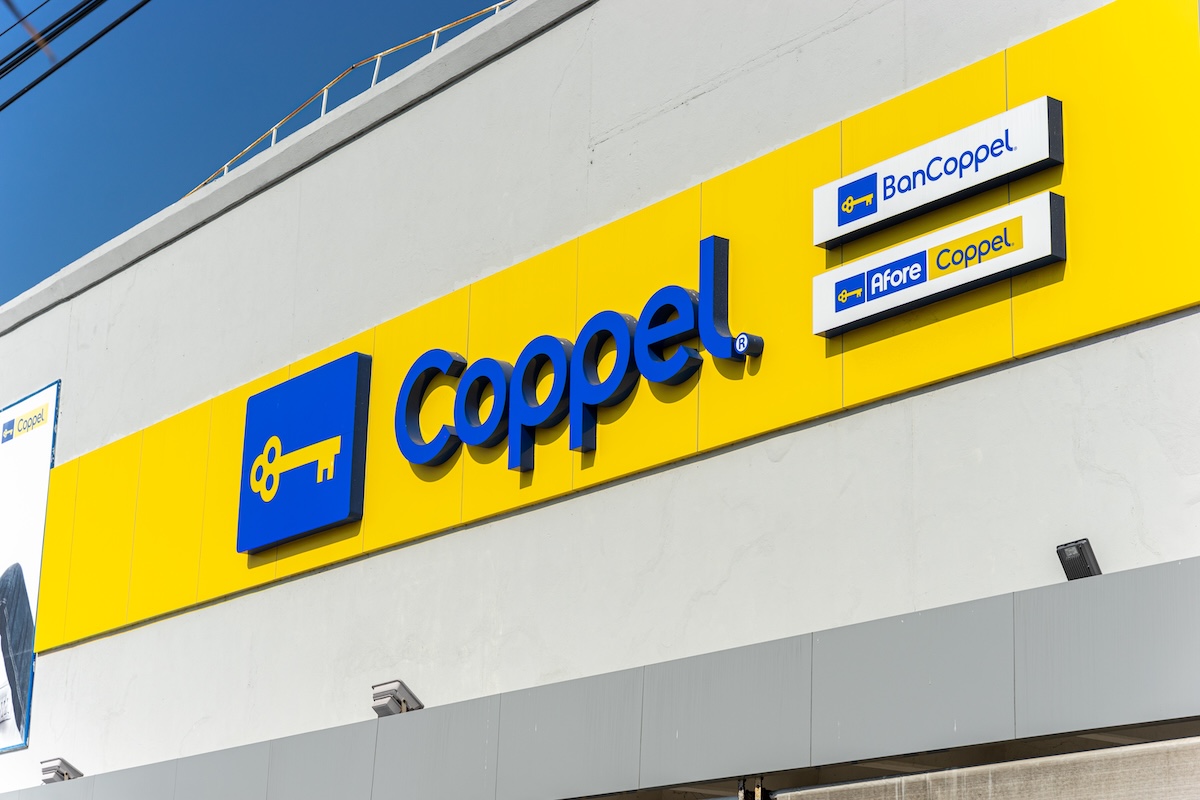
These Mexican families are stepping up to impact investing, even as others step back. In Mexico, as elsewhere, venture capital fundraising fell off a cliff in 2022. Bucking the trend, that’s the year that the Coppel family, which runs one of Mexico’s most popular department store chains, launched its own VC firm, 1200VC, with $150 million to back impact technology across the Americas and Europe. The venture fund grew out of the Coppels’ family office, Talipot. “The funding landscape in Latin America is not retreating, it is evolving,” Esteban Coppel Gómez tells ImpactAlpha on behalf of the family. “The pullback after the recent capital bubble has created a healthier environment that rewards discipline, operational depth and long-term alignment.” As other investors have retreated, a handful of wealthy Mexican families are stepping up their allocations to impact investments in an effort to build a more vibrant ecosystem for startups and entrepreneurs tackling the country’s social challenges. Family businesses make up the backbone of Mexico’s economy, accounting for three-quarters of all businesses valued above $1 billion. “While some international capital has stepped back, this moment favors patient, informed investors – particularly regional families and global family offices willing to engage with the real economy rather than financial cycles,” says Lupe Rodriguez, who runs Talipot’s investments.
- Durable capital. The Sánchez Navarro family, once one of the biggest landowners in the country, co-founded CO_Capital in 2018 to invest in ventures addressing poverty and climate change. The fund is part of CO_Plataforma, an impact investing initiative working to build Mexico’s impact ecosystem. The Coppel family defines impact as “sustained improvements in economic agency and institutional resilience, alongside competitive financial returns.” That includes expanding access to essential services, strengthening market institutions, and deploying technology to improve productivity across borders. Through 1200VC, Talipot has invested in Earth AI and in climate venture funds such as Lowercarbon Capital and Third Sphere. “Meeting the region’s capital needs will require strong governance, collaboration across families, and a willingness to build durable platforms rather than pursue isolated deals,” the family says. “Impact ultimately means stewardship – of capital, institutions, and the conditions that allow prosperity to compound over generations.”
- Leaning in. The Servitje family, which controls the world’s largest baking conglomerate Grupo Bimbo, is preparing to make its first impact investments to complement its grantmaking in Mexico’s underserved communities. The Servitje family has built an estimated $7 billion fortune since Bimbo was founded in 1945. At the family’s annual assembly last year, María Cecilia Gabriela Servitje Montull, daughter of Grupo Bimbo founder Lorenzo Servitje, gathered more than 80 members to discuss impact funding, particularly environmental investments. With seven other regional family foundations, she is mapping where capital should flow before starting to write checks. Servitje is now pursuing what she calls “systemic” work, to find ways to help Mexico’s long-divided public and private sectors work together. “When you’re not in the investment world, trying to understand the language is difficult,” she explains. “It’s like trying to learn a new way of speaking. It’s totally different from philanthropy.”
- Keep reading, “These Mexican families are stepping up to impact investing even as others step back,” by Erik Stein. Our monthly newsletter, ImpactAlpha Latin America, drops later today. Opt-in for free to receive ImpactAlpha Latin America as part of your subscription.
Dealflow: Energy Access
Acumen reaches $250 million target for Hardest to Reach energy access initiative. The fund provides flexible financing to off-grid solar companies operating in African countries with the lowest electrification and energy access rates, including Somalia, Malawi, Benin and Lesotho. Acumen reached its fundraising goal for the blended-finance initiative with $7.8 million from the Swiss Agency for Development and Cooperation, or SDC. The capital will go into Hardest to Reach’s debt pool, called H2R Amplify, which has now raised a total of $180 million to provide impact-linked loans and receivables-based financing to cover companies’ working capital needs. Acumen also secured $18 million in grant funding from existing backers to reward portfolio companies for reaching impact milestones (listen to, “How Acumen’s Jacqueline Novogratz is blending capital to bring electricity to the hardest to reach”).
- Impact incentives. The Swiss agency has been a long-standing supporter of impact-linked financing; it was the first backer of a type of impact bonus payments, called social impact incentives, or SIINCs, piloted in Mexico a decade ago (go deeper). H2R Amplify also has backing from the Green Climate Fund, Shinhan Bank, British International Investment, the Soros Economic Development Fund and others. The rest of the $250 million raised is in Hardest to Reach’s second funding pool, H2R Catalyze, which offers a mix of debt, equity and grants to support companies’ market building work. Catalyze’s backers include the Global Energy Alliance for People and Planet, the Osprey Foundation, Cazenove Capital, and the Good Energies Foundation. Acumen launched Hardest to Reach at the COP28 climate summit in Dubai in 2023.
Inka’s Berries secures debt capital for climate-resilient blueberry farming in Peru. Lima-based Inka’s Berries has been farming and exporting blueberries since 2009. The company’s blueberry variety, unlike standard varieties, does not require periods of cool weather to bloom, making Inka’s crops more resilient to less predictable growing conditions. The company secured a long-term debt facility from Darby International Capital and Cordiant Capital. “By backing their significant production expansion, particularly with the zero-chill varieties, we are supporting a high-growth business that is making crucial advancements in climate-resilient agriculture,” said Andres de la Cuesta of Darby, a private debt investor that focuses on Latin America. Darby is increasing its focus on climate opportunities with its $363 million fourth fund, which closed in September.
- Resilient business. Other food producers also are seeking to mitigate intensifying climate risks. Family-run Driscoll’s, the world’s largest berry company, has invested heavily in water conservation and climate resilient berry varieties. In addition to its environmental focus, Inka’s Berries works with rural communities to share the benefits of its growth. In exchange for 500 acres of land in the Chambara district, about 180 miles outside of Lima, Inka offered community landowners preferred shares in the company, dividend payments, and first access to jobs generated by Inka’s farming activities.
- Share this post.
OceanHub Africa gets backing from Coca-Cola and Doen foundations for blue economy startups. South Africa-based OceanHub Africa offers accelerators for African startups addressing ocean pollution and restoring marine ecosystems. It has rolled out a new financing initiative, the Blue Loop Facility, to provide interest-free loans to companies in its accelerator cohorts. Blue Loop will write checks of $30,000 to $80,000 to two dozen startups working on sustainable seafood production, ocean energy, circularity, and low-carbon transportation and ports. The Coca-Cola and Doen foundations anchored the facility.
- Blue economy. Investing in ocean health is one of the least funded sustainable development goals, but it’s quickly gaining attention (see, “These young entrepreneurs aren’t giving up on the climate or the oceans”). In Africa, OceanHub has supported more than 30 startups in 23 countries, including Kenya-based Kuza Freezer, which provides solar-powered refrigeration for small-scale fish farmers; and Reef Pulse on Reunion Island, which provides coral reef data and monitoring.
Dealflow overflow. Investment news crossing our desks:
- HA Sustainable Infrastructure Capital will invest $500 million in a joint venture with residential solar firm Sunrun to finance at least 300 megawatts of distributed energy capacity over the next 18 months. (HASI)
- New York–based Oasys raised $4.6 million from Pathlight, Twine and Better Ventures to help mental and behavioral health providers provide more personalized and efficient care. (Oasys)
- UK-based Biographica snagged £7 million ($9 million), backed by EQT Foundation Entrepreneurs First and Faber VC, to use gene editing to design climate-resilient crops. (Biographica)
Signals: Climate Risk
Insurance for Good’s Carolyn Kousky discusses innovations in ‘risk transfer’ for climate-vulnerable communities. Climate change-related disasters are pushing the US insurance market to its breaking point. Some insurers in disaster-prone states have folded or left, leaving homeowners with unaffordable insurance options or state-run “insurance of last resort” programs. “We are going to face an uninsurable future if we don’t invest in lowering the losses from climate impacts,“ Carolyn Kousky of Insurance for Good tells ImpactAlpha in a Q&A. The nonprofit helps policymakers and communities access resources to transfer climate risk more equitably. Risk transfer mechanisms help communities manage risk and absorb financial losses, Kousky says. “What we’re trying to build are risk-transfer solutions that people can actually use and sustain.”
- Parametric insurance. Among Insurance for Good’s current projects is a collaboration with the Philadelphia Office of Sustainability and a local community organization, Eastwick United, on a parametric insurance product for the city’s majority-Black Eastwick neighborhood, where traditional flood insurance hasn’t always worked for lower-income residents. The product, if implemented, would pay out residents automatically upon a triggering event, such as wind speeds exceeding a certain threshold. Right now, the only operating parametric microinsurance market in the US is in Puerto Rico, where it covers both hurricanes and earthquakes. The Eastwick project could become a model that can be replicated in other communities.
- Resilience delta. Insurance for Good is also working with communities in California on flood and fire risks. “We’re working with partners in Los Angeles about how to pay the extra cost – what we call the resilience delta – to build back to the highest level of wildfire resilience,” Kousky says (for background see, “LA wildfires push California’s insurance market to the brink“). Other innovations she’s seeing: using stormwater fees to pay for green infrastructure investment, and insurance licensing fees that go into grant programs for home hardening. The state of Hawaii passed a small tax on cruise ships to help pay for climate resilience. Insurance, bond markets and lenders can price in climate risk, Kousky adds, like offering lower rates on loans and bonds for more resilient properties and initiatives.
- Keep reading, “Innovations in ‘risk transfer’ for climate-vulnerable communities” by ImpactAlpha contributor Taylor Kate Brown.
Agents of Impact: Follow the Talent
Impact Capital Managers‘ 2026 Impact Awards go to Achieve Partners’ Daniel Pianko (Impact Award), Builders Vision’s Noelle Laing (LP Leader Award) and Goldman Sachs Asset Management’s Emma Sissman (Emerging Leader Award).
Hamza Louizi, formerly with International Finance Corp., joins the Mennonite Economic Development Associates as director of fund investments for the Mastercard Foundation’s Africa Growth Fund (see, “Mastercard Foundation learned some lessons deploying its Africa Growth Fund“)… One Acre Fund seeks an associate manager focused on renewables in Kinshasa, DRC… The Global Energy Alliance for People and Planet is hiring a fundraising consultant in the UK for its Grids of the Future Initiative.
Apex Group is on the hunt for a climate change and sustainability consultant for its India division… WSP has an opening for a climate risk and adaptation consultant in India… Visa seeks a social impact manager for its Latin America team… Fitch Rating is looking for an associate director of ESG and sustainable finance in Mexico… Kiva has an opening for a social enterprise investment manager in Bogota, Colombia.
Ford Foundation is looking for a grant manager… JPMorgan Chase is recruiting a vice president for corporate responsibility and social impact integration… Rethink is hiring a fund manager… Carbon Equity is on the lookout for a content creator to join its marketing team… Applications are open for the 2025–2026 Bluegrass AgTech Challenge Grant, which supports companies developing solutions for Kentucky’s farmers, food systems and rural communities.
👉 View (or post) impact investing jobs on ImpactAlpha’s Career Hub.
Thank you for your impact!
– Jan. 8, 2026